
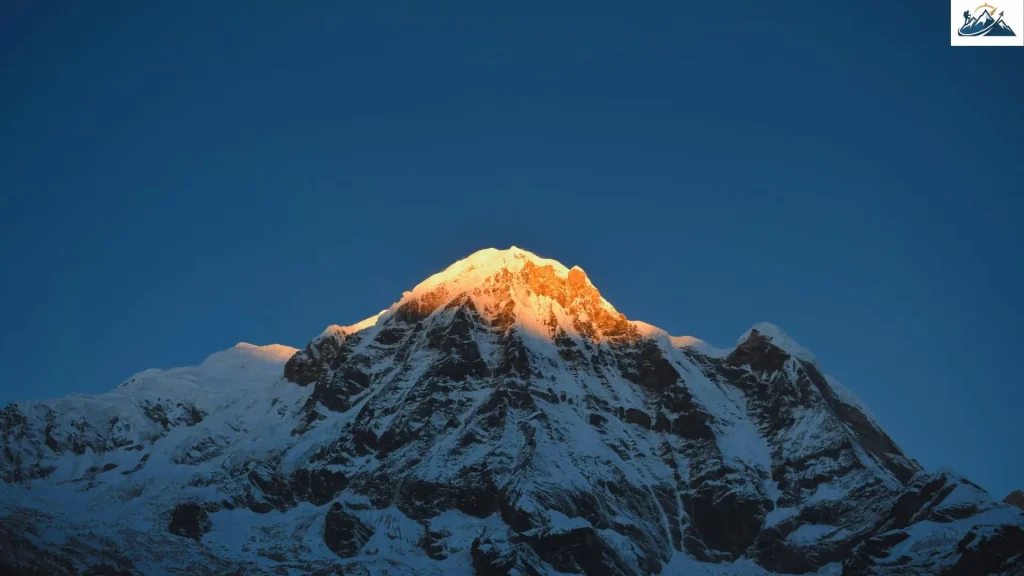
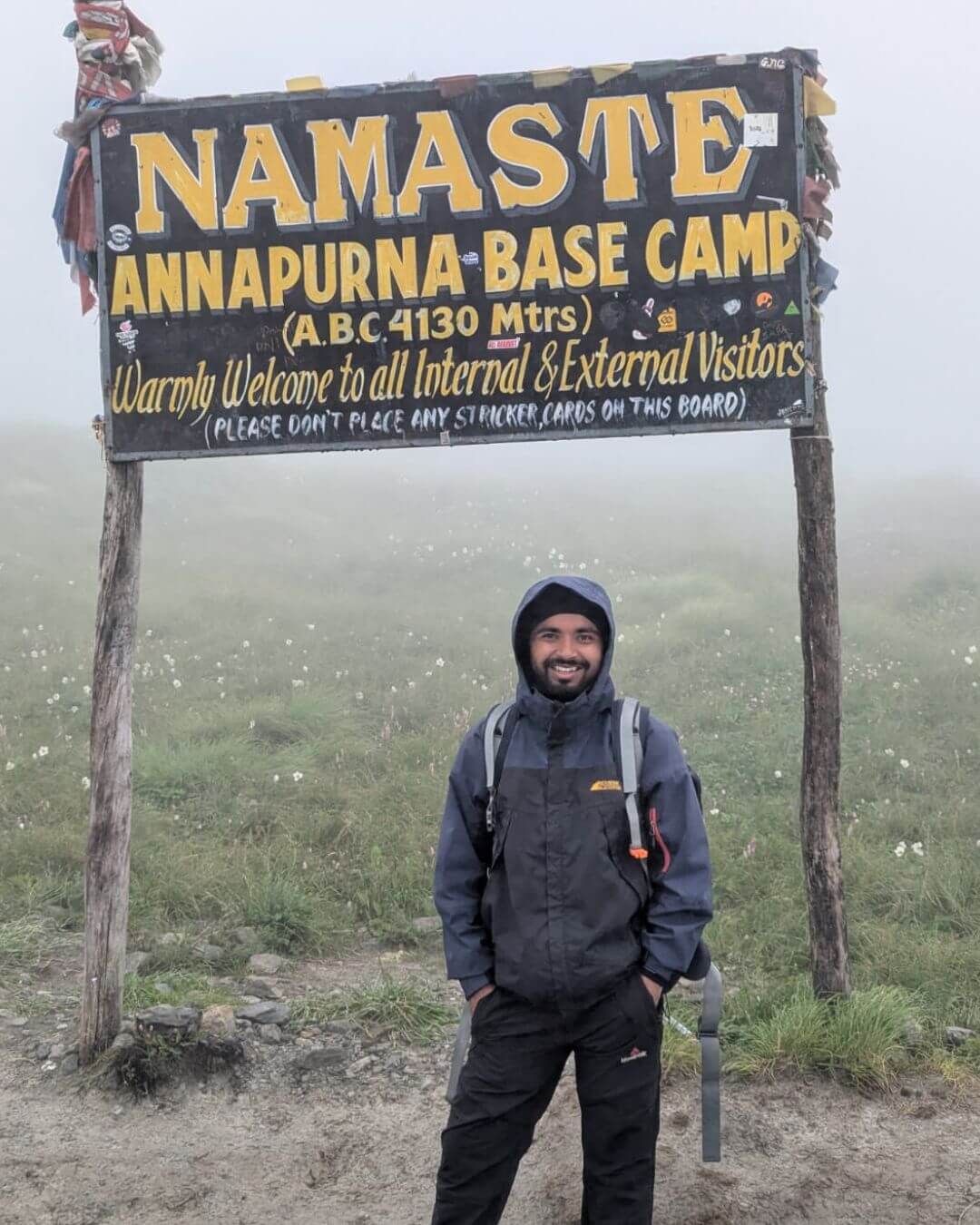
Trekking to Annapurna Base Camp puts you inside a natural amphitheater of 7,000-plus-meter peaks, reached on foot through rhododendron forest, terraced farmland, and Gurung villages. If you’re trying to figure out how long it takes, how hard it actually is, what it costs, and what permits you need, this guide walks through all of it using current, verifiable numbers.
The Nepal Annapurna Base Camp Trek (often shortened to ABC Trek) sits inside the Annapurna Conservation Area in Nepal’s Gandaki Province, and it’s one of the most walked routes in the country precisely because it delivers big mountain scenery without the altitude or logistics of Everest Base Camp. This Annapurna Base Camp Trek Guide covers the route, itinerary, difficulty, permits, cost, best season, and preparation, so you can plan the trek with realistic expectations.
Quick Answer
The Annapurna Base Camp Trek is a 7- to 12-day teahouse trek in Nepal’s Annapurna region, climbing from around 1,070 m at Nayapul to 4,130 m at Annapurna Base Camp. The round-trip distance is roughly 70 to 115 km, walked over 5 to 7 hours a day. It is rated moderate difficulty with no technical climbing, but steep stone staircases and daily elevation change make it demanding. A licensed guide is mandatory for all foreign trekkers, and the total cost typically runs $700 to $1,500 per person depending on trek style.
Key Takeaways
- Annapurna Base Camp sits at 4,130 m (13,549 ft).
- Trek takes 7-12 days, most commonly 10-11.
- Lower altitude than Everest Base Camp, so lower AMS risk.
- A licensed guide has been mandatory since April 2023.
- ACAP permit required for all trekkers.
- A TIMS card is also officially required for foreign trekkers, though enforcement on the trail currently varies.
- Teahouses cover the whole route, so no camping needed.
- Best seasons: spring (Mar-May) and autumn (Sep-Nov).
New to trekking in Nepal? Browse our Nepal trekking section to see other routes and treks before diving into the Annapurna-specific details below.
What Is the Annapurna Base Camp Trek?
The Annapurna Base Camp Trek follows the Modi Khola river valley into the Annapurna Sanctuary, a glacial basin ringed by Annapurna I, Annapurna South, Hiunchuli, Machhapuchhre (Fishtail), and Gangapurna. Unlike Everest Base Camp, which requires a flight to Lukla, the Annapurna Base Camp Trek from Pokhara starts within a couple of hours’ drive of the city, which is what makes it accessible to a wider range of travelers, including reasonably fit first-timers.
Annapurna Base Camp trekking passes through Gurung and Magar villages such as Ghandruk and Chhomrong before climbing through bamboo and rhododendron forest toward Machhapuchhre Base Camp (MBC) and, finally, Annapurna Base Camp itself. Along the way you gain and lose elevation daily, cross suspension bridges, and sleep in teahouses run by local families. There is no camping required on the standard route.
Where Is Annapurna Base Camp?
Annapurna Base Camp sits in Kaski District, Gandaki Province, inside the Annapurna Sanctuary, a high glacial basin roughly 40 km north of Pokhara as the crow flies, though the actual trekking distance is longer since the trail winds through the Modi Khola valley rather than heading straight in. There is no direct road from Kathmandu. The standard route is Kathmandu to Pokhara first (by road or air), then a short drive to the trailhead, followed by several days on foot.
Getting from Kathmandu to Pokhara
Most trekkers reach Pokhara one of three ways before starting the trek itself:
| Method | Time | Approx. Cost |
| Domestic flight | 25-30 minutes | $80-$120 one-way |
| Tourist bus | 6-8 hours | $10-$25 one-way |
| Private jeep/car | 6-7 hours | $80-$150 for the vehicle |
From Pokhara, it’s a further 1.5-2 hour drive to Nayapul or another trailhead, where the walking portion of the trek begins. Flying saves the better part of a day if your schedule is tight; the overland bus route is cheaper and gives you a look at Nepal’s midhills along the way.
Annapurna Base Camp Trek Route and Itinerary
Most itineraries start with a drive from Pokhara to Nayapul (or a nearby trailhead like Kimche or Siwai), then follow one of two common paths into the sanctuary, one via Ghorepani and Poon Hill, the other more direct via Ghandruk and Chhomrong. Both converge at Chhomrong, the last major village before the trail narrows into the gorge leading to the Sanctuary.
A typical 10-day itinerary looks like this:
| Day | Route | Approx. Altitude | Walking Time |
| 1 | Pokhara → Nayapul → Tikhedhunga | 1,070 m → 1,540 m | 4-5 hrs |
| 2 | Tikhedhunga → Ghorepani | 1,540 m → 2,860 m | 6-7 hrs |
| 3 | Ghorepani (Poon Hill sunrise) → Tadapani | 2,860 m → 2,630 m | 5-6 hrs |
| 4 | Tadapani → Chhomrong | 2,630 m → 2,170 m | 5-6 hrs |
| 5 | Chhomrong → Sinuwa → Bamboo/Dovan | 2,170 m → 2,340 m | 5-6 hrs |
| 6 | Bamboo/Dovan → Deurali | 2,340 m → 3,230 m | 5-6 hrs |
| 7 | Deurali → Machhapuchhre Base Camp → Annapurna Base Camp | 3,230 m → 4,130 m | 6-7 hrs |
| 8 | Annapurna Base Camp → Bamboo | 4,130 m → 2,340 m | 6-7 hrs |
| 9 | Bamboo → Jhinu Danda (Hot Springs) | 2,340 m → 1,780 m | 5-6 hrs |
| 10 | Jhinu Danda → Nayapul → Pokhara | 1,780 m → 1,070 m | 3-4 hrs Walk + Drive |
Shorter 7-day itineraries skip Poon Hill and use the more direct Ghandruk route; longer 12-14 day versions add acclimatization days or combine ABC with the Ghorepani-Poon Hill loop on both ends. If altitude sickness or fatigue is a concern, adding a rest day around Chhomrong or Sinuwa is a reasonable adjustment rather than pushing straight through. If you want a complete guide to the trek map of Annapurna, you can look at the Annapurna Base Camp Trek map complete guide.
| Good to Know: Improved road access now lets some trekkers start from Kimche, Siwai, or Ghandruk instead of Nayapul, cutting a day of walking off the front end. Ask your guide or agency which trailhead your itinerary actually uses, it affects both the distance and the day count. |
Highlights Along the Annapurna Trail
The trek is not just a means of reaching the base camp. Several stops along the way are attractions in their own right:
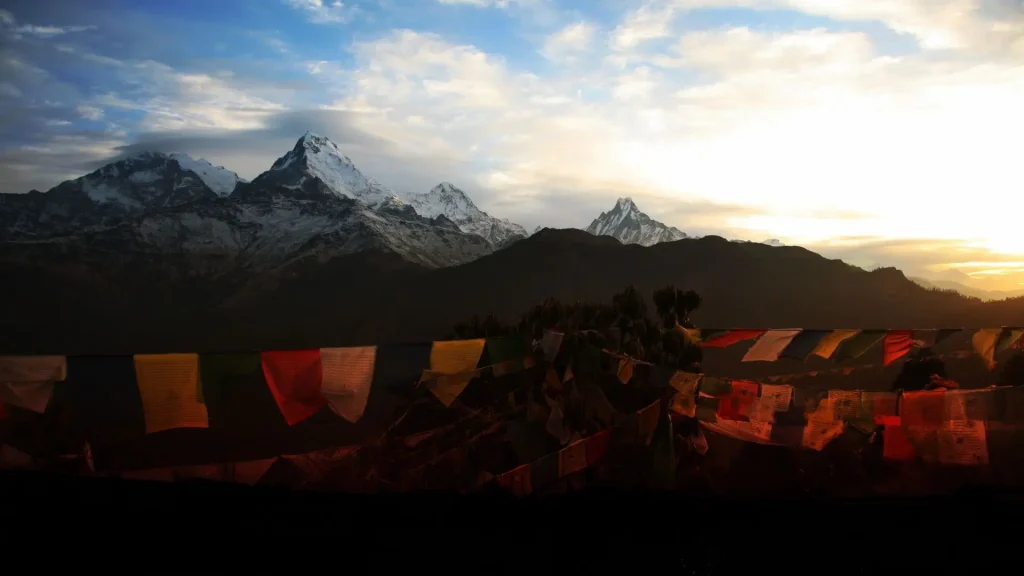
- Poon Hill (3,210 m): A pre-dawn side trip from Ghorepani for one of the most photographed sunrise panoramas in Nepal, taking in Dhaulagiri, Annapurna South, and Machhapuchhre. It adds roughly a day to the itinerary but is one of the most commonly added detours.
- Ghandruk: A large Gurung village with stone-paved lanes and a small museum on local Gurung culture and Gurkha military history, worth an hour or two if your route passes through.
- Chhomrong: The last substantial village before the trail narrows toward the Sanctuary, and a natural point to rest, resupply, or add an acclimatization day.
- Jhinu Danda hot springs: Natural hot pools beside the Modi Khola, a 15- to 20-minute walk downhill from Jhinu Danda, and a genuinely welcome stop on the way back down for sore legs.
- The Annapurna Sanctuary itself: the 360-degree glacial amphitheater at Annapurna Base Camp, ringed by Annapurna I (8,091 m), Annapurna South, Hiunchuli, Machhapuchhre, and Gangapurna.
The Annapurna Conservation Area is also rich in biodiversity. Trekkers occasionally spot Himalayan langurs, and birdlife, including pheasants and the colorful Himalayan monal (Nepal’s national bird), is common in the forested lower sections. Sightings of larger animals like Himalayan tahr or black bear are rare and not something to plan a trip around, but they are part of what the ACAP permit fee helps protect.
How Long Is Annapurna Base Camp Trek?
The Annapurna Base Camp Trek takes 7 to 12 days for most trekkers, with 10 days being the most common itinerary length. The round-trip walking distance is roughly 70-115 km, covered at an average of 8-15 km per day over 5-7 hours of walking. Shorter 7-day versions are physically demanding because they compress the same elevation gain into fewer days; longer 12-day itineraries build in more acclimatization time and are generally more comfortable.
The wide range in “how long” answers you’ll see online comes down to three variables: your starting trailhead (Nayapul versus a shorter drive-in point like Kimche), whether you add the Ghorepani-Poon Hill detour, and how many rest or buffer days you build in for weather or altitude adjustment.
How Difficult Is Annapurna Base Camp Trek?
The Annapurna Base Camp Trek difficulty is rated moderate. There is no technical climbing, rope work, or glacier travel. It is a walking trek on established trails, but long daily stone staircases, repeated steep ascents and descents, and a top altitude of 4,130 m make it more demanding than a casual hike. A reasonable level of cardiovascular fitness and some prior hiking experience will make the trek considerably more comfortable.
Can a beginner do the Annapurna Base Camp Trek? Yes, a fit beginner with no prior high-altitude trekking experience can complete it, provided they train beforehand and pace themselves. It is often recommended as a first Himalayan trek for exactly this reason. The altitude ceiling is lower than Everest Base Camp, and the trail is well-marked with frequent teahouses.
Is Annapurna Base Camp Trek harder than Everest Base Camp? Overall, most guides consider Everest Base Camp the harder trek because it goes almost 1,200 m higher (5,364 m versus 4,130 m), runs longer (typically 12 to 14 days versus 7 to 10), and depends on a weather-sensitive flight to Lukla. That said, ABC has its own kind of difficulty. The stone staircases around Ulleri, Chhomrong, and the descent from Sinuwa involve more repeated steep climbing per day than most EBC sections, so trekkers who struggle with stairs may find individual ABC days feel tougher even though the trek overall asks less of the body.
| Factor | Annapurna Base Camp | Everest Base Camp |
| Max altitude | 4,130 m (13,549 ft) | 5,364 m (17,598 ft) |
| Typical duration | 7-10 days | 12-14 days |
| Round-trip distance | ~70-115 km | ~130 km |
| Access | Road drive from Pokhara | Flight to Lukla |
| Terrain challenge | Steep stone staircases | High-altitude, rocky, exposed trail |
| Altitude sickness risk | Lower | Higher |
Altitude and Altitude Sickness on the ABC Trek
Annapurna Base Camp sits at 4,130 m, high enough that altitude sickness (acute mountain sickness, or AMS) is a real risk, even though it is lower than Everest Base Camp. Symptoms typically include headache, nausea, dizziness, and fatigue, and they can appear anywhere above roughly 2,500 to 3,000 m.
The standard itinerary builds in gradual acclimatization by climbing in stages rather than in one push. You sleep at Chhomrong (2,170 m), then Bamboo or Dovan (around 2,340 m), then Deurali (3,230 m), before pushing to MBC and ABC on the final ascent day. This staged gain, rather than the altitude in isolation, is what keeps most trekkers comfortable.
| Safety Note: The standard advice for AMS is to stop ascending, rest, hydrate, and descend if symptoms don’t improve or worsen. No itinerary, guide, or gear substitutes for descending when symptoms are serious. This information is general and not a substitute for a pre-trip medical consultation, particularly if you have a heart or lung condition. |
| Quick Tip: Walk at a slow, steady pace. “Bistari, bistari” (slowly, slowly) is the local phrase you will hear often. Drink 3 to 4 liters of water a day, and avoid alcohol at altitude. These are simple habits, but they matter more than any single piece of gear. |
Annapurna Base Camp Trek Permits
Every foreign trekker needs the Annapurna Conservation Area Permit (ACAP) to enter the Annapurna Conservation Area. The ACAP costs NPR 3,000 (about US$20) for foreign nationals and NPR 1,000 for SAARC nationals; children under 10 are exempt. It’s issued by the National Trust for Nature Conservation (NTNC), which has managed the conservation area since it was established in 1986. The Annapurna Conservation Area Project covers 7,629 square kilometers and is home to over 100,000 residents from different cultural and linguistic groups.
Beyond the ACAP, most trekkers also budget for the TIMS card (Trekkers’ Information Management System), which records trekker details for safety and emergency-rescue coordination. TIMS pricing has historically been NPR 2,000 for individual foreign trekkers. It is worth flagging here that sources disagree on whether TIMS is still separately required on Annapurna routes in 2026 versus folded into the mandatory-guide system. Enforcement has reportedly been inconsistent on the ground. Confirm the current requirement with the Nepal Tourism Board or your trekking agency before you go rather than relying on any single blog post, including this one.
The Mandatory Guide Rule for Annapurna Base Camp Trek
Since April 1, 2023, Nepal has required all foreign trekkers to be accompanied by a licensed guide on regulated trekking routes, which includes the Annapurna region. This effectively ended independent Annapurna Base Camp solo trek arrangements for foreign trekkers without a licensed guide. You can still trek without a large group, but you need a government-licensed guide booked through a registered trekking agency.
Note: Solo trekking is allowed but with a legal license guide.
| Permit | Cost (Foreign Nationals) | Cost (SAARC) | Issued By |
| ACAP (Annapurna Conservation Area Permit) | NPR 3,000 (~US$20) | NPR 1,000 | NTNC |
| TIMS Card (where still required) | NPR 2,000 (~US$15) | NPR 1,000 | Nepal Tourism Board (via registered agency) |
| Important: Permit fees roughly double if purchased at a trail checkpoint instead of in advance in Kathmandu or Pokhara. Sort your paperwork before you start walking. |
Annapurna Base Camp Trek Cost
A typical Annapurna Base Camp trek tour costs $700-$1,500 per person, excluding international flights, and the total depends heavily on whether you book a guided package or arrange transport, guide, and teahouses separately. Since a licensed guide is now mandatory, fully independent budget trekking (without any guide fee) is no longer a realistic option for foreign visitors.
Rough daily costs on the trail:
| Item | Typical Cost |
| Teahouse room | $3-$10/night (often discounted if you eat dinner and breakfast there) |
| Meals | $15-$30/day, rising at higher altitudes |
| Licensed guide | $25-$35/day |
| Porter (optional) | $18-$25/day, carries 20-25 kg, often shared between two trekkers |
| Permits (ACAP + TIMS) | ~$38 total, one-time |
| Wi-Fi, hot shower, charging | $2-$5 each, per use, at teahouses |
For example, a standard 10-day guided package including permits, a licensed guide, teahouse accommodation, and meals commonly falls in the $700-$1,000 range. Add a porter, and expect another $180-$250 across the trip. None of these figures include flights into Nepal or travel insurance, both of which are separate line items worth budgeting for.
| Budget Tip: Committing to eat both dinner and breakfast at the teahouse where you sleep is standard practice on the Annapurna trail and usually gets you a cheaper or free room. Trying to save money by eating elsewhere and expecting a discounted room rarely works and can create friction with lodge owners who depend on food sales. |
Best Time for the Annapurna Base Camp Trek
| Season | Months | Conditions |
| Spring | March-May | Rhododendrons blooming, generally clear mornings, and warming temperatures. One of the two peak seasons. |
| Summer/Monsoon | June-August | Heavy rain, leeches, landslide risk, poor visibility. Not recommended for most trekkers. |
| Autumn | September-November | Most stable weather and clearest mountain views. The most popular season. |
| Winter | December-February | Cold, especially above 3,000 m, but clear skies and far fewer crowds. |
Autumn and spring are the two reliable windows for the ABC trek, and autumn in particular tends to deliver the clearest, most consistent mountain views. For trekkers comparing weather, scenery, and trail conditions, the best time to trek Annapurna Base Camp is usually during these two seasons. Winter is doable for trekkers prepared for cold-weather gear and shorter daylight hours, and it comes with noticeably quieter trails and teahouses. Monsoon season is generally discouraged because of poor visibility, slippery stone steps, and landslide risk on the access roads.
Money and Staying Connected on the Annapurna Base Camp Trail
There are no ATMs past Nayapul, and teahouses along the entire route are cash-only. Cards and mobile payments are not accepted. Exchange or withdraw Nepali rupees in Kathmandu or Pokhara before you start walking, and carry small denominations, since teahouses often cannot break large notes.
Mobile signal (Nepal Telecom generally has better coverage than Ncell on this route) holds up reasonably well through the lower villages, including Nayapul, Ghandruk, and Chhomrong, but gets patchy beyond Sinuwa and is often unavailable at Deurali, MBC, and Annapurna Base Camp itself. Wi-Fi is available at most teahouses for a small per-use fee, but expect it to be slow, and do not count on it working reliably above 3,000 m.
| Quick Tip: A basic power bank is worth the pack weight. Teahouses charge $2 to $5 to charge a device, and that cost rises the higher you go. |
How Does ABC Compare to Other Annapurna Treks?
If you’re still deciding between routes in the Annapurna region, here’s how ABC stacks up against the other popular options:
| Trek | Duration | Max Altitude | Best For |
| Ghorepani-Poon Hill | 4-5 days | 3,210 m | A short taste of the Annapurna foothills and sunrise views, minimal altitude risk |
| Mardi Himal | 5-7 days | 4,500 m | A quieter, less-trafficked alternative with dramatic ridge walking |
| Annapurna Base Camp | 7-12 days | 4,130 m | The classic base-camp experience offers glacial amphitheater views without extreme altitude. |
| Annapurna Circuit | 12-18 days | 5,416 m (Thorong La) | A longer loop through more varied terrain and climate zones, including a high mountain pass |
ABC sits in the middle of this range. It is longer and higher than Poon Hill or Mardi Himal but shorter and lower than the full Circuit. It is a common choice for trekkers who want the “big mountain” payoff without committing to two-plus weeks or a 5,000-plus-meter pass crossing.
Accommodation on the Annapurna Base Camp Trail
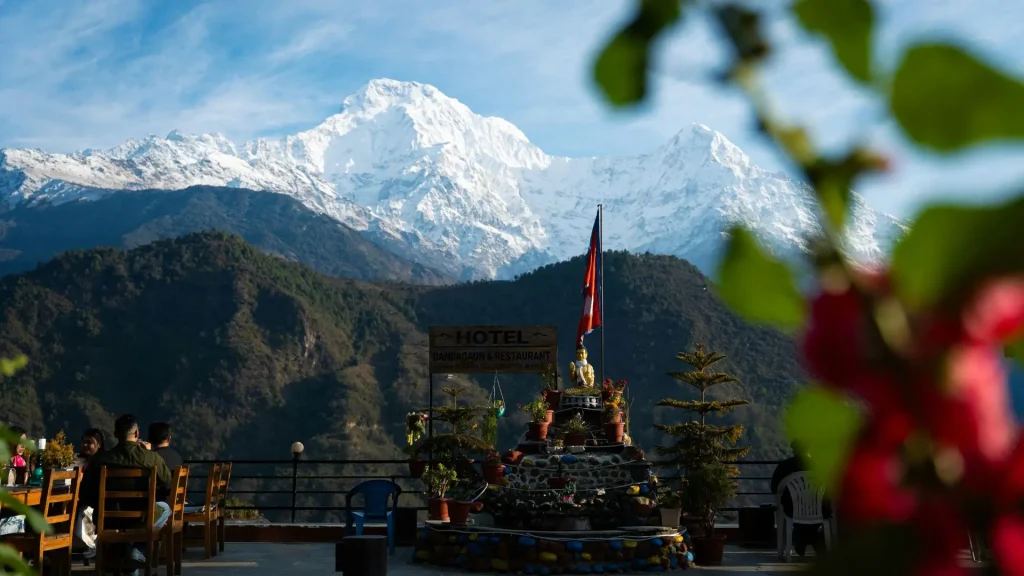
The Annapurna Base Camp Trek runs on a teahouse system. Family-run lodges are spaced roughly every few hours of walking, offering a basic private or twin room and a shared menu of Nepali and simple Western dishes.
Rooms are simple: a bed, a blanket, and sometimes a shared bathroom, with hot showers and Wi-Fi usually available for a small extra fee, especially at lower elevations. Higher up, near Deurali, MBC, and ABC itself, facilities get more basic and colder, and prices for food, charging, and Wi-Fi rise accordingly, since everything above roughly 2,500 m has to be carried up by a porter or mule.
You do not need a tent or camping gear for the standard route. This is one of the practical advantages ABC has over more remote treks in Nepal.
How to Prepare for the Annapurna Base Camp Trek
Fitness. You do not need to be an athlete, but regular cardio for 6 to 8 weeks before the trek, including hiking, stair climbing, running, or cycling, makes a real difference on the steep stretches around Ulleri and Chhomrong. If you can comfortably walk 5 to 6 hours on hilly terrain with a daypack, you are in reasonable shape for ABC.
Packing. Your Annapurna Base Camp Trek packing list should focus on layering, since you will move from subtropical valley heat to near-freezing alpine air over the course of a week.
Broken-in hiking boots with ankle support
- A 4-season sleeping bag rated to at least -10°C for high-camp nights
- Down jacket, fleece mid-layer, moisture-wicking base layers
- Waterproof and windproof outer shell
- Trekking poles, genuinely useful on the steep stone descents
- Headlamp, sun protection, basic first-aid kit, water purification tablets, or a filter
Common mistakes. One of the most common mistakes is under-training for the stairs specifically. Trekkers who prepare with flat-ground cardio are often surprised by how much the repeated steep ascents and descents tax the legs compared to distance alone. Another is skimping on the down jacket and sleeping bag rating, assuming the lower altitude compared to Everest Base Camp means it will not get that cold. It still drops well below freezing at Annapurna Base Camp overnight, especially outside peak season.
Annapurna Base Camp Trip Variations and Extensions
The standard ABC itinerary isn’t the only option, and several Annapurna Base Camp treks offer different durations and route combinations:
- Machhapuchhre Base Camp only. If altitude is a concern, some trekkers stop at MBC (3,700 m) rather than pushing on to ABC. It is roughly 400 m lower and still delivers close-up mountain views, with a shorter final day.
- Poon Hill add-on. Routing through Ghorepani for the Poon Hill sunrise adds a day or two but is the most common variation, and it is a gentle way to start acclimatizing before the trail climbs higher.
- Jomsom-Muktinath extension. Trekkers with more time sometimes combine ABC with a trip north to Muktinath, a Hindu and Buddhist pilgrimage site, via Jomsom and Kagbeni, though this typically means arranging separate onward transport rather than looping back through the same trailhead.
Responsible Trekking in the Annapurna Region
The Annapurna Conservation Area is home to over 100,000 residents, and the trail passes directly through their villages, farmland, and forests. A few practical habits go a long way:
| Responsible Travel: Carry a reusable water bottle and use a filter or purification tablets instead of buying bottled water. Plastic waste disposal is a real problem at altitude, where nothing can be recycled locally. Stick to marked trails to avoid damaging fragile alpine vegetation, and ask before photographing people or religious sites. |
Supporting the local teahouse economy, eating and sleeping where you are welcomed rather than seeking outside alternatives, is itself a form of responsible tourism in a region where tourism is the primary livelihood for many villages along the route.
Final Thoughts
The Annapurna Base Camp Trek delivers a genuine high-Himalaya experience, a 360-degree wall of 7,000-plus-meter peaks, without the flight logistics or altitude extremes of Everest Base Camp. This is exactly why it draws such a wide range of trekkers, from seasoned hikers to well-prepared first-timers. Getting the basics right matters more than anything else: budget realistically, sort your ACAP permit and licensed guide in advance, train your legs for stairs as much as the distance, and build in enough days to acclimatize rather than rushing the ascent.
Wander Himalayan is an independent Nepal travel information platform. We do not book or operate treks, but if you are still mapping out your route through the region, our guides to Pokhara, the wider Annapurna region, and trekking permits in Nepal are good next stops for planning the rest of the trip around your ABC itinerary.
Frequently Asked Questions
1. How long does it take to hike to Annapurna Base Camp?
The trek to Annapurna Base Camp typically takes 7 to 12 days round-trip from Pokhara, with 10 days being the most common itinerary length, covering roughly 70-115 km total.
2. Can a beginner do Annapurna Base Camp trek?
A beginner can do the Annapurna Base Camp trek if they’re reasonably fit and train beforehand, since the route doesn’t require technical climbing skills and the altitude tops out lower than most other major Himalayan base camp treks.
3. Is Annapurna Base Camp trek harder than Everest Base Camp?
Annapurna Base Camp is generally considered less difficult than Everest Base Camp overall, mainly because it reaches a lower maximum altitude (4,130 m versus 5,364 m) and takes fewer days, though its steep stone staircases can feel harder on individual days.
4. How does difficult is Annapurna Base Camp Trek compare to a regular hike?
The Annapurna Base Camp Trek is considerably harder than a day hike. It involves multiple consecutive days of 5 to 7 hours of walking with significant elevation gain and loss, plus adjusting to altitude above 3,000 m.
5. Do I need a guide for the Annapurna Base Camp trek?
Yes, a licensed guide is legally required for all foreign trekkers on the Annapurna Base Camp trek as of the mandatory-guide rule introduced in April 2023.
6. What permits do I need for Annapurna Base Camp?
You need the ACAP (Annapurna Conservation Area Permit) for every foreign trekker entering the region. You should also budget for the TIMS card, as it remains an official requirement, even though ground enforcement at Annapurna checkpoints has varied following the 2023 mandatory guide rule. Check current guidelines with the Nepal Tourism Board or your trekking agency before departure.
7. How much does the Annapurna Base Camp trek cost?
The Annapurna Base Camp trek typically costs $700-$1,500 per person for a guided package, excluding international flights, depending on trek length, guide and porter arrangements, and season.
8. What is the best time of year to trek to Annapurna Base Camp?
Autumn (September-November) and spring (March-May) are the best times to trek to Annapurna Base Camp, offering the most stable weather and clearest mountain views.
9. How high is Annapurna Base Camp?
Annapurna Base Camp sits at 4,130 m (13,549 ft) above sea level, inside the glacial basin known as the Annapurna Sanctuary.
10. Is altitude sickness a concern on the ABC trek?
Altitude sickness is a real but manageable concern on the ABC trek, since the trail climbs above 3,000 m; the standard staged itinerary is designed to allow gradual acclimatization, but trekkers should still watch for symptoms and be willing to descend if needed.
11. Can I camp instead of staying in teahouses?
Camping isn’t necessary on the standard Annapurna Base Camp route, since teahouses with rooms and meals are available at regular intervals along the entire trail.
12. What’s the difference between the Annapurna Base Camp trek and the Annapurna Circuit?
The Annapurna Base Camp trek is a shorter, out-and-back route into the Annapurna Sanctuary focused on reaching the base camp itself, while the Annapurna Circuit is a longer loop that crosses the Thorong La pass and covers a wider range of landscapes and altitudes. Our Annapurna region guide breaks down how the two compare in more detail.
13. Where exactly is Annapurna Base Camp located?
Annapurna Base Camp is located in Kaski District, Gandaki Province, roughly 40 km north of Pokhara inside the Annapurna Sanctuary, a glacial basin reached only on foot.
14. Is there mobile signal or Wi-Fi on the Annapurna Base Camp trek?
Mobile signal and Wi-Fi are available in the lower villages but become unreliable or disappear entirely above Sinuwa, so treat the final two to three days of the trek as effectively offline.
15. Do I need travel insurance for the Annapurna Base Camp trek?
Travel insurance is strongly recommended for the Annapurna Base Camp trek, and it should specifically cover high-altitude trekking up to at least 5,000 m along with emergency helicopter evacuation, since standard travel policies often exclude both.
Sources
- National Trust for Nature Conservation (NTNC) | ntnc.org.np/project/annapurna-conservation-area-project-acap
- U.S. Embassy in Nepal | New Requirements for Use of Trekking Guides/Porters Effective April 1, 2023