
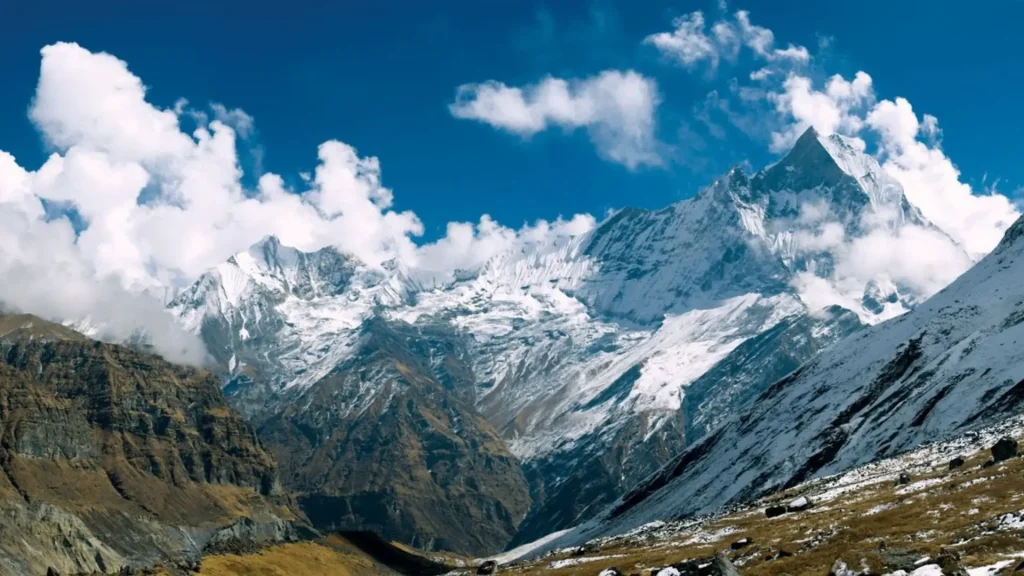
The Annapurna Circuit Trek is one of the most complete trekking experiences Nepal has to offer, moving from warm subtropical valleys to a windswept mountain pass above 5,400 meters in the space of about two weeks.
If you’re trying to work out whether this trek fits your fitness level, how many days to set aside, or which permits you actually need, this Annapurna Circuit guide walks through all of it in order. Wander Himalayan put this together as a practical reference for independent and guided trekkers alike, covering the route, the seasons, the costs, and the planning details that shape a successful Annapurna Circuit trek.
Quick Answer
The Annapurna Circuit Trek is a 12- to 18-day teahouse trek that loops around the Annapurna Massif in central Nepal, crossing Thorong La Pass at 5,416 meters. Most itineraries now cover roughly 100-160 km on foot, since road access has shortened the classic route, and trekkers typically spend $700-$1,800 per person on permits, guides, food, lodging, and transportation. Guide requirements for foreign trekkers have changed in recent years, so trekkers should confirm the latest requirements before departure. Moderate fitness combined with proper acclimatization is enough for many healthy adults to complete this Nepal Annapurna Circuit trek.
Key Takeaways
- Thorong La Pass (5,416 m) is the trek’s highest and hardest point.
- Build in at least two acclimatization days before the pass.
- Guide requirements for foreign trekkers have changed in recent years, so check the latest regulations before starting the Annapurna Circuit Trek.
- ACAP is required; verify current TIMS requirements.
- The full loop once ran 160-230 km; most routes now cover 100-160 km.
- Teahouses line the entire route, so no tents or camping gear are needed.
- Spring and autumn offer the clearest views and most stable weather.
- Total cost typically runs $700-$1,800 per person.
Table of Contents
What Is the Annapurna Circuit Trek?
The Annapurna Circuit Trek is a long-distance teahouse trek in Nepal’s Gandaki Province that circles the Annapurna Massif, following the Marsyangdi River valley up toward Manang, crossing Thorong La Pass, and descending along the Kali Gandaki River through Mustang back toward Pokhara. The full circuit passes beneath some of the highest peaks on earth, including Annapurna I (8,091 m), Annapurna II, III, and IV, Gangapurna, and Dhaulagiri, with Machhapuchhre’s distinctive fishtail summit visible for much of the lower route.
The entire trail sits inside the Annapurna Conservation Area, Nepal’s largest protected area, managed by the National Trust for Nature Conservation (NTNC). This is what separates the Annapurna Circuit in Nepal from a simple hike. It is as much a journey through changing ecosystems and cultures, including Gurung villages in the mid-hills, Manang’s high-altitude Tibetan-influenced settlements, and Thakali communities near Jomsom, as it is a mountain trek.
The Annapurna Circuit Route: Where It Goes
Most trekkers start driving or riding from Besisahar, in Lamjung district, and follow the Marsyangdi valley north before crossing Thorong La and dropping into the Kali Gandaki gorge on the Mustang side. Here’s how the classic route breaks down stop by stop.
| Destination | Approx. Altitude | What It’s Known For |
| Besisahar | 760 m | Common starting point; road access from Kathmandu and Pokhara |
| Dharapani / Chame | 1,900-2,710 m | Gateway to Manang district; Chame is the district headquarters |
| Pisang | 3,200 m | Split point for the low or high trekking route to Manang |
| Manang | 3,540 m | Main acclimatization stop; monasteries, side trips, mountain views |
| Yak Kharka | 4,050 m | High pastureland; last village-style stop before the pass approach |
| Thorong Phedi / High Camp | 4,450-4,925 m | Final overnight before the Thorong La crossing |
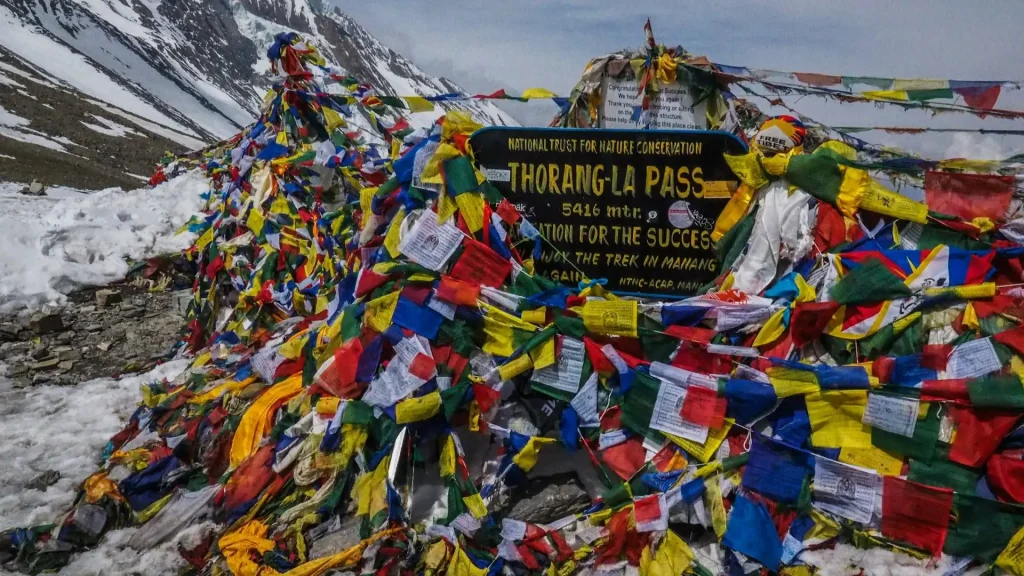
| Thorong La Pass | 5,416 m | The trek’s highest point, dividing Manang and Mustang districts |
| Muktinath | 3,760 m | Sacred pilgrimage site for Hindus and Buddhists |
| Jomsom | 2,720 m | Mustang’s hub; road and flight connections to Pokhara |
| Tatopani / Ghorepani | 1,190-2,860 m | Natural hot springs and, optionally, the Poon Hill sunrise viewpoint |
| Good to Know: Roads now reach further into the Annapurna region than they did a decade ago, particularly around Besisahar, Chame, and Jomsom. Many trekkers use a jeep for the lower sections and walk the higher, more scenic stretches, which is one reason itinerary length and total distance vary so much between operators. |
How Long Does It Take to Walk the Annapurna Circuit?
Most trekkers complete the Annapurna Circuit Trek in 12 to 18 days, including acclimatization stops, though the exact number depends on where you start walking and whether you add side trips. A full traditional circuit starting from Besisahar and finishing in Pokhara runs closer to 18-21 days on foot; a jeep-assisted itinerary that starts trekking from Chame or Koto can be done in 10-12 days.
| Itinerary Type | Typical Duration | Notes |
| Classic full circuit | 16-18 days | Walking from Besisahar to Pokhara, minimal vehicle use |
| Standard guided trek | 12-15 days | Jeep to Syange or Chame, walk the rest, fly, or drive out from Jomsom |
| Short circuit | 10-12 days | Drives further in, skips some lower-valley walking days |
| Extended with Tilicho Lake | +2-3 days | Side trip added before or after Manang |
Whichever version you choose, build in at least two acclimatization days, usually one in Manang and one near Thorong Phedi or High Camp, since these matter more for a safe crossing than shaving a day or two off the schedule.
Annapurna Circuit Trek Distance
The Annapurna Circuit Trek covers roughly 100 to 160 km on foot for most modern itineraries, though the historic full loop, before roads reached into Manang and Mustang, ran between 160 and 230 km depending on the start and end points.
The single toughest stretch is the approach to Thorong La. From Thorong Phedi to Muktinath is around 10 to 15 km, but it is covered at altitudes above 4,400 meters in thin air and cold, early-morning conditions, which makes it feel considerably longer than the number suggests.
How Difficult Is the Annapurna Circuit Trek?
The Annapurna Circuit Trek is rated moderate to challenging, and altitude is the main factor, not technical climbing skill. Trekking days typically run 5 to 7 hours, with the Thorong La crossing taking 7 to 8 hours from High Camp to Muktinath.
There is no rope work, ladders, or technical scrambling involved in a normal-season crossing. The trail is a well-established teahouse route the whole way, but the combination of daily elevation gain, cold temperatures near the pass, and thinner air above 4,000 meters makes it noticeably harder than a lowland multi-day hike.
One common mistake is treating fitness as the only variable that matters. In practice, pacing and acclimatization decide more outcomes on this trek than raw cardio fitness does. Trekkers who rush the ascent into Manang are far more likely to struggle with altitude than those who walk slower but steadier.
Best Time to Trek the Annapurna Circuit
Spring (March-May) and autumn (September-November) are the best seasons for the Annapurna Circuit Trek, offering the clearest skies, stable weather, and the safest conditions for crossing Thorong La.
| Season | Months | Conditions |
| Spring | March – May | Warming temperatures, rhododendron blooms in the lower valleys, and generally clear mountain views |
| Autumn | September – November | Peak season; the most stable weather and best visibility of the trekking year |
| Winter | December – February | Very cold at altitude; Thorong La can close after heavy snowfall, though lower sections stay accessible |
| Monsoon | June – August | Wet, humid, and prone to landslides on lower trails; Mustang’s rain-shadow side stays drier, but visibility suffers |
| Quick Tip: If autumn or spring dates are not an option, the Mustang side of the trek (Jomsom to Muktinath) sits in a rain shadow and stays comparatively dry even during monsoon, though the Thorong La crossing itself is riskier outside the main seasons. |
Permits and Requirements for the Annapurna Circuit Trek
Every foreign trekker on the Annapurna Circuit needs the ACAP permit and must be accompanied by a licensed trekking guide. TIMS remains a gray area. See the note below.
| Requirement | Cost (Foreign Nationals) | Cost (SAARC Nationals) | Issued By | Notes |
| ACAP (Annapurna Conservation Area Permit) | NPR 3,000 (~$23-$30) | NPR 1,000 | National Trust for Nature Conservation (NTNC) | Mandatory; checked at all checkpoints along the trail. Children under 10 are exempt. |
| TIMS Card (Trekkers’ Information Management System) | NPR 2,000 (~$15) if issued | NPR 1,000 | Nepal Tourism Board (NTB) | Not required or checked at Annapurna region trail checkpoints. |
| Licensed Trekking Guide | ~$25–$35 / day | – | Registered trekking agency | Recommended for safety, though independent trekkers with valid ACAP permits are permitted past checkpoints. |
Important: Guidance on TIMS for the Annapurna Circuit is inconsistent right now. The Nepal Tourism Board’s official site still lists it as required, but several trekking agencies operating on the ground report that only the ACAP is checked in practice and TIMS isn’t being issued for Annapurna routes. Confirm directly with NTB or a registered agency before departure, since this is the kind of rule that could be formally updated at any time.
How Much Does the Annapurna Circuit Trek Cost?
A typical Annapurna Circuit Trek costs between $700 and $1,800 per person, excluding international flights. Budget-guided treks with basic teahouse lodging run around $700-$1,000, while a standard guided trek with a full board, a private guide, and some porter support falls closer to $1,200-$1,800. Fully organized packages with extra comfort or private transport can run higher.
| Cost Item | Typical Range (USD) | Notes |
| ACAP permit | $23 | NPR 3,000, one-time fee |
| TIMS card | $15 | NPR 2,000 for foreign nationals |
| Licensed guide | $25-35 / day | Mandatory; often includes their food and lodging |
| Porter (optional) | $20-25 / day | Typically carries 15-20 kg |
| Teahouse lodging | $3-10 / night | Cheaper at lower altitude; often discounted if you eat dinner there |
| Meals | $5-15 / day | Prices rise with altitude due to portage costs |
| Kathmandu-Besisahar/Pokhara transport | $10-30 | Local bus is cheapest; private jeep costs more |
| Budget Tip: Meal and room prices climb steadily the higher you go, since everything is carried in by a porter or mule. Budgeting a bit more for food above Manang, rather than trying to cut costs there, avoids underfueling right when your body needs energy most. |
Accommodation in Annapurna Circuit Trek: Teahouse Trekking
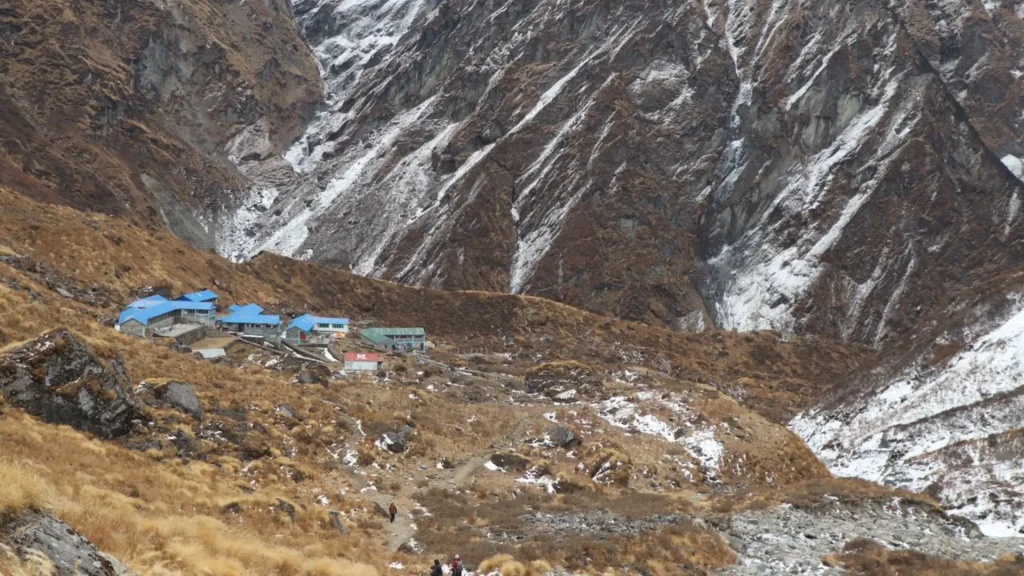
The Annapurna Circuit is a teahouse trek from start to finish, meaning you sleep in simple guesthouses rather than tents. Rooms are basic, usually twin beds, a shared or squat-style bathroom at lower altitudes, and thinner walls the higher you climb, but they are warm, dry, and a fair trade for the trail’s remoteness.
Many teahouses set room rates low or free if you eat your meals there, which is the standard arrangement most trekkers follow. Hot showers, wifi, and device charging are usually available for a small extra fee, especially above Manang.
Food on the Annapurna Circuit
Teahouse menus along the Annapurna Circuit lean heavily on dal bhat, a set meal of lentil soup, rice, vegetable curry, and often a small portion of meat or pickle, along with momos, noodle soups, and Tibetan bread.
Thakali cuisine, native to the Mustang side of the trek, is known for its distinctively spiced dal bhat and is worth trying around Jomsom and Marpha. Garlic soup is a trail favorite that many trekkers swear helps with altitude adjustment. That is more folk wisdom passed between hikers than a proven medical remedy, though it is a warming, tasty option regardless.
Culture Along the Annapurna Circuit Trail
The Annapurna Circuit crosses more cultural ground than most treks in Nepal. The lower and mid-hill villages are largely Gurung communities, while Manang Valley carries a strong Tibetan Buddhist influence, visible in its monasteries, prayer wheels, and mani walls. Crossing into Mustang on the far side of Thorong La brings you into Thakali territory, centered around Jomsom and Marpha, with its own distinct cuisine, architecture, and dialect.
Muktinath itself is one of Nepal’s most significant pilgrimage sites, sacred to both Hindus and Buddhists, and draws its own stream of religious travelers separate from the trekking crowd.
| Local Insight When passing mani walls, chortens, or prayer wheels along the trail, walk to the left and pass them clockwise. This follows local Tibetan Buddhist custom and is easy to fold into your normal walking pace. |
Highlights of the Annapurna Circuit Trek
Thorong La Pass is the trek’s signature moment, the highest point most trekkers will ever stand at on foot, with views stretching across the Annapurna and Dhaulagiri ranges on a clear morning. Muktinath Temple, just below the pass on the Mustang side, adds a cultural and spiritual layer few other high-altitude treks in Nepal offer in one route.
For trekkers with a couple of extra days, Tilicho Lake, often cited as one of the highest lakes in the world at its elevation, is a popular side trip from Manang, though it requires additional time and, on some routes, extra permit considerations.
Further down, the Kali Gandaki Gorge, running between Annapurna and Dhaulagiri, is regularly described as one of the deepest river gorges on earth when measured against the peaks flanking it, though exact rankings vary by how depth is defined.
Preparing for the Trek
A few months of regular cardio, including hiking, running, or stair climbing, combined with a handful of long walks carrying a loaded daypack, is enough preparation for most reasonably fit adults. Building actual hiking days into your training, rather than relying only on a gym, helps your legs and feet adjust to sustained walking on uneven ground, which is a different demand than most indoor training replicates.
What to Pack for Annapurna Circuit Trek
- Layered clothing: moisture-wicking base layers, an insulating mid-layer, and a windproof/waterproof outer shell
- A sleeping bag rated to at least -10°C to -15°C for nights at Thorong Phedi and High Camp
- Broken-in, sturdy trekking boots with ankle support
- A water bottle or reservoir plus a reliable purification method (filter, tablets, or UV steripen)
- Sun protection: high-SPF sunscreen, sunglasses rated for glacier/snow glare, and a wide-brim hat
- A basic first-aid kit, including any personal medication and, ideally, acetazolamide (Diamox) discussed with a doctor beforehand
- A headlamp for the early-morning Thorong La start
Safety and Altitude Sickness
Altitude sickness is the main safety concern on the Annapurna Circuit Trek, since the route climbs from around 760 meters at Besisahar to 5,416 meters at Thorong La.
Acute Mountain Sickness (AMS) can affect trekkers regardless of fitness level, and the standard guidance is to ascend gradually, rest on scheduled acclimatization days, stay hydrated, and descend immediately if symptoms like persistent headache, nausea, or dizziness worsen rather than improve with rest.
| Safety Note: No guide, itinerary, or piece of gear can guarantee safety at altitude. Take AMS symptoms seriously, communicate them to your guide early, and be willing to descend or delay the pass crossing if needed. Trekking insurance that covers high-altitude helicopter evacuation is strongly recommended before you go. |
Common Mistakes to Avoid for the Annapurna Circuit Trek
- Skipping acclimatization days to save time. This is the single biggest contributor to AMS problems on this route.
- Underestimating the cold at Thorong Phedi and High Camp, where night temperatures regularly drop well below freezing even in the main trekking seasons.
- Booking too tight a schedule, leaving no buffer day for bad weather before or after the Thorong La crossing.
- Ignoring your guide’s pacing advice, especially in the days approaching Manang and the pass itself.
- Traveling without evacuation-inclusive insurance, which matters far more here than on a lowland trip.
Alternatives to the Annapurna Circuit Trek
If the full Annapurna Circuit doesn’t fit your timeline or fitness goals, several other routes in the region and beyond offer a similar flavor at a different scale.
| Trek | Typical Duration | Max Altitude | Best For |
| Annapurna Circuit Trek | 12-18 days | 5,416 m (Thorong La) | A full high-pass crossing with the widest cultural range |
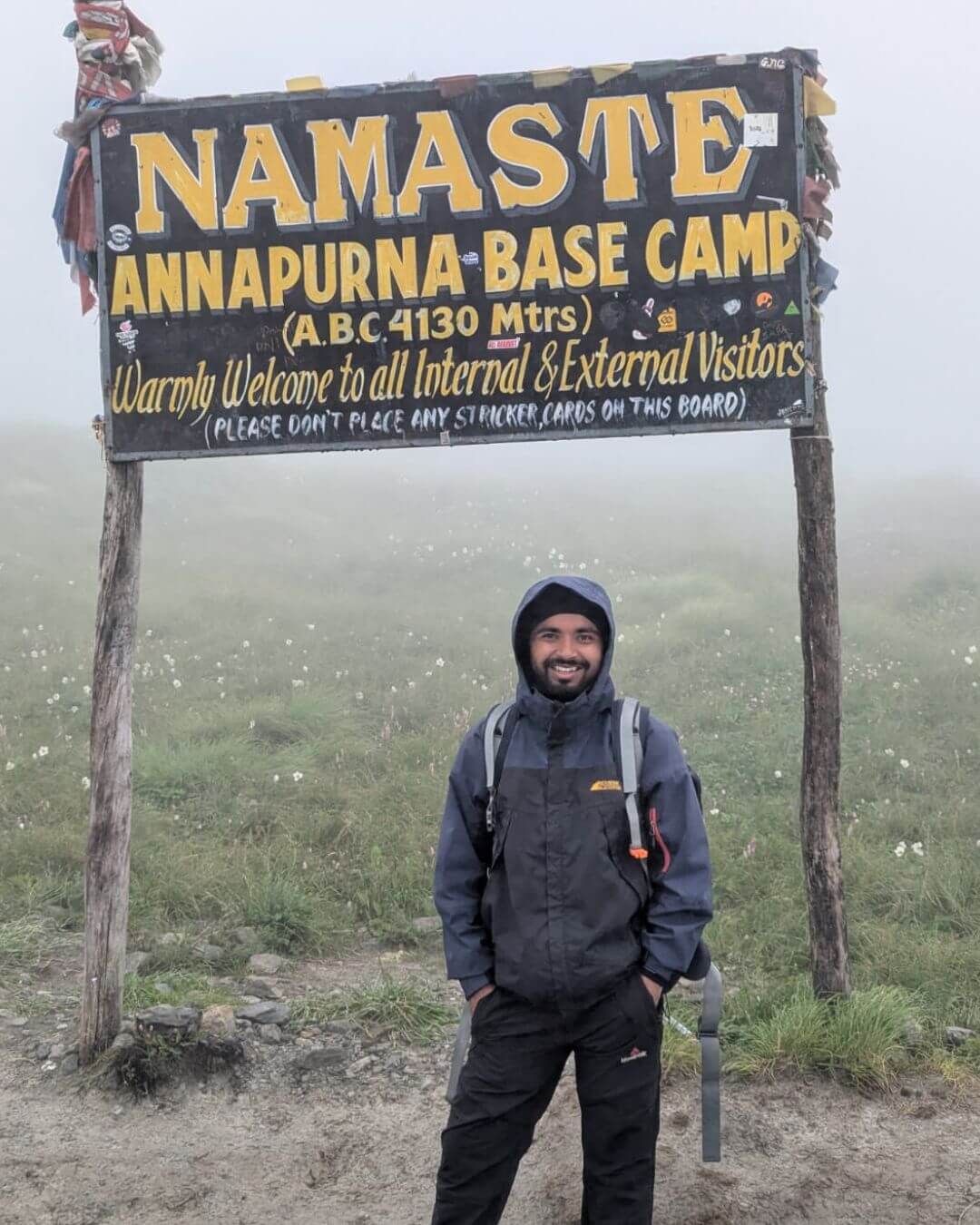
| Annapurna Base Camp Trek | 7-12 days | 4,130 m | A shorter, no-pass introduction to high-altitude trekking |
| Ghorepani Poon Hill Trek | 4-6 days | 3,210 m | Short timelines, sunrise mountain views, minimal altitude risk |
| Manaslu Circuit Trek | 14-17 days | 5,106 m (Larke La) | A quieter, more remote alternative to the Annapurna Circuit |
Want to explore more trekking options in Nepal? Browse Wander Himalayan’s trekking collection to compare different trekking routes and find an adventure that matches your time, experience, and preferred level of challenge.
Responsible Tourism on the Annapurna Circuit
The Annapurna Conservation Area supports both a fragile high-altitude environment and communities that depend on trekking income, so a few habits go a long way.
- Carry a reusable bottle and a filter or purification method instead of buying bottled water, which creates plastic waste in areas with no real recycling infrastructure
- Stick to marked trails and follow ACAP guidelines around wildlife and vegetation, particularly near Manang and the high pastures
- Choose local teahouses and guides over pre-packaged foreign-operated services where possible, since trekking income is a major livelihood source along this route
- Ask before photographing people, monasteries, or religious ceremonies, and dress modestly around Muktinath and other sacred sites
- Pack out any non-biodegradable waste rather than assuming it will be managed locally
Final Thoughts
The Annapurna Circuit Trek rewards trekkers who plan around altitude rather than around a tight calendar. Build in the acclimatization days, budget realistically for permits and guide costs, and pick a spring or autumn window if your schedule allows it.
Beyond the logistics, this route offers a rare range of scenery and culture in one trek, from Gurung foothill villages to Manang’s Tibetan Buddhist heritage to the sacred grounds of Muktinath.
Wander Himalayan covers the wider Annapurna region, Pokhara, and other Nepal trekking routes in more depth if you are still comparing options or piecing together a longer Nepal itinerary.
Frequently Asked Questions
1. How long does it take to walk the Annapurna Circuit?
Walking the Annapurna Circuit typically takes 12 to 18 days, depending on how much of the route you cover on foot versus by vehicle and whether you add side trips like Tilicho Lake. A jeep-assisted short version can be done in as little as 10 days, while a full walking circuit from Besisahar runs closer to 18 to 21 days.
2. How difficult is the Annapurna Circuit Trek?
The Annapurna Circuit Trek is moderate to challenging, with altitude, not technical terrain, as the main difficulty. Daily walks run 5 to 7 hours on a well-established trail, with the Thorong La crossing being the hardest single day at 7 to 8 hours in cold, thin air above 4,900 meters.
3. Can beginners do the Annapurna Circuit Trek?
Beginners with decent general fitness and a sensible acclimatization plan can complete the Annapurna Circuit Trek. No technical climbing skills are needed, though a few months of hiking-based training beforehand makes the altitude and daily distances much more manageable.
4. Is Annapurna Base Camp a beginner trek?
Annapurna Base Camp is generally considered more beginner-friendly than the full Circuit, since it is shorter, does not cross a high mountain pass, and tops out around 4,130 meters compared to Thorong La’s 5,416 meters.
5. Do I need a guide for the Annapurna Circuit Trek?
While the Nepal Tourism Board introduced national guidelines on April 1, 2023, requiring guides for foreign trekkers, local checkpoint enforcement in the Annapurna Conservation Area allows independent, solo trekkers with a valid ACAP permit. However, hiring a licensed guide remains highly recommended for navigation, emergency assistance, and altitude management.
6. What permits do I need for the Annapurna Circuit?
You only need an ACAP (Annapurna Conservation Area Permit), which can be obtained in Kathmandu or Pokhara prior to starting the trek. The TIMS card is not enforced at trail checkpoints in the Annapurna region.
7. What is the best time to trek the Annapurna Circuit?
The best time to trek the Annapurna Circuit is during spring (March-May) or autumn (September-November), when weather is most stable and mountain visibility is at its clearest for the Thorong La crossing.
8. How much does the Annapurna Circuit Trek cost?
The Annapurna Circuit Trek typically costs $700 to $1,800 per person, covering permits, a guide, teahouse lodging, and meals, though costs vary with season, comfort level, and whether you add a porter.
9. What is the highest point of the Annapurna Circuit?
The highest point of the Annapurna Circuit is Thorong La Pass, at 5,416 meters (17,769 feet), located between Manang and Mustang districts.
10. Is Tilicho Lake part of the standard Annapurna Circuit route?
Tilicho Lake is not part of the standard Annapurna Circuit route. It is a popular optional side trip from Manang that adds two to three days and some extra elevation gain before rejoining the main trail.
11. What is the difference between the Annapurna Circuit and Annapurna Base Camp treks?
The Annapurna Circuit is longer, crosses the high Thorong La Pass at 5,416 meters, and loops around the entire Annapurna Massif, while Annapurna Base Camp is shorter, tops out at 4,130 meters, and heads directly into the Annapurna Sanctuary without crossing a pass.
12. Do I need travel insurance for the Annapurna Circuit Trek?
Yes, travel insurance that covers high-altitude trekking and helicopter evacuation is strongly recommended for the Annapurna Circuit Trek, given the altitude exposure at Thorong La and the remoteness of parts of the route.
Sources
- Nepal Tourism Board: Park Entry Fees (ACAP) https://ntb.gov.np/plan-your-trip/before-you-come/park-entry-fees
- Nepal Tourism Board: TIMS Card Requirements https://ntb.gov.np/en/plan-your-trip/before-you-come/tims-card