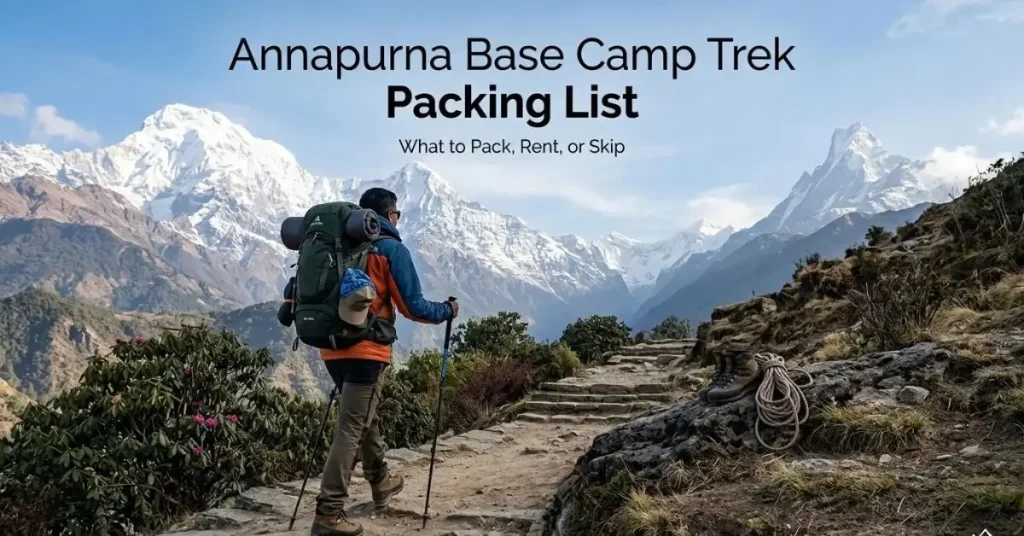
This Annapurna Base Camp trek packing list is built around what the route actually demands.
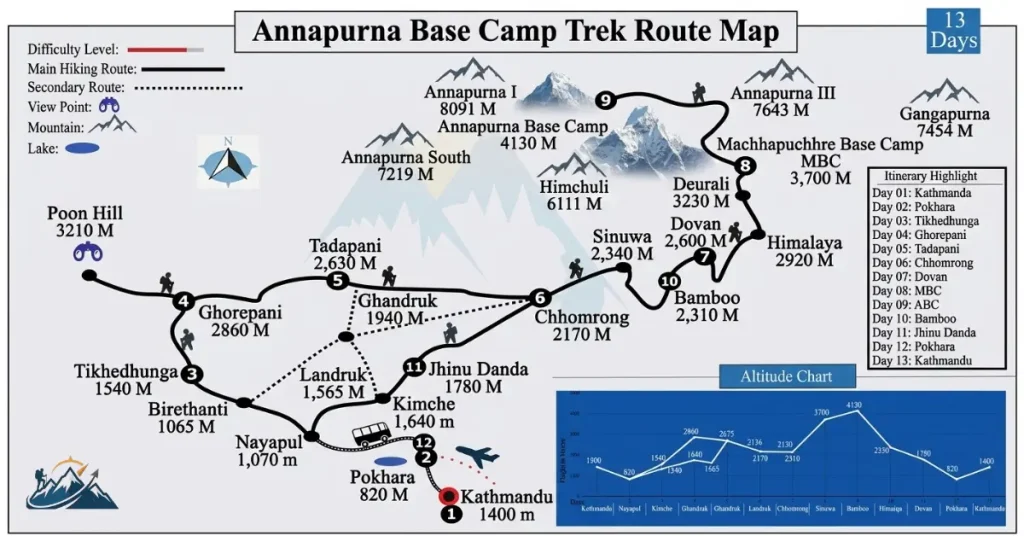
You start in warm, humid river valleys near Pokhara and finish in a glacial basin at 4,130 m, where nights drop well below freezing even in the best trekking months. Below you will find what to pack, what to rent in Pokhara, what to buy in Nepal, what to leave at home, and how the list changes by season. Wander Himalayan is an independent Nepal travel information platform, so nothing here is a sales pitch.
| Quick Answer For the Annapurna Base Camp trek, pack a layering system (merino base layers, fleece, and waterproof shell), a down jacket rated to -10°C, broken-in waterproof boots, a four-season sleeping bag, adjustable poles, a headlamp, a power bank, water purification tablets, and permits, insurance, and Nepali rupee cash. Use a 25 to 35L daypack and a 60 to 80L duffel if a porter carries your gear. Rent bulky insulation in Pokhara. |
The ABC Trek Packing List at a Glance
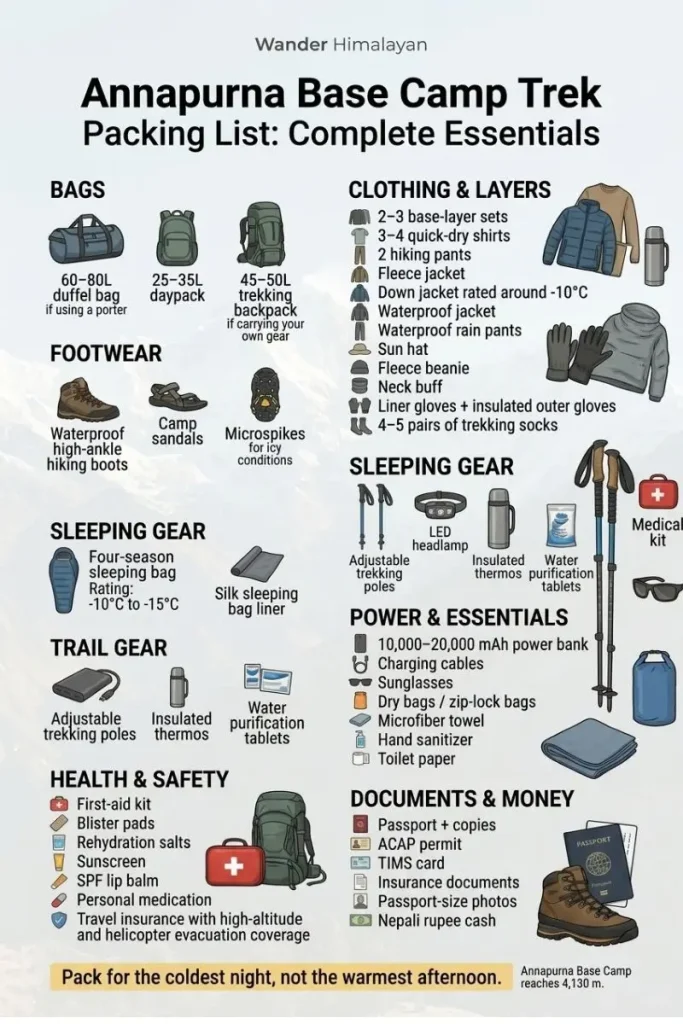
Most first-time trekkers can pack for ABC with a 60 to 80L duffel and a 25 to 35L daypack. The table below is the full list. The sections after it explain how to choose each item and where to get it.
| Category | What to pack | Quantity or spec |
|---|---|---|
| Bags | Duffel (if using a porter) and daypack | 60 to 80L duffel, 25 to 35L daypack |
| Base layers | Merino wool or synthetic tops and bottoms | 2 to 3 sets |
| Trekking clothes | Quick-dry shirts, breathable hiking pants | 3 to 4 shirts, 2 pants |
| Warm layers | Fleece jacket, high-loft down jacket | 1 fleece, 1 down jacket rated to -10°C |
| Outer shell | Gore-Tex (or similar) jacket, waterproof rain pants | 1 each |
| Head, hands, neck | Sun hat, fleece beanie, neck buff, liner gloves, insulated outer gloves | 1 each, two glove layers |
| Feet | High-ankle waterproof boots, camp sandals, merino wool trekking socks | 1 pair of each, 4 to 5 pairs of socks |
| Sleep | Four-season sleeping bag, silk liner | Rated -10°C to -15°C |
| Trail gear | Adjustable trekking poles, LED headlamp, insulated thermos, purification tablets | 1 each, spare batteries |
| Power | Power bank, charging cables | 10,000 to 20,000 mAh |
| Health | Blister moleskin pads, sunscreen, first-aid kit, personal medication | High-SPF sunscreen, SPF lip balm |
| Documents and money | Passport, permits, insurance, Nepali rupee cash | Several passport photos, copies of everything |
If you’re planning a trip beyond the Annapurna region, our Nepal travel guide covers major destinations, trekking routes, costs, permits and practical travel information.
Bags: Backpack, Duffel, and Daypack
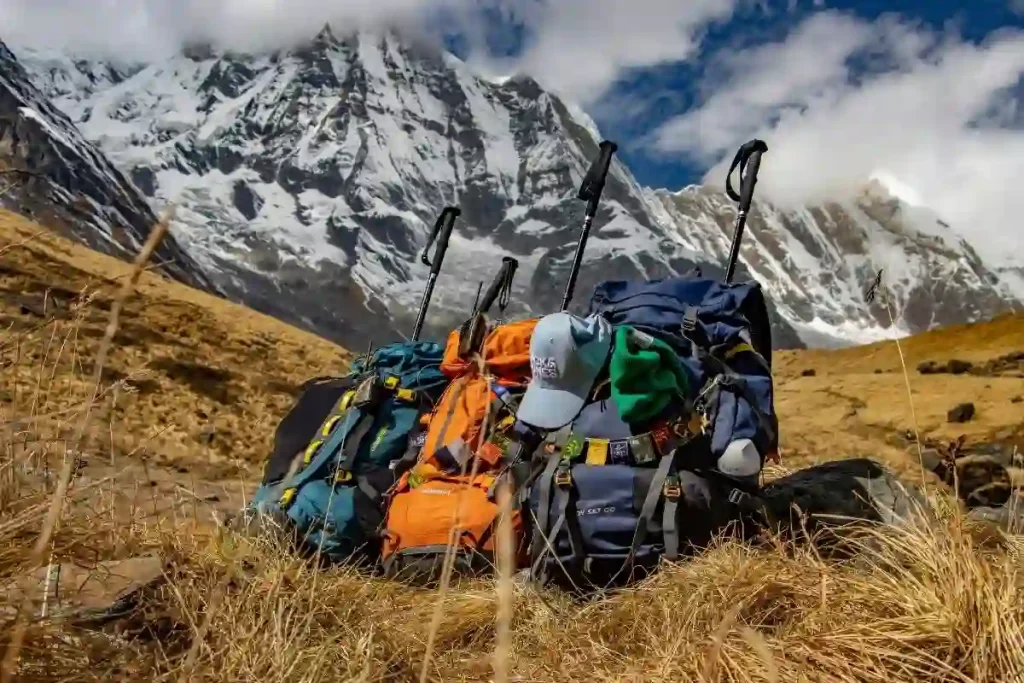
Your bag setup depends on one decision: will a porter carry your main bag? If yes, use a 60 to 80L duffel for the porter and a 25 to 35L daypack for yourself. If not, a 45 to 50L trekking backpack is enough for a teahouse trek, because you do not need a tent, stove, or food supplies.
A common rule of thumb is to keep the duffel around 10 to 12 kg. Lighter is better, since the route is full of long stone staircases, including the steep climb to Ulleri.
Your daypack is what you carry every day, so keep these in it:
- Waterproof shell and a warm layer
- 1 to 2 liters of water and a few snacks
- Sunscreen, sunglasses, and lip balm
- Headlamp, power bank, and first-aid basics
- Passport copy, permits, and some cash
Line the inside of both bags with a plastic liner or use dry bags. Rain finds every gap, and a wet down jacket is useless.
Clothing: The Layering System
Layering means wearing several thin pieces you can add or remove as the temperature changes. It works better than one bulky jacket because you can adjust in minutes as you climb through very different climate zones.
1. Base layers for cold weather Annapurna trekking
Pack 2 to 3 lightweight thermal tops and bottoms in merino wool or a synthetic fabric. Merino stays warmer when damp and resists odour over several days of wear. Synthetic dries faster and costs less. Avoid cotton, because it holds sweat and chills you at altitude.
Wear one set to walk and keep one set clean for sleeping. That habit alone makes cold nights easier.
2. Trekking shirts and pants
Bring 3 to 4 quick-dry shirts (short or long sleeve) and 2 pairs of breathable hiking pants. Lower sections are hot and humid, so zip-off pants or light trousers work well. Add moisture-wicking underwear, and pack a spare pair for each two days of trekking.
3. Fleece and down jacket
A fleece jacket or pullover is your everyday mid-layer for cool mornings and evening teahouse stops. On top of that, bring a high-loft down jacket rated to about -10°C. You will wear it every evening from around Chhomrong upward and constantly at MBC and ABC.
4. Waterproof jacket and rain pants
Choose a Gore-Tex or similar waterproof, windproof shell with a hood that fits over a hat. Pit zips help you vent heat on uphill sections. Pair it with waterproof rain pants, which also block wind on the exposed final stretch. In a monsoon, the shell is the most important item you own.
5. Hats, gloves, buff, and socks
- Sun hat for the lower valleys, where UV is strong
- Fleece beanie for mornings and nights
- Neck buff for wind, dust, and cold
- Lightweight liner gloves for cool mornings, plus insulated outer gloves for the top
- 4 to 5 pairs of merino wool trekking socks, rotated and aired daily
How Cold Does the ABC Trek Get?
Nights at ABC fall to roughly -5°C to -10°C in spring and autumn and -10°C to -20°C in winter. Daytime temperatures at the top run from about 0°C to 15°C depending on season and sun. Figures vary between sources and between years, so treat them as a planning range rather than a forecast.
| Season | Typical night temperature at ABC | What it feels like |
|---|---|---|
| Spring (March to May) | About -5°C to -10°C | Clear mornings, cold nights, some afternoon clouds |
| Monsoon (June to August) | Milder, but wet | Heavy rain, muddy trails, leeches on lower sections |
| Autumn (September to November) | About -5°C to -10°C | Stable and dry, the clearest mountain views |
| Winter (December to February) | About -10°C to -20°C | Snow and ice above Deurali, very cold nights |
| Good to Know: Mountain weather changes fast. A clear morning can turn to cloud and wind by afternoon, and the exposed stretch between MBC and ABC feels colder than the numbers suggest. Keep your shell and a warm layer in your daypack every day. |
Footwear: Boots, Sandals, and Traction
1. Hiking boots for Annapurna Base Camp
Wear waterproof, high-ankle hiking boots with good grip and ankle support, and break them in for several weeks before you fly. The trail mixes stone steps, muddy forest, loose rock, and, at times, snow. Trail runners can work in dry autumn weather for experienced hikers, but boots protect your ankles and keep feet drier on wet days.
If you are thinking about where to buy hiking boots for ABC in Nepal, then Thamel in Kathmandu and Lakeside in Pokhara both have plenty of gear shops, and you can visit plenty of shops and compare options to get what best fits you.
2. Camp sandals
Pack lightweight sandals, flip-flops, or sneakers for teahouses. Your feet need to dry and rest after 5 to 7 hours of walking each day.
3. Microspikes and gaiters
Microspikes (ice cleats) matter in winter and early spring, when snow and ice cover the upper trail. Gaiters help in snow and mud. In spring and autumn, ask in Pokhara about recent snowfall before you decide, and rent them rather than buy if conditions look icy.
Do You Need a Sleeping Bag for Annapurna Base Camp?
Yes, for most trekkers. Teahouses provide a mattress and blankets, but the lodges at MBC and ABC get very cold at night, and blankets are not always warm enough. A sleeping bag also gives you a clean, predictable layer between you and shared bedding.
What type of sleeping bag suits ABC temperatures? Choose a four-season bag rated to about -10°C to -15°C. In winter, choose a warmer one. A few details make the difference:
- Check the rating type. Brands quote comfort, limit, or extreme ratings. The comfort rating is the honest one for most sleepers.
- Add a silk liner. It adds a little warmth, keeps the bag cleaner, and makes a rented bag more pleasant.
- Test a rented bag. Check the zip, the loft, and the smell before you leave the shop.
Renting makes sense for one trip. In Pokhara, a sleeping bag rents for about NPR 200 to 330 per day (TESA-member shop rates, verified April 2026), while buying costs NPR 8,000 to 25,000.
| Quick Tip: Cold drains phone and camera batteries fast. Sleep with your electronics and power bank inside the sleeping bag. |
Trekking Poles: Do You Need Them?
You do not need poles to complete the trek, but most trekkers should bring adjustable ones. Descents like the drop down to Chhomrong are hard on the knees, and poles take load off them. They also help on slippery stone steps and snowy patches.
Where to rent trekking poles in Pokhara? Shops along Lakeside rent them, at roughly NPR 150 per day at TESA-member rates. Check that the locking mechanism holds before you leave.
Lighting, Power, and Small Essentials
- LED headlamp with spare batteries. Early starts and power cuts make this essential.
- Power bank, 10,000 to 20,000 mAh. Many teahouses charge a fee per device, so a power bank saves money and stress.
- Insulated thermos or water bottle. Refill it at your teahouse rather than buying plastic bottles.
- Microfiber towel, wet wipes, hand sanitizer, and toilet paper. Facilities are basic at higher altitudes.
- Sunglasses with UV protection. Glare from snow and thin air is intense.
- Zip-lock bags and a dry bag for documents and electronics.
Health, First Aid, and Altitude Preparation
Pack a compact first-aid kit and take altitude seriously. The ABC route is popular and well supported by teahouses, but it still reaches 4,130 m, and altitude sickness can affect fit, experienced trekkers too.
Your kit should include:
- Personal medication and painkillers
- Blister moleskin pads and plasters
- Rehydration salts
- Antiseptic wipes and tape
- High-SPF sunscreen and SPF lip balm
- Water purification tablets
Acetazolamide (Diamox) needs a doctor’s input. It can speed acclimatization, but it is a prescription medicine in many countries, and it does not replace a slow ascent. Talk to a doctor or travel clinic before you fly about whether to carry it. The CDC Yellow Book advises that above 3,000 m you should raise your sleeping altitude by no more than 500 m per day, with an extra rest day for each additional 1,000 m gained.
| Safety Note: Headache, nausea, dizziness, and unusual fatigue can signal acute mountain sickness. Do not climb higher with worsening symptoms, and descend if they do not improve. No packing list can guarantee safety, so build in flexibility and listen to your guide and your body. |
| Travel insurance is part of your kit. Make sure your policy explicitly covers high-altitude trekking and helicopter evacuation, and carry the policy number and emergency contact on paper. |
Documents, Permits, and Cash for Annapurna Base Camp Trek
For your Annapurna Base Camp Trek Packing List Keep permits and paperwork in a zip-lock bag in your daypack. Here is what to carry:
- Passport with a valid Nepal visa, plus photocopies
- A few passport-size photos. Permit offices typically ask for two to four.
- ACAP permit. It costs NPR 3,000 for foreign nationals and NPR 1,000 for SAARC nationals, and children under 10 do not need one. Online payment adds a 2.9% gateway charge, and permits issued at check posts cost double, so get yours in Pokhara or Kathmandu, or online.
- TIMS card. The Nepal Tourism Board lists the fee as NPR 2,000 for non-SAARC applicants. Some agencies report that TIMS is checked less consistently on Annapurna routes, so confirm the current practice before you go.
- Insurance documents with helicopter evacuation cover
- Nepali rupee cash. There are no ATMs on the trail, so withdraw in Pokhara and carry small notes.
| Before You Go: Rules on licensed guides and TIMS have changed since 2023, and agencies describe enforcement differently. Check the current requirements with the Nepal Tourism Board or a registered agency before you book. For a full permit and budget breakdown, read our Annapurna Base Camp trek cost guide. |
What to Rent, Buy, or Bring From Home
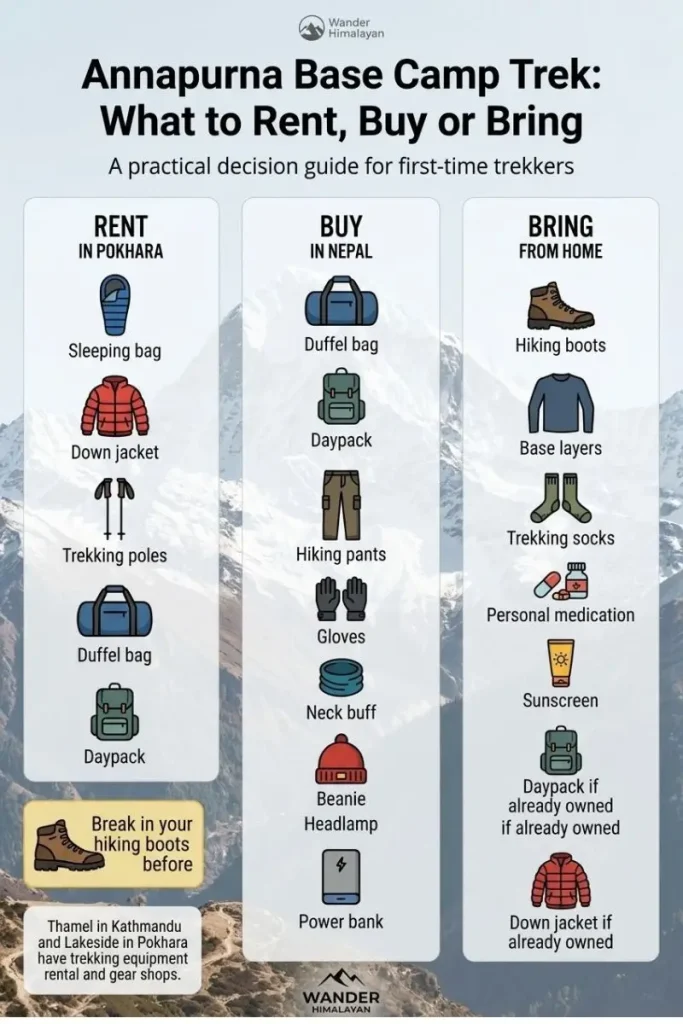
A common mistake is buying an entire kit for a trek you may do once. A practical split looks like this:
| Item | Rent in Pokhara | Buy in Nepal | Bring from home |
|---|---|---|---|
| Sleeping bag | Yes | Only if you will reuse it | Yes, if you already own one |
| Down jacket | Yes | Optional | Yes, if you own one |
| Trekking poles | Yes | Optional | Optional |
| Duffel bag | Yes | Yes | Optional |
| Daypack | Yes | Yes | Yes |
| Hiking boots | No | Only with time to break in | Best option |
| Base layers and socks | No | Basic ones only | Best option |
| Fleece, hiking pants | Rarely | Yes, affordable | Optional |
| Gloves, buff, beanie | No | Yes | Optional |
| Headlamp, power bank | Headlamp only | Yes | Yes |
| Medication, sunscreen | No | Basic items only | Best option |
Rental rates vary by shop and quality. A common range is NPR 100 to 330 per day per item, and prices are often negotiable. Buy or rent in Pokhara rather than on the trail, since trail prices are higher.
And you can rent trekking equipment in Nepal, as rental shops in Thamel (Kathmandu) and Lakeside (Pokhara) rent sleeping bags, down jackets, poles, duffels, and daypacks. For more on the town itself, see our Pokhara travel guide.
What You Do Not Need to Pack
Overpacking is the fastest way to make the trek harder. Leave these at home:
- Camping gear. ABC is a teahouse trek, so a tent, stove and food supplies are unnecessary.
- Cotton clothing and jeans. They stay wet and cold.
- Extra shirts and pants. Wash and re-wear instead. Three shirts are enough.
- Heavy camera kits. A phone and one light lens go a long way.
- Bottled water. Purify or refill instead.
- Crampons. Microspikes are enough for the standard route in winter.
- Valuables and jewelry. They add worry, not comfort.
How to Adjust Your Annapurna Base Camp Trek Packing List by Season
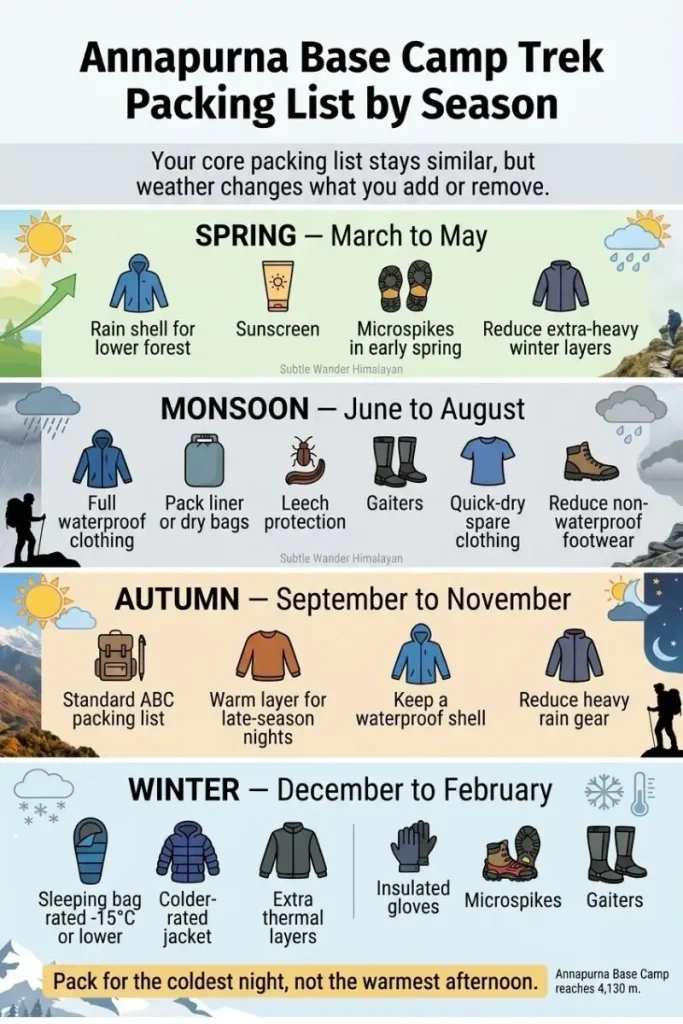
The base list works for spring and autumn. The table below shows what to add or swap.
| Season | Add | Skip or reduce |
|---|---|---|
| Spring (March to May) | Rain shell for lower forest, sunscreen, microspikes in early spring | Extra-heavy winter layers |
| Monsoon (June to August) | Full waterproofs, pack liner or dry bags, leech protection, gaiters, quick-dry spares | Sun-only clothing, non-waterproof boots |
| Autumn (September to November) | Standard list, plus a warm layer for late-season nights | Heavy rain gear (keep the shell) |
| Winter (December to February) | Warmer sleeping bag (-15°C or lower), colder-rated down jacket, extra thermals, insulated gloves, microspikes, gaiters | Light summer layers |
Final Thoughts
A good Annapurna Base Camp trek packing list is short, layered, and tuned to the coldest night, not the warmest afternoon. Bring boots you trust, rent the bulky insulation in Pokhara, carry your permits, insurance, and cash, and leave the extras behind. That is enough for the walk from the Modi Khola Valley up to the Annapurna Sanctuary.
Frequently Asked Questions
1. What essential gear should I pack for Annapurna Base Camp?
The essential gear for Annapurna Base Camp is a layering system, a -10°C down jacket, waterproof boots, a four-season sleeping bag, trekking poles, a headlamp, and a power bank. Add water purification tablets, blister care, sunscreen, permits, insurance, and cash. Everything else is optional.
2. What does the travel package for the Annapurna Base Camp trek include?
An ABC trek package from a licensed operator typically covers permits, a guide, teahouse lodging and often meals, while personal gear, insurance, tips, showers and charging are usually extra. Some operators lend a duffel or sleeping bag, but inclusions vary, so ask for the list in writing. Wander Himalayan does not sell or operate trek packages.
3. Do I need a sleeping bag for Annapurna Base Camp?
A sleeping bag is strongly recommended for Annapurna Base Camp. Teahouses supply blankets, but nights at MBC and ABC are cold enough that blankets are often not enough. If you do not own one, rent a bag in Pokhara.
4. What type of sleeping bag is suitable for ABC temperatures?
A four-season sleeping bag rated to -10°C to -15°C suits ABC temperatures in spring and autumn. In winter, choose a warmer bag. Add a silk liner for extra warmth and cleanliness.
5. Do I need trekking poles for Annapurna Base Camp?
Trekking poles are not mandatory for Annapurna Base Camp, but they are highly recommended. They reduce knee strain on long descents and add stability on stone steps, mud, and snow. You can rent them in Pokhara for roughly NPR 150 per day.
6. Can I rent trekking equipment in Nepal?
Trekking equipment can be rented in Nepal, mainly in Kathmandu’s Thamel and Pokhara’s Lakeside. Shops rent sleeping bags, down jackets, poles, duffels, and daypacks. Expect roughly NPR 100 to 330 per day per item, and check the condition before you pay.
7. Where can I buy hiking boots for Annapurna Base Camp in Nepal?
Hiking boots for Annapurna Base Camp can be bought in Thamel and Lakeside, but branded boots often cost more than at home, and quality varies. The safer choice is to bring boots you have already broken in. If you buy locally, walk in them before the trek starts.
8. What waterproof jacket is best for Annapurna Base Camp?
The best waterproof jacket for Annapurna Base Camp is a Gore-Tex or similar breathable shell with a hood, taped seams, and pit zips. It should fit over a fleece or down layer. Pair it with waterproof rain pants.
9. What base layers are recommended for cold-weather Annapurna trekking?
Merino wool or synthetic thermal tops and bottoms are recommended for cold-weather Annapurna trekking. Pack 2 to 3 sets and avoid cotton. Wear one set to walk and keep one dry for sleeping.
10. How much cash should I carry on the Annapurna Base Camp trek?
Cash on the Annapurna Base Camp trek should cover meals, lodging, charging, hot showers, and tips, because there are no ATMs on the trail. Withdraw Nepali rupees in Pokhara and carry small notes. For a cost breakdown, see our ABC trek cost guide.
Sources
- NTNC ePermit (ACAP fees, exemptions, payment rules, Minimum Impact Code): https://epermit.ntnc.org.np/
- Nepal Tourism Board, TIMS Card (TIMS fee): https://ntb.gov.np/plan-your-trip/before-you-come/tims-card
Sandeep Poudel is the founder of Wander Himalayan and a lifelong traveler with a deep interest in Nepal’s mountains, culture, landscapes, and local communities. His interest in exploring Nepal began early in life and has grown into a passion for discovering places beyond the usual tourist routes and understanding what makes each destination unique.
From detailed trekking guides and packing advice to destination guides, travel costs, transportation, and local insights, Sandeep focuses on information that travelers can actually use when planning a trip.