
Planning the Everest Base Camp Trek can be confusing, especially when different sources provide conflicting advice and outdated information.
That confusion is exactly what this complete guide solves, giving you clear, practical, and reliable information to plan with confidence. At Wander Himalayan, we’ve built this page as a single, accurate reference for the route, the day-by-day itinerary, real 2026 costs, permits, and the planning details that actually change your trip outcome, not just page views.
Table of Contents
Quick Answer
The Everest Base Camp Trek, Nepal is a 12–14 day round-trip hike in Nepal’s Khumbu region, starting with a flight to Lukla and ending at Everest Base Camp (5,364 m), often combined with a sunrise climb to Kala Patthar (5,545 m) for the best Everest views. It covers roughly a 130 km round trip, needs no technical climbing skill, but does demand solid fitness and proper acclimatization. A guided package typically costs USD 1,300–2,200, including permits, teahouse lodging, meals, and a licensed guide.
Everest Base Camp Trek at a Glance
- Duration: 12–14 days, including two acclimatization days.
- Distance: Around 130 km (81 miles) round trip from Lukla to Everest Base Camp.
- Maximum Altitude: 5,364 m (17,598 ft) at Everest Base Camp and 5,545 m (18,192 ft) at Kala Patthar.
- Difficulty: Moderate to challenging due to high altitude rather than technical terrain.
- Best Time to Go: Spring (March–May) and Autumn (late September–November) for the best weather and mountain views.
- Average Cost: USD 1,300–2,200 for a guided trek, excluding personal expenses.
- Permits Required: Sagarmatha National Park Entry Permit and Khumbu Pasang Lhamu Rural Municipality Permit.
- Guide Requirement: A licensed guide is recommended and generally expected for foreign trekkers.
- Who It’s For: Suitable for beginners with good fitness and adequate preparation, no climbing experience required.
What Is the Everest Base Camp Trek?
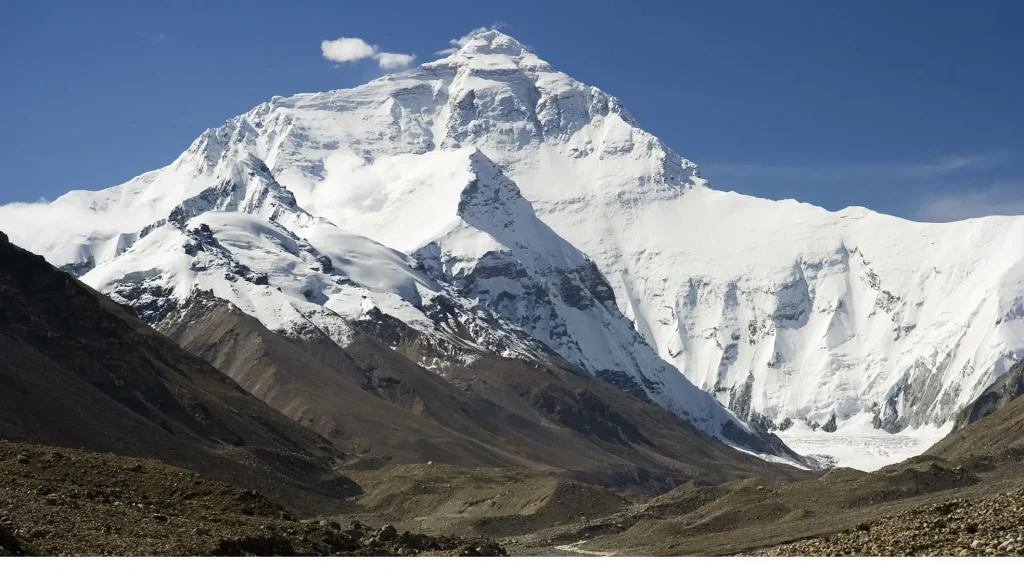
The Everest Base Camp Trek is a 130 km round-trip hike through Nepal’s Khumbu region, starting at Lukla (2,860 m) and ending at Everest Base Camp (5,364 m), covering the roughly 65 km one-way distance over 8–9 walking days plus acclimatization stops. The path follows old Sherpa trade trails through Sagarmatha National Park, a UNESCO World Heritage Site, on maintained footpaths and suspension bridges, all on foot, with no vehicles and no technical climbing.
The Everest Base Camp Trek is a trek, not a climb. There’s no roped travel and no summit attempt on Everest itself (8,848.86 m); you’re walking to the mountain’s base, not up it. Along the way, the trail passes through Sherpa villages built around Tibetan Buddhist monasteries, most famously Tengboche, and gives you close-up views of Everest’s neighboring giants: Lhotse, Nuptse, Ama Dablam, and Pumori.
The Department of National Parks and Wildlife Conservation (DNPWC), the government authority responsible for managing Nepal’s protected areas, oversees conservation and visitor management within the Everest region.
Everest Base Camp Trek Route Overview
The Everest Base Camp Trek route is a 130 km round trip with roughly 63–68 hours of total walking time spread across 8–9 trekking days, split into distinct legs between Sherpa villages. Most trekkers fly into Lukla’s Tenzing-Hillary Airport rather than walking in from the road, which would add another 4–6 days each way.
| Trail Section | Distance | Walking Time | Altitude |
| Lukla → Phakding | ~8 km | 3–4 hours | 2,860 m → 2,610 m |
| Phakding → Namche Bazaar | ~11–12 km | 5–7 hours | 2,610 m → 3,440 m |
| Namche Bazaar (acclimatization) | ~5–6 km round trip | Half-day hike | Stays at 3,440 m |
| Namche → Tengboche | ~10 km | 5–6 hours | 3,440 m → 3,860 m |
| Tengboche → Dingboche | ~10–12 km | 5–6 hours | 3,860 m → 4,410 m |
| Dingboche (acclimatization) | ~5 km round trip | Half-day hike | Stays at 4,410 m |
| Dingboche → Lobuche | ~8–9 km | 5–6 hours | 4,410 m → 4,910 m |
| Lobuche → Gorak Shep → Everest Base Camp → Gorak Shep | ~13–15 km | 7–8 hours | 4,910 m → 5,164 m → 5,364 m |
| Gorak Shep → Kala Patthar → descend to Pheriche | ~13–14 km | 7 hours | 5,545 m → 4,240 m |
The Everest Base Camp Trek, Nepal, follows a well-established trail through Sherpa villages, suspension bridges, and Sagarmatha National Park before reaching Everest Base Camp.
Lukla to Namche Bazaar
Lukla to Namche Bazaar is about 19–20 km total across two trekking days, with 8–9 hours of combined walking time. The path follows the Dudh Koshi river valley south from Lukla, crossing several suspension bridges through the villages of Phakding, Monjo, and Jorsalle, before climbing steeply for the final two hours into Namche Bazaar at 3,440 m.
Day one covers 8 km from Lukla to Phakding and is mostly downhill, which tricks a lot of trekkers into thinking the whole trek will feel this easy. Day two is the real test: 11–12 km that climbs over 800 m from Phakding, with the last stretch into Namche being the steepest sustained climb most trekkers have faced so far. Namche Bazaar itself is the unofficial capital of the Khumbu, with bakeries, gear shops, and the first hot showers and reliable Wi-Fi on the route. It is also your first scheduled acclimatization stop, usually with a half-day hike up to the Everest View Hotel at around 3,880 m.
Namche Bazaar to Tengboche and Dingboche
Namche Bazaar to Dingboche is about 20–22 km across two trekking days, with 10–12 hours of walking time. The path climbs out of Namche along a scenic balcony trail overlooking the Dudh Koshi valley, drops to Phunki Tenga for lunch, then climbs through rhododendron forest to Tengboche Monastery (3,860 m), the largest monastery in the Khumbu, with a direct view of Ama Dablam.
From Tengboche, the trail descends through Deboche forest, crosses the Imja Khola, and climbs gradually through Pangboche, one of the oldest Sherpa villages in the region, before reaching Dingboche at 4,410 m, a 550 m gain that pushes you above the treeline into open alpine terrain. Dingboche is your second and final scheduled acclimatization stop, with a rest-day hike up Nagarjun Hill to roughly 5,100 m and back, about 5 km round trip. It is short in distance but genuinely demanding on the air.
Dingboche to Everest Base Camp and Kala Patthar
Dingboche to Everest Base Camp is about 22 km one way, covered over three trekking days with roughly 17–19 hours of total walking time. The path climbs through barren valleys and Khumbu Glacier moraine to Lobuche (4,910 m), then a short 4.5 km, 2–2.5 hour walk to Gorak Shep (5,164 m), before the final stretch across glacial moraine to Base Camp itself.
From Gorak Shep, the round trip out to Everest Base Camp and back adds 8–9 km with no clearly marked path in places. It is the longest and most demanding single day of the trek at 13–15 km, entirely above 5,000 m. Base Camp won’t give you a clean view of Everest’s summit, since Nuptse blocks the sightline, which is why almost every itinerary follows it with a pre-dawn climb up Kala Patthar the next morning: a steep but short 1.5 km, 2-hour ascent to 5,545 m that delivers the classic, unobstructed sunrise view of Everest’s summit pyramid.
Everest Base Camp Trek Itinerary (12–14 Days)
A standard Everest Base Camp Trek itinerary runs 12–14 days round trip from Kathmandu, with two acclimatization days built in. Cutting either of these to shorten the trip is the single most common reason trekkers develop altitude sickness before reaching Base Camp.
| Day | Route | Distance | Altitude |
| 1 | Fly from Kathmandu to Lukla, trek to Phakding | ~8 km (Lukla to Phakding) | 2,610 m |
| 2 | Phakding to Namche Bazaar | ~11–12 km | 3,440 m |
| 3 | Acclimatization: hike to Everest View Hotel | ~5–6 km | 3,440 m |
| 4 | Namche to Tengboche | ~10 km | 3,860 m |
| 5 | Tengboche to Dingboche | ~10–12 km | 4,410 m |
| 6 | Acclimatization: hike to Nagarjun Hill | ~5 km | 4,410 m |
| 7 | Dingboche to Lobuche | ~8–9 km | 4,910 m |
| 8 | Lobuche to Gorak Shep to Everest Base Camp to Gorak Shep | ~13–15 km | 5,364 m (day hike) |
| 9 | Kala Patthar sunrise to descend to Pheriche | ~13–14 km | 5,545 m to 4,240 m |
| 10 | Pheriche to Namche Bazaar | ~16 km | 3,440 m |
| 11 | Namche to Lukla | ~18–19 km | 2,860 m |
| 12 | Fly from Lukla to Kathmandu. | — | — |
Descent days move fast: Pheriche to Namche and Namche to Lukla are both longer in distance than almost any day on the way up, but they feel easier because you’re dropping back into thicker air. Trekkers wanting an extra buffer for weather delays, or planning to add the Gokyo Lakes, typically extend this to 14–16 days.
Everest Base Camp Trek Cost Breakdown (2026)
A full guided package for 12–14 days typically runs USD 1,300–2,200 per person, and the single biggest line item after the package itself is the Kathmandu–Lukla flight, which currently costs USD 450–500 round trip.
| Cost Item | Typical Price (USD) |
| Guided package (12–14 days, all-inclusive) | $1,300 – $2,200 |
| Kathmandu–Lukla round-trip flight | $450 – $500 |
| Sagarmatha National Park Entry Permit | ~$22 – $30 |
| Khumbu Pasang Lhamu Rural Municipality Permit | ~$15 – $23 |
| Teahouse accommodation (per night, if booked separately) | $5 – $15 |
| Meals (per day, teahouse menu) | $20 – $35 |
| Guide (per day, if hired separately) | $25 – $35 |
| Porter (per day, if hired separately) | $18 – $25 |
| High-altitude travel insurance (with helicopter evacuation) | $80 – $150 |
Prices climb with altitude on the trail itself. A plate of dal bhat or a hot shower costs noticeably more in Gorak Shep than in Namche Bazaar, since everything above Lukla arrives on a porter’s back or a yak train. On top of the package price, budget an additional $150–250 for tipping your guide and porter at the end of the trek. This is standard practice in Nepal and usually isn’t included in the quoted price.
Permits Required for the Everest Base Camp Trek
You need two permits for the Everest Base Camp Trek: the Sagarmatha National Park Entry Permit (NPR 3,000 + 13% VAT, roughly $25–30) and the Khumbu Pasang Lhamu Rural Municipality Permit (NPR 3,000, roughly $22–26). Both are checked at trail checkpoints, most notably at Monjo before Namche Bazaar.
| Permit | Cost (Foreigners) | Where Issued |
| Sagarmatha National Park Entry Permit | NPR 3,000 (~$22–30) | Monjo checkpoint, or the Nepal Tourism Board in Kathmandu |
| Khumbu Pasang Lhamu Rural Municipality Permit | NPR 3,000 (~$22–26) | Lukla or Monjo |
The old TIMS (Trekkers’ Information Management System) card is no longer used in the Everest region; it has been fully replaced by the Khumbu Pasang Lhamu permit above. Both permits require your passport, are non-refundable, and are non-transferable, so keep them accessible for checkpoint inspections throughout the trek. A trekking agency will normally arrange both for you as part of a package. Because rural municipality fees in Nepal get revised periodically, confirm current figures with the Nepal Tourism Board or your agency before you fly out.
Best Time to Trek to Everest Base Camp
The best time for the Everest Base Camp Trek is late September through November and March through May. These two windows almost every experienced Khumbu trekker will point you toward, because they combine stable weather with clear mountain visibility, the two things that make or break the views this trek is famous for.
| Season | Conditions | Best For |
| Spring (Mar–May) | Mild days, rhododendrons blooming below 3,500 m, clear mornings | First-time trekkers, photographers |
| Autumn (Late Sep–Nov) | Coolest, driest air of the year; the clearest mountain visibility | Best overall views, but the busiest trail |
| Winter (Dec–Feb) | Sub-zero nights above 4,000 m, thin crowds | Experienced trekkers with cold-weather gear |
| Monsoon (Jun–Aug) | Daily rain, cloud cover, leeches on lower trails, frequent flight delays | Not recommended for most trekkers |
Spring vs. Autumn
Autumn usually wins on pure visibility. The monsoon rains wash the dust and haze out of the air just before the season starts, so October and November mornings tend to deliver the sharpest mountain views of the year. Spring trades a little of that clarity for milder daytime temperatures and blooming rhododendron forests through the lower villages. Both seasons run Lukla flights at full capacity, so book 2–3 months ahead if you’re targeting peak dates in October or April.
How Difficult Is the Everest Base Camp Trek?
During the Everest Base Camp Trek, you’ll walk 5–7 hours a day on maintained trails with no technical climbing involved, but the combination of consecutive long days and altitude above 3,500 m makes this a genuinely demanding trek for fit and unfit trekkers alike. Distance isn’t the limiting factor; oxygen is.
The terrain itself is straightforward: stone-paved village paths, forest trails, and suspension bridges, with a handful of steep climbs. Phakding to Namche and the final push to Tengboche are the two toughest. What actually determines whether someone struggles is how their body responds to thinning air, which fitness level only partly predicts.
Recommended preparation
- Build cardiovascular fitness for 8–12 weeks beforehand through hiking, running, or stair training with a loaded daypack.
- Do at least a few multi-day hikes with real elevation gain before attempting EBC, not just flat-ground training.
- Strengthen legs and core specifically for descents, which are harder on joints than the climbs and make up nearly half the trek.
Example: a moderately fit trekker who trains consistently for two months rarely struggles with the walking distances themselves. Where people actually turn back short of Base Camp is almost always altitude-related, not fitness-related.
Altitude Sickness and Acclimatization
Above 3,000 m, the standard safety rule is not to increase your sleeping altitude by more than 300–500 m per day, which is exactly why the itinerary above builds in rest days at Namche Bazaar (3,440 m) and Dingboche (4,410 m) instead of climbing straight through.
Acute Mountain Sickness (AMS) shows up as headache, nausea, dizziness, or fatigue that’s out of proportion to how hard you’re actually working. It’s caused by ascending faster than your body can adapt to falling oxygen levels, and it affects trained athletes and casual hikers with roughly equal unpredictability. Fitness doesn’t protect you from it.
The acclimatization hikes at Namche and Dingboche exist for a specific physiological reason: climbing a few hundred meters higher during the day, then sleeping back down at the lower altitude, helps the body start producing more red blood cells before you commit to sleeping at that elevation. Skipping these days to save time is the most common and most preventable cause of trek-ending AMS on this route.
If symptoms worsen despite rest, the only reliable response is to descend. Continuing to climb with worsening AMS is how mild symptoms progress into High Altitude Pulmonary Edema (HAPE) or High Altitude Cerebral Edema (HACE), both of which are medical emergencies. This is why comprehensive travel insurance with high-altitude helicopter evacuation coverage isn’t optional gear on this trek; it’s the backup plan you hope never to use.
Accommodation: Tea Houses on the EBC Trail
You’ll sleep in a family-run teahouse every night of the trek. These are simple lodges with a private twin room and a shared dining hall, and the standard drops noticeably the higher you climb. Namche Bazaar and Phakding have teahouses with attached bathrooms, hot showers, and bakery cafes. Above Dingboche, expect shared bathrooms, thin plywood walls, and rooms with no heating at all.
The one heated space above 4,000 m is usually the dining hall, warmed by a central wood or dried-dung stove where everyone gathers each evening. Wi-Fi and device charging are available at nearly every stop, but both get more expensive the further you get from Lukla, since the equipment itself has to be carried in.
What to Pack for the Everest Base Camp Trek
Your gear needs to handle a temperature swing of roughly 40°C over the course of the trip, from mild daytime sun in Phakding to well below freezing at night in Gorak Shep. This means layering matters more than any single piece of gear.
- Layering: Moisture-wicking base layers, an insulated mid-layer (down jacket), and a waterproof, windproof outer shell.
- Footwear: Broken-in waterproof hiking boots, plus lightweight camp shoes to give your feet a break each evening.
- Sleep system: A four-season sleeping bag rated to at least -15°C, since teahouse rooms above 4,000 m aren’t heated.
- Health: A basic altitude medication kit as advised by a travel doctor, blister care, and strong sun protection. UV exposure at 5,000 m is far more intense than it looks.
- Practical gear: A headlamp, trekking poles, a water filter or purification tablets, and a daypack for carrying essentials if a porter is handling your main bag.
Every trek in Nepal offers a unique experience. Explore our collection of Nepal trekking guides to compare routes, difficulty, duration, costs, and the best season before planning your next Himalayan adventure.
Do You Need a Guide for the Everest Base Camp Trek?
Nepal’s government has required foreign trekkers in national parks and conservation areas, including the Everest region, to hike with a licensed guide since a 2023 regulation that’s been reinforced heading into the 2026 season. Plan and budget for a guide as a default, not an optional extra.
Enforcement specifics in the Khumbu specifically have been a genuine point of back-and-forth between national and local authorities, and reporting through 2026 on exactly how strictly this is checked on the ground has been inconsistent. Given that, the safer move for both compliance and safety is booking through a registered agency with a licensed guide rather than relying on secondhand accounts of what’s currently being enforced. A guide also earns their cost beyond the paperwork, including route-finding across glacial moraine in poor visibility, coordinating teahouse bookings during peak season, and recognizing early AMS symptoms you might dismiss yourself.
The old TIMS card no longer applies in the Everest region; it’s been replaced by the Khumbu Pasang Lhamu Rural Municipality Permit covered above.
Common Mistakes to Avoid
The mistakes that actually end EBC treks early are predictable and almost all preventable: skipping acclimatization days, under-training beforehand, pushing through early AMS symptoms, and booking a package without checking what’s actually included.
- Skipping acclimatization days to shave time off the itinerary is the single biggest cause of altitude sickness on this route.
- Pushing through early AMS symptoms instead of resting or turning back downhill.
- Underestimating the cold, especially on the pre-dawn Kala Patthar climb, which starts well below freezing in the dark.
- Booking the cheapest package available without confirming it includes a porter, sufficient meals, and a licensed guide. Some rock-bottom quotes cut corners that matter above 4,000 m.
- Not budgeting a buffer day for Lukla flight delays, which are common due to mountain weather and can affect both the start and the end of the trip.
Final Thoughts
The Everest Base Camp Trek, Nepal, rewards preparation more than raw fitness. Get the acclimatization schedule right, choose the right season, and budget realistically for permits and flights, and the rest of the trip tends to fall into place. Whether you’re comparing routes, checking costs, or just trying to figure out if this trek is right for you, the details above cover what actually matters on the trail.
Looking for more travel inspiration? Explore Wander Himalayan to discover destinations, trekking regions, travel tips, and stories from across Nepal.
Frequently Asked Questions
1. How long does the Everest Base Camp Trek take?
Most itineraries run 12–14 days round trip from Kathmandu, including two acclimatization days. Longer 16-day versions add extra buffer or the Gokyo Lakes extension; shorter 8–10 day trips exist but skip acclimatization and carry higher AMS risk.
2. How high is Everest Base Camp?
Everest Base Camp sits at 5,364 m (17,598 ft). The nearby viewpoint of Kala Patthar, which most trekkers also climb, is higher still at 5,545 m (18,192 ft).
3. Do I need climbing experience for the EBC trek?
No. It’s a trekking route on maintained trails and suspension bridges, not a technical climb. No ropes, crampons, or climbing skills are required. Mount Everest’s summit itself is a separate mountaineering expedition, well beyond Base Camp.
4. Can beginners do the Everest Base Camp Trek?
Yes, with proper preparation. Beginners with solid general fitness who train for several weeks beforehand and follow a well-paced itinerary with acclimatization days regularly complete the trek. The main risk factor is altitude, not trekking experience.
5. Is the Everest Base Camp Trek dangerous?
The primary danger is altitude sickness, not the terrain itself. Following a gradual acclimatization schedule, staying hydrated, and descending if symptoms worsen manages this risk effectively for the vast majority of trekkers.
6. What is the best time of year to trek to Everest Base Camp?
Late September to November (autumn) and March to May (spring) offer the most stable weather and clearest mountain views. Monsoon season (June–August) and deep winter (December–February) are more difficult and less predictable.
7. How much does the Everest Base Camp Trek cost?
A full guided package typically costs USD 1,300–2,200 per person, covering permits, Lukla flights, teahouse lodging, most meals, and a licensed guide. Add roughly $150–250 for tips and personal spending.
8. Do I need travel insurance for the EBC trek?
Yes. Comprehensive travel insurance that specifically covers high-altitude trekking and helicopter evacuation above at least 5,500 m is considered essential, since emergency evacuation without insurance can cost thousands of dollars out of pocket.
9. What permits do I need for the Everest Base Camp Trek?
Two permits: the Sagarmatha National Park Entry Permit (NPR 3,000 + VAT) and the Khumbu Pasang Lhamu Rural Municipality Permit (NPR 3,000). Both are checked at trail checkpoints and are typically arranged by your trekking agency.
10. Can I see Mount Everest from Base Camp itself?
Not clearly. Nuptse blocks the direct view of Everest’s summit from Base Camp. Kala Patthar, a viewpoint above Gorak Shep, is where trekkers get the classic unobstructed view of Everest, especially at sunrise.
11. What’s the difference between the Everest Base Camp Trek and the Everest Three Passes Trek?
The standard EBC trek is a direct out-and-back route. The Three Passes Trek is a longer, more demanding variation that adds the Kongma La, Cho La, and Renjo La passes along with the Gokyo Lakes, suited to trekkers with prior high-altitude experience.
12. Is a guide mandatory for the Everest Base Camp Trek?
Nepal’s national guide requirement applies to trekking in national parks and conservation areas, including the Everest region, though how strictly this has been enforced specifically in the Khumbu has varied by report. Booking with a licensed guide through a registered agency is the safest way to stay compliant and supported on the trail.