If you’re planning for an Annapurna Base Camp trek, then picking a trek date matters more on the Annapurna Base Camp (ABC) route than most people expect. The trail climbs through five distinct climate zones in a matter of days, so the month you choose shapes everything from how far you can see to how much you’ll pay for a teahouse bed.
If you’re comparing spring against autumn or wondering whether winter or monsoon is worth the risk, this guide breaks down what actually changes month by month. Whether you’re asking when is the best time to trek Annapurna Base Camp or simply trying to work out the best time to do the Annapurna Base Camp trek, the answer comes down to a trade-off between clear skies, comfortable temperatures, and how crowded the trail gets.
| Quick Answer The best time to trek Annapurna Base Camp is during autumn (late September to November) and spring (March to May). Autumn delivers the clearest mountain views and the most stable trail conditions right after the monsoon washes the dust out of the sky. Spring runs a close second, adding blooming rhododendron forests to similarly reliable weather. Both seasons bring daytime temperatures around 10-20°C on the lower trail and colder nights near base camp, with October and April generally considered the two single best months. |
Best Time to Trek Annapurna Base Camp | Key Takeaways
- Autumn (late September to November) offers the clearest views and driest trails but the busiest teahouses of the year.
- Spring (March to May) is nearly as stable as autumn, plus rhododendron blooms and slightly thinner crowds.
- October and April are the two single best months if you are picking one.
- Monsoon (June to August) blocks most mountain views and adds landslide and leech risk. Avoid unless you specifically want green, quiet trails.
- Winter (December to February) gives the year’s sharpest skies, but nights near ABC drop below -10°C, and snow can close the final stretch.
- Base camp sits at 4,130 m, so altitude risk applies in every season, not just cold ones.
- A licensed guide is mandatory for all foreign trekkers in the Annapurna Conservation Area, year-round, per Nepal Tourism Board rules.
- Book teahouses ahead in October and April. Peak-season villages fill up by early afternoon.
When Is the Best Time to Trek Annapurna Base Camp?
Autumn and spring are the best times to trek Annapurna Base Camp because both seasons sit between Nepal’s two disruptive weather extremes: the summer monsoon and the deep winter cold. Autumn wins on visibility, spring wins on flowers and slightly lower crowds, and the choice between them usually comes down to whether you’d rather have the clearest photos or a quieter trail with color in the forest.
Everything else in this guide explains why, season by season, with the trade-offs each one brings for temperature, rainfall, crowding, and trail safety. In short, choosing the best season for the Annapurna Base Camp trek comes down to matching the Annapurna Base Camp trek season to what you value most: sharp mountain views, blooming rhododendrons, or a quieter trail.
Annapurna Base Camp Trek Seasons at a Glance
| Season | Months | Daytime Temp (lower trail) | Night Temp (near ABC) | Visibility | Crowds |
|---|---|---|---|---|---|
| Spring | March-May | 10-20°C | -5°C to 0°C | Good, hazier by afternoon | High |
| Monsoon | June-August | 15-25°C (humid) | 5-10°C | Poor, frequent cloud cover | Low |
| Autumn | Late Sept-Nov | 12-20°C | -8°C to -2°C | Excellent, especially mornings | Very high |
| Winter | Dec-Feb | 5-12°C | -10°C to -15°C+ | Excellent, occasional snow haze | Low |
Figures are approximate averages compiled from multiple current Nepal trekking-weather sources and vary with altitude, elevation gain each day, and short-term weather systems; always confirm conditions with your guide before summiting.
Autumn (Late September to November): The Peak Season
Autumn is the single most popular and most reliable season for the ABC trek, with October and early November offering the clearest skies of the year.
The monsoon clears out of the Annapurna region by mid-to-late September, and the days that follow are dry, cool, and largely cloud-free. Post-monsoon air carries far less dust and haze than in spring, so mountain panoramas, including Annapurna I, Annapurna South, Hiunchuli, and Machapuchare, appear sharper against the sky, particularly in early morning before afternoon cloud tends to build.
- September: Trails are still drying out from the monsoon; daytime temperatures are around 10-14°C, with occasional leftover showers early in the month.
- October: Widely regarded as the best single month for the trek, with dry trails, dependable clear mornings, and comfortable daytime temperatures. Nights at Machapuchare Base Camp and Annapurna Base Camp regularly drop below freezing.
- November: Skies stay clear and crowds thin out slightly compared to October, but nighttime cold intensifies and late-month snow at higher elevations becomes more likely.
This is also Nepal’s festival season, which shapes trail logistics as much as the weather does. Dashain and Tihar, Nepal’s two biggest Hindu festivals, usually fall in September or October depending on the lunar calendar, and some family-run teahouses in smaller villages close briefly so owners can travel home to celebrate. Booking ahead through your guide avoids any surprise closures.
| Important: Because autumn draws the highest trekker numbers of any season, popular stops like Chhomrong, Deurali, and Machapuchare Base Camp can fill up by early afternoon in peak weeks. Starting each day’s walk early helps secure a room before the busiest lodges are full. |
Spring (March to May): Rhododendrons and Stable Weather
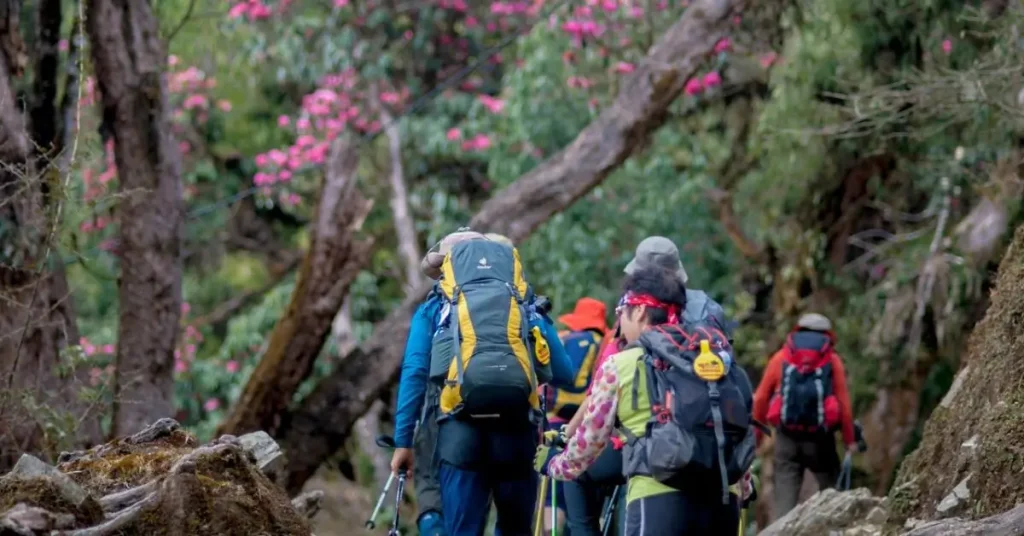
Spring is the second-best season for the ABC trek, offering weather nearly as stable as autumn plus one thing autumn cannot match: Nepal’s national flower in full bloom along the trail.
As winter snow melts back, the Annapurna foothills fill with color. Rhododendron forests between Ghorepani, Tadapani, and Chhomrong bloom in shades of red, pink, and white, typically peaking in March and April. Trails reopen fully after winter closures, and daytime walking conditions are comfortable across the route.
- March: Winter’s tail end lingers. Expect occasional icy patches between Deurali and Machapuchare Base Camp early in the month, plus the season’s best rhododendron color.
- April: Generally the most reliable spring month, with warm days, cold-but-manageable nights, and consistently good trail conditions.
- May: Pre-monsoon humidity starts to build, and afternoon haze can soften mountain views, though mornings usually stay clear enough for good photography.
Spring crowds are heavy but typically a step below autumn’s peak, making it a reasonable middle ground for trekkers who want reliable weather without autumn’s busiest lodges.
| Quick Tip: If mountain photography is your main priority, aim for the first three hours after sunrise in both spring and autumn. Afternoon cloud buildup is common in the Annapurna Sanctuary regardless of season. |
Monsoon (June to August): The Season to Avoid
Monsoon is the least recommended time to trek Annapurna Base Camp, with heavy daily rainfall, obscured mountain views, and elevated landslide risk on the lower trail.
Nepal’s monsoon typically runs from June through August, and the Annapurna region, sitting directly in the path of moisture rolling up from the Bay of Bengal, gets hit especially hard. Rain usually falls in intense afternoon and evening bursts rather than all day, but the cumulative effect on the trail is significant: slippery stone steps, leeches on the lower forested sections near Ghandruk and Chhomrong, and a real risk of landslides blocking sections of path after heavy rain.
Cloud cover also means that for much of the day, the payoff for the climb, the wall of peaks around the Sanctuary, simply is not visible. Some trekkers do walk this route in monsoon for the lush, green scenery and near-empty teahouses, but it requires flexibility, waterproof gear, and a guide experienced with wet-season trail conditions.
| Safety Note: Landslides and flash flooding are genuine risks on Nepal’s monsoon trails, and regional flooding events have affected other trekking areas in recent years. If you do trek in this window, build extra buffer days into your itinerary and follow your guide’s judgment on any section that looks unstable. |
Winter (December to February): Cold, Clear, and Quiet
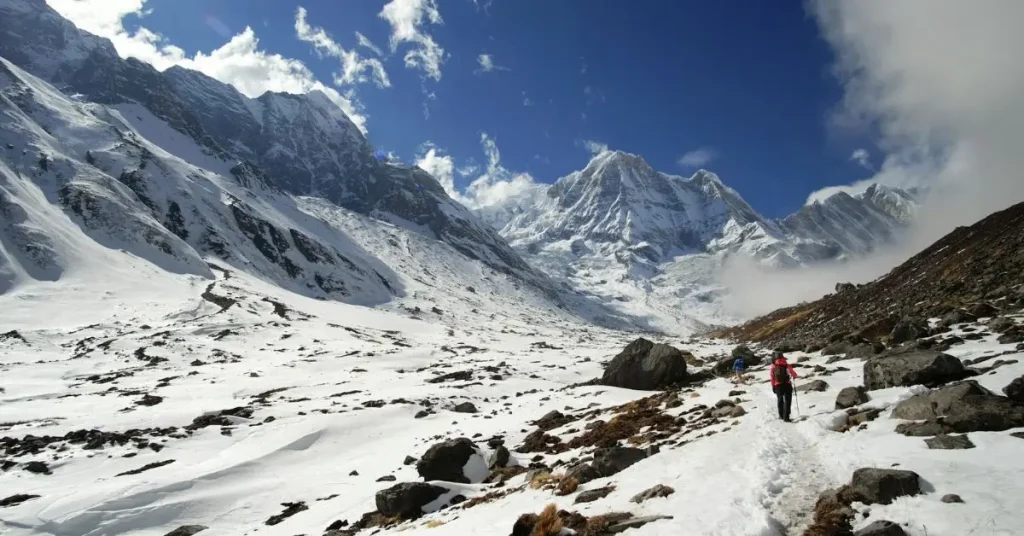
Winter offers some of the year’s clearest mountain views and the emptiest trails but demands serious cold-weather gear and carries the highest risk of snow blocking the upper route.
With little rainfall and minimal haze, winter skies over the Annapurna Sanctuary are often stunningly clear, especially in the mornings. Daytime temperatures on the lower trail stay tolerable, but nights near Machapuchare Base Camp and Annapurna Base Camp regularly fall well below freezing, and snowfall at these higher elevations is common from December through March.
- December: Early winter cold sets in gradually; trails are typically still passable with proper gear.
- January: The coldest month, with the highest chance of snow closing the final stretch above Deurali.
- February: Days start warming slightly, though nights remain firmly below freezing.
Winter suits trekkers who prioritize solitude and photography over comfort, but it isn’t the right choice for first-timers without cold-weather trekking experience or without a guide who can make a real-time call on turning back if snow makes the upper trail unsafe.
| Before You Go: A four-season sleeping bag, insulated jacket, and microspikes are close to essential for winter ABC treks. Teahouses above Chhomrong are unheated beyond a communal dining-room stove. |
Best Months for Annapurna Base Camp Trek: A Direct Comparison
If you’re narrowing down to specific months rather than full seasons, here’s how the leading candidates stack up:
| Month | Best For | Main Trade-off |
|---|---|---|
| March | Rhododendron bloom, moderate crowds | Possible icy patches near MBC/ABC early in the month |
| April | Overall best balance of weather and bloom | Busiest spring month |
| October | Clearest mountain views of the year | Highest crowds of the year |
| November | Excellent visibility, slightly fewer crowds than October | Colder nights, possible late-month snow |
For most first-time trekkers, October and April are the two strongest single-month choices: one for the sharpest post-monsoon views, the other for stable weather paired with wildflowers.
How Weather Affects Trek Difficulty and Preparation
Season does not just change the view. It changes how hard the trek feels day to day. Rain-softened stone steps in monsoon slow your pace and increase the risk of a slip. Snow and ice near Deurali in winter or early spring can turn a straightforward stretch into a careful, pole-out scramble. Even in the “good” seasons, the jump from Chhomrong’s forested slopes to the exposed, wind-swept approach to Annapurna Base Camp means packing layers for a 20°C-plus temperature swing within a single day.
Many trekkers search for the exact Annapurna Base Camp trek best time down to the week, but the honest answer is a window, not a single date. Conditions can shift a few days earlier or later than any calendar suggests.
Altitude sickness risk exists in every season, since it’s driven by elevation gain rather than temperature. Annapurna Base Camp sits at 4,130 meters, and the trek’s built-in acclimatization stops at places like Chhomrong and Machapuchare Base Camp matter regardless of when you go. Walking at a steady pace, staying hydrated, and listening to your guide’s read on symptoms is as important in a “perfect weather” October window as they are in January.
Final Thoughts
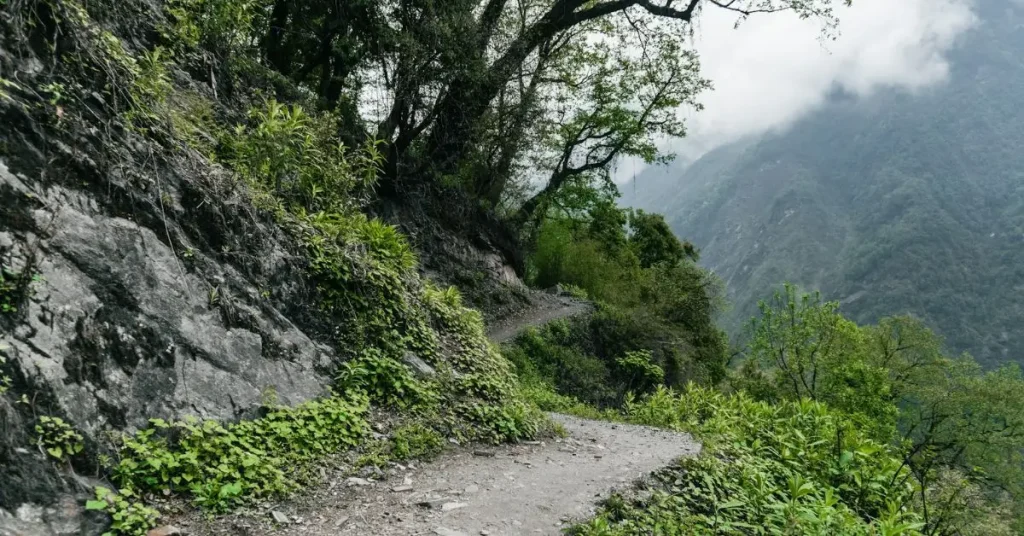
Choosing when to trek Annapurna Base Camp comes down to what you’re willing to trade. Autumn hands you the clearest possible views in exchange for crowded teahouses. Spring offers nearly the same reliability plus rhododendron color, at a slightly gentler pace. Winter rewards trekkers prepared for serious cold with quiet trails and crisp skies, while monsoon is best left to those specifically chasing green, rain-washed landscapes rather than mountain panoramas.
Wander Himalayan is a Nepal travel blog covering the practical side of Nepal trip planning, from trekking routes and permits to seasonal travel tips, to help you match your travel dates to what you actually want out of the trek. For more on preparing for the route itself, see our full Annapurna Base Camp Trek guide for context on the wider area you will be walking through.
FAQs
1. Can a beginner do the Annapurna Base Camp trek?
Yes, a beginner can do the Annapurna Base Camp trek if they have a reasonable level of fitness and enough time to acclimatize. The route follows well-established teahouse trails with no technical climbing involved, which is why it is one of the most popular treks in Nepal for first-timers, though a slower pace and proper preparation still matter, especially above Chhomrong.
2. Is ABC harder than EBC?
No, the Annapurna Base Camp trek is generally considered less physically demanding than the Everest Base Camp trek. ABC tops out at 4,130 meters compared to EBC’s roughly 5,364 meters, meaning lower overall altitude exposure and a shorter typical itinerary, though ABC’s daily elevation gains and losses can still feel steep.
3. Is the ABC trek risky?
The ABC trek carries the same core risks as any Himalayan teahouse trek, including altitude sickness, weather-related trail hazards, and monsoon-season landslides, but it is considered one of the lower-risk major treks in Nepal due to its moderate altitude and well-developed infrastructure. Trekking with a licensed guide, which is mandatory for foreign trekkers, and following proper acclimatization reduces these risks significantly.
4. Why is Annapurna so hard to climb?
Annapurna I, the mountain (not the base camp trek), is considered technically difficult and dangerous to climb due to its unstable ice walls, frequent avalanches, and steep, exposed routes near the summit. This refers to mountaineering the 8,091-meter peak itself, which is an entirely different undertaking from the trek to its base camp.
5. Is Annapurna deadlier than Everest?
Annapurna I has historically had one of the highest fatality-to-summit ratios among the world’s 8,000-meter peaks, largely due to avalanche risk on its main routes, whereas Everest sees far more overall attempts and deaths in absolute numbers. Neither figure applies to the Annapurna Base Camp trek, which does not involve summiting Annapurna I.
6. Can a beginner climb Annapurna?
No, climbing Annapurna I is not suitable for beginners under any circumstances. It requires advanced mountaineering skills, high-altitude climbing experience, and professional expedition support due to its avalanche-prone terrain. This is distinct from the Annapurna Base Camp trek, which is accessible to reasonably fit beginners.
7. When is the best time for Annapurna Base Camp trek?
The best time to trek Annapurna Base Camp is during autumn (late September to November) or spring (March to May), when rainfall is low, trails are stable, and mountain visibility is at its best. October and April are typically singled out as the two strongest individual months.
8. What are the best months for the Annapurna Base Camp trek?
The best months for the Annapurna Base Camp trek are October and April, followed closely by November and March. These months balance clear weather, manageable temperatures, and, outside of peak October, moderate crowd levels.
9. Do I need a guide for the Annapurna Base Camp trek regardless of season?
Yes, a licensed guide has been mandatory for all foreign trekkers in the Annapurna Conservation Area since April 2023, regardless of which season you trek in. Solo independent trekking is no longer permitted in this region.
10. Is winter too cold to trek to Annapurna Base Camp?
Winter is not too cold to complete the trek, but it does require serious cold-weather gear, since nights near base camp can drop to -10°C or lower. Snowfall at higher elevations can also occasionally close the final stretch above Deurali, so flexibility in your itinerary helps.
11. Does the monsoon completely block mountain views?
Not completely, but monsoon cloud cover blocks mountain views for a large part of most days, with brief clear windows more likely in early morning. Trekkers going in June, July, or August should expect green, misty scenery more often than open mountain panoramas.
12. How does season affect Annapurna Base Camp trek permits?
Season does not affect the permit requirements themselves. The Annapurna Conservation Area Permit (ACAP) and guide requirements apply year-round. What does change seasonally is teahouse availability and checkpoint conditions, which your guide manages as part of route planning.
Sources
Nepal Tourism Board / Annapurna Conservation Area Project: mandatory guide requirement for foreign trekkers (effective April 2023): https://www.nepaltourismboard.gov.np
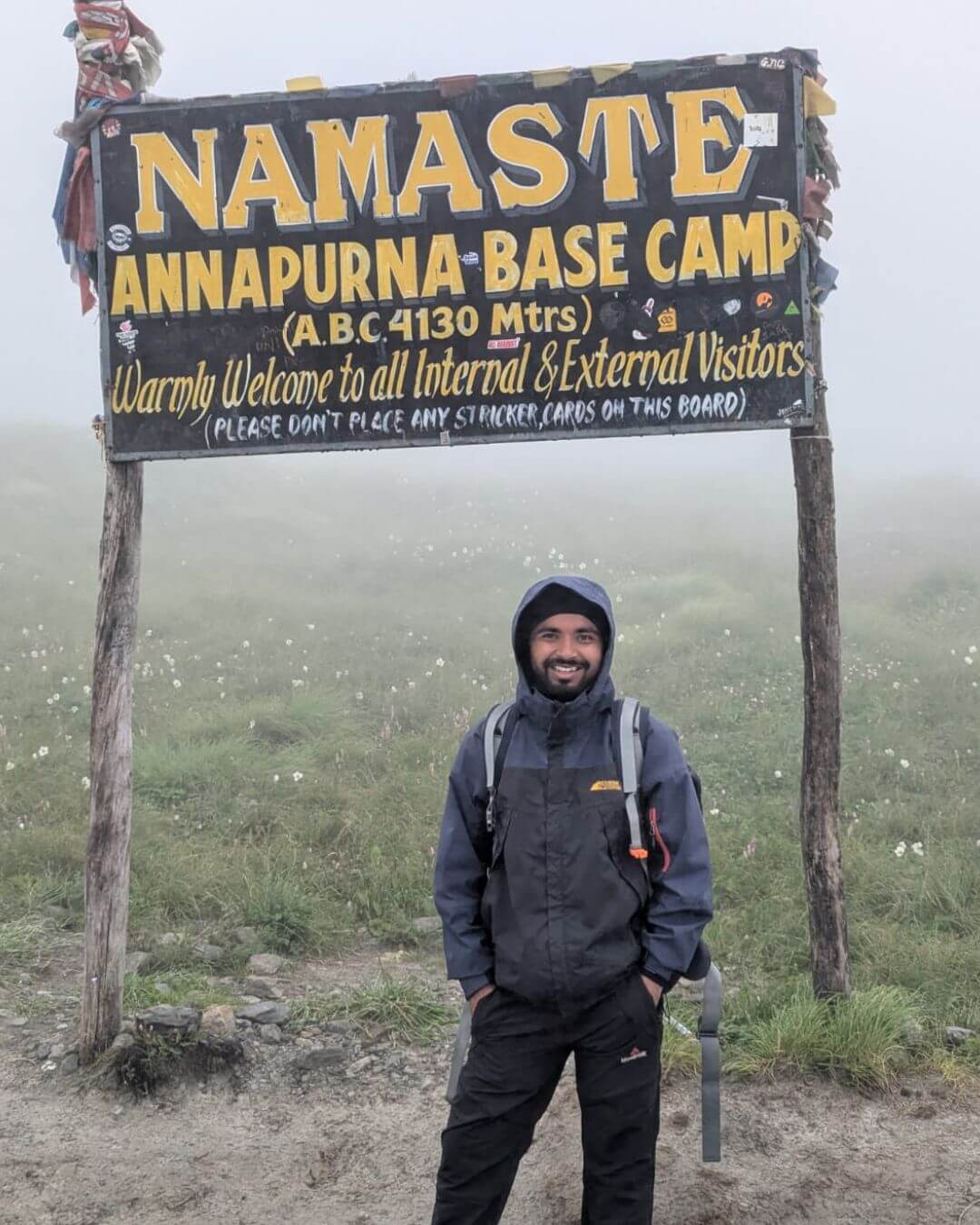
Sandeep Poudel is the founder of Wander Himalayan and a lifelong traveler with a deep interest in Nepal’s mountains, culture, landscapes, and local communities. His interest in exploring Nepal began early in life and has grown into a passion for discovering places beyond the usual tourist routes and understanding what makes each destination unique.
From detailed trekking guides and packing advice to destination guides, travel costs, transportation, and local insights, Sandeep focuses on information that travelers can actually use when planning a trip.