
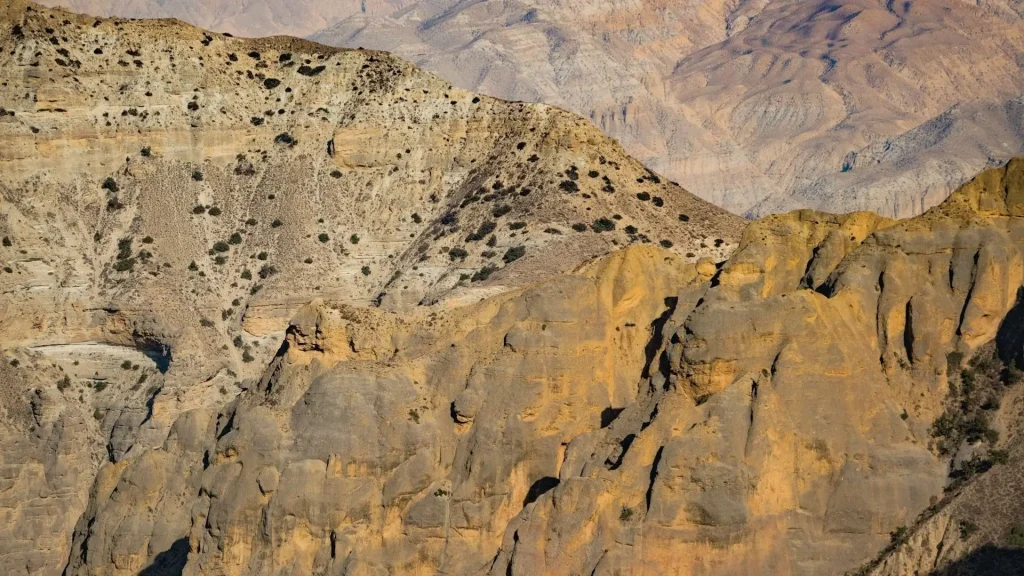
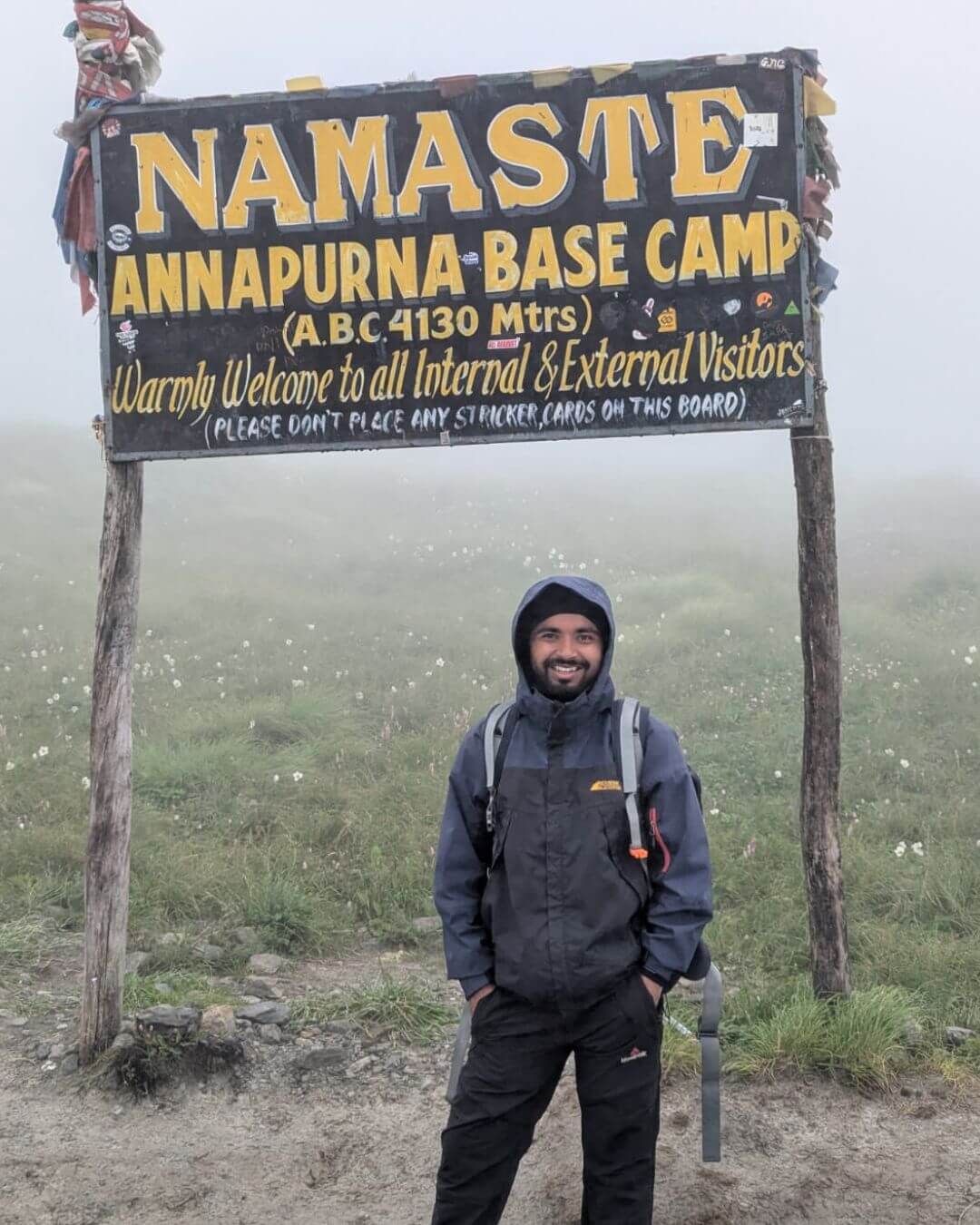
The Mustang trek takes you into one of the driest, most culturally distinct corners of Nepal, a windswept desert valley in the rain shadow of the Annapurna and Dhaulagiri ranges, where Tibetan Buddhist culture has survived largely untouched for centuries. Whether you are weighing a short Lower Mustang loop or the full Upper Mustang trek to the walled city of Lo Manthang, this guide walks through routes, permits, cost, difficulty, and the best time to go, so you know exactly what you are planning for.
| Quick Answer The Mustang trek covers two distinct areas: Lower Mustang, an open region reachable with a standard Annapurna Conservation Area Permit, and Upper Mustang, a restricted area requiring a special permit costing USD 50 per person per day. A Lower Mustang loop around Jomsom, Kagbeni, and Muktinath takes 4-7 days, while a full Upper Mustang trek to Lo Manthang runs 10-14 days. Total costs range from roughly USD 400-600 for Lower Mustang to USD 1,300-3,500 for Upper Mustang, permits included. |
Key Takeaways
- Mustang splits into Lower Mustang (open, no restricted permit) and Upper Mustang (restricted, permit required).
- Upper Mustang’s Restricted Area Permit is now USD 50 per person per day (2026 reform), replacing the old flat $500 for a 10-day fee.
- Solo trekkers can get the Upper Mustang permit since March 2026, but a licensed guide is still mandatory.
- Lower Mustang loop: 4 to 7 days. Full Upper Mustang trek: 10 to 14 days.
- The highest points sit around 3,840 to 3,950 m, a moderate trek by Himalayan standards.
- Best seasons: spring (March to May) and autumn (September to November). Mustang’s rain-shadow location also keeps it trekkable through monsoon.
- Total cost: approximately $400 to $600 for Lower Mustang, approximately $1,300 to $3,500 for Upper Mustang, permits included.
- Jomsom (the gateway) is a 20 to 25 minute flight or 6 to 9 hour drive from Pokhara.
Looking for more trekking options in Nepal? Explore the Trekking section to discover more trekking routes and experiences across Nepal.
Table of Contents
What Is the Mustang Trek? Lower Mustang vs. Upper Mustang
“Mustang trek” covers routes through Nepal’s Mustang district, a high-altitude desert carved by the Kali Gandaki River between the Annapurna and Dhaulagiri massifs. The district splits into two very different trekking zones.
Lower Mustang is the section from Jomsom down through Kagbeni, Muktinath, Marpha, and Tukuche. It sits inside the Annapurna Conservation Area, is open to independent travel, and doesn’t require a restricted-area permit.
Upper Mustang begins north of Kagbeni and leads through Chele, Syangboche, Ghami, Tsarang, and on to Lo Manthang, the medieval walled capital of the former Kingdom of Lo. This section remained closed to foreigners until 1992 because of its sensitivity as a border area with the Tibetan plateau, and it’s still classified as a restricted area today.
| Lower Mustang | Upper Mustang | |
| Access | Open, no restricted permit | Restricted Area Permit required |
| Typical duration | 4-7 days | 10-14 days |
| Key stops | Jomsom, Kagbeni, Muktinath, Marpha, Tukuche | Chele, Ghami, Tsarang, Lo Manthang, Chhoser |
| Highest point | Muktinath, ~3,800 m | ~3,840-3,950m (Lo Manthang / Lo La area) |
| Guide requirement | Recommended, not mandatory | A mandatory, licensed guide is required. |
| Feel | Green apple orchards to high desert transition | Full Tibetan-style desert and Lo Manthang’s walled city |
Both routes follow the Kali Gandaki valley, one of the deepest gorges on earth, with Dhaulagiri (8,167 m) rising on one side and Annapurna I (8,091 m) on the other. Wander Himalayan covers both areas in more depth in dedicated Upper Mustang and Lower Mustang guides, which are worth reading once you’ve decided which route fits your time and budget.
Mustang Trek Routes
Mustan trek routes is divided into 2 parts: Upper Mustang and Lower Mustang.
Lower Mustang Route
The classic way to Trek Mustang Nepal is through the Lower Mustang loop, which runs Jomsom → Kagbeni → Muktinath → back through Jharkot and Kagbeni, or Jomsom → Marpha → Tukuche → back to Jomsom.
Most trekkers fly into Jomsom from Pokhara and walk a combination of both legs. Kagbeni marks the gateway to Upper Mustang and is worth a stop even if you’re not continuing north, with its whitewashed monastery and maze-like alleyways.
Muktinath draws Hindu and Buddhist pilgrims alike to its 108 water spouts and eternal flame, sitting at the base of the Thorong La pass used on the Annapurna Circuit. Marpha and Tukuche, further south, are Thakali villages known for apple orchards, distilleries, and some of the best teahouse food on the route.
Upper Mustang Route
The standard Upper Mustang route continues north from Kagbeni through Chele, Syangboche, Ghami, and Tsarang before reaching Lo Manthang, the walled former capital of the Kingdom of Lo.
From Lo Manthang, most itineraries include a side trip to Chhoser to see the Jhong Cave sky-dwellings and Nyphu monastery, or a visit to Ghar Gompa, one of the oldest monasteries in the Himalayas.
Some itineraries return via the same trail, while others loop back through Dhakmar and Ghiling for varied scenery. This is the section requiring the Restricted Area Permit and a licensed guide, covered in the permits section below.
| Good to Know You don’t have to choose between the two: most Upper Mustang itineraries pass straight through Lower Mustang on the way in and out, so you get both landscapes on a single trip. |
| Safety Note Altitude sickness can occur above roughly 2,500m, even on a moderate trek like this one. Watch for headache, nausea, or unusual fatigue, drink plenty of water, and tell your guide immediately if symptoms appear. Acetazolamide (Diamox) is commonly used preventively by trekkers, but discuss this with a travel health provider before you go. |
How Long Is the Mustang Trek?
A full Upper Mustang trek typically takes 10 to 14 days door to door, including flights or jeep transfers to and from Jomsom, walking days, and at least one exploration day in Lo Manthang.
A Lower Mustang-only loop can be done in 4 to 7 days. The exact length depends on whether you fly or drive between Pokhara and Jomsom, how many acclimatization and cultural exploration days you build in, and whether you extend into side valleys like Chhoser or Dhakmar.
| Itinerary type | Typical duration | Trekking distance |
| Lower Mustang loop (Jomsom-Kagbeni-Muktinath) | 4-7 days | ~30-45 km |
| Standard Upper Mustang trek (Jomsom to Jomsom) | 10-14 days | ~120-145 km round trip |
| Extended Upper Mustang with side valleys | 15-18 days | ~150+ km |
How Far Is Mustang From Pokhara?
Jomsom, the gateway to both Lower and Upper Mustang, is about 68 km from Pokhara by air and roughly 140-180 km by road, depending on the route and how far up the Kali Gandaki gorge you’re measuring. Flying is by far the faster option.
| Mode | Distance | Travel time |
| Flight (Pokhara → Jomsom) | ~68 km | 20-25 minutes |
| Road / jeep (Pokhara → Jomsom) | ~140-180 km | 6-9 hours, often split over two days |
| Quick Tip Pokhara-Jomsom flights operate only in the early morning, since mountain winds pick up by mid-morning and afternoon flights are frequently cancelled. Book the first flight of the day and build a spare day into your itinerary in case of weather delays. This is one of Nepal’s more weather-sensitive short-haul routes. |
Best Time for Mustang Trek in Nepal
Spring (March-May) and autumn (September-November) are the best times for a Mustang trek, with stable weather, clear mountain views, and comfortable daytime temperatures.
What sets Mustang apart from most other Nepal treks is that it also stays trekkable through the summer monsoon (June-August), because the region sits in the rain shadow of the Annapurna and Dhaulagiri ranges and receives only a fraction of the rainfall that soaks the rest of the country.
Winter (December-January) is generally avoided, since temperatures drop well below freezing and heavy snow can close high sections of the trail.
| Season | Months | Conditions |
| Spring | March-May | Warm days, cold nights, good visibility; the Tiji Festival usually falls in this window. |
| Monsoon | June-August | The rain-shadow effect keeps Mustang largely dry while the rest of Nepal is wet. |
| Autumn | September-November | Peak season: clear skies, stable weather, and the busiest trails. |
| Winter | December-February | Very cold, high winds, and some sections may close due to snow. |
Lo Manthang’s Tiji Festival is one of the region’s biggest draws, a three-day Tibetan Buddhist ceremony of masked dances re-enacting the legend of a deity subduing a demon to protect Mustang.
Lo Manthang’s Tiji Festival is held annually according to the Tibetan lunar calendar, which means the exact dates shift from year to year, typically falling somewhere in May. If you want to time your trek around it, confirm the current year’s dates with a registered trekking agency or the Nepal Tourism Board before booking flights, since the festival is not fixed to a Gregorian calendar date.
| Local Insight Trekking during Tiji brings noticeably higher demand for teahouse beds and Jomsom flights in Lo Manthang. If the festival isn’t the main reason for your trip, visiting a few weeks before or after in spring or autumn gets you the same landscapes and culture with a quieter trail. |
Mustang Trek Permits and Requirements
Permit requirements differ sharply between the two zones. Lower Mustang requires only the standard Annapurna Conservation Area Permit (ACAP) and a TIMS card, both available directly through the Nepal Tourism Board in Kathmandu or Pokhara. Upper Mustang requires those two permits plus a Restricted Area Permit (RAP), which can only be arranged through a registered Nepal trekking agency.
Nepal overhauled the Upper Mustang RAP structure in 2025-2026. Previously, trekkers paid a flat USD 500 for the first 10 days regardless of how long they actually stayed, plus USD 50 for each additional day.
As of 2026, the fee is a flat USD 50 per person, per day, calculated only for the days actually spent inside the restricted zone. This change makes shorter Upper Mustang visits significantly cheaper than before.
A related rule change in March 2026 removed the old two-person minimum group size, so solo travelers can now hold an Upper Mustang permit in their own name, though a licensed guide is still required at all times.
| Permit | Where required | Cost (foreign nationals) |
| Restricted Area Permit (RAP) | Upper Mustang, north of Kagbeni | USD 50 per person, per day |
| Annapurna Conservation Area Permit (ACAP) | Both Lower and Upper Mustang | NPR 3,000 (~USD 22-25) |
| TIMS card | Both Lower and Upper Mustang | NPR 2,000 (~USD 15-20) |
| Important Independent trekking is not permitted in Upper Mustang under any circumstances. The RAP can only be issued through a registered Nepal trekking agency, and you must be accompanied by a licensed guide for the entire restricted-area section. Trekking without a valid permit can result in heavy fines and deportation. Because permit rules have changed more than once in the past two years, confirm current fees and requirements with a registered agency or the Nepal Tourism Board before finalizing your trip. |
How Much Does the Upper Mustang Trek Cost?
A standard Upper Mustang trek costs roughly USD 1,300 to USD 3,500 per person for a 12- to 17-day itinerary, including permits, a licensed guide, teahouse accommodation, meals, and ground transport.
Most standard packages booked through a local agency fall between USD 1,500 and 2,200 per person; costs rise toward the upper end for solo travelers, smaller groups, or added luxury and private transport. A Lower Mustang-only loop, which doesn’t require the restricted-area permit, typically costs a few hundred dollars for a week, including a guide, food, and lodging.
The single biggest cost driver is the RAP itself. Under the 2026 daily-rate structure, a 10-day Upper Mustang permit runs about USD 500, compared with USD 750 for 15 days, meaning shorter, more focused itineraries (for example, a 5- to 7-day loop timed around the Tiji Festival) can now come in well under USD 2,500 total, something that wasn’t realistic under the old flat-fee system.
| Cost item | Typical range |
| Restricted Area Permit (10-day trek) | ~USD 500 |
| ACAP + TIMS | ~USD 35-45 combined |
| Teahouse accommodation | USD 6-9 per night (twin-sharing) |
| Meals | ~USD 20 per person per day |
| Licensed guide | USD 20-30 per day |
| Pokhara-Jomsom flight (one way) | USD 116-160 |
| Total (10-14 day package, guide + permits included) | USD 1,300-3,500 per person |
| Budget Tip Traveling in a small group rather than solo brings the per-person guide cost down, since the daily guide fee is shared. If budget is the priority, ask agencies about a shorter 7- to 8-day Upper Mustang itinerary. The 2026 daily permit rate means fewer restricted-area days translate directly into real savings, not just a shorter trip. |
Sample Mustang Trek Nepal Itinerary
Itineraries vary by agency, but a typical 12-day Upper Mustang trek (excluding Kathmandu-Pokhara travel days) follows a pattern like this:
- Day 1: Fly from Pokhara to Jomsom (20-25 min); short walk or jeep to Kagbeni
- Day 2: Kagbeni to Chele, entering the restricted Upper Mustang zone
- Day 3: Chele to Syangboche, crossing the first high passes
- Day 4: Syangboche to Ghami, passing chortens and mani walls
- Day 5: Ghami to Tsarang, visiting Tsarang Palace and monastery
- Day 6: Tsarang to Lo Manthang, arriving at the walled capital
- Day 7: Exploration day in Lo Manthang: royal palace, monasteries, city walls
- Day 8: Day trip to Chhoser: Jhong Cave sky-caves and Nyphu monastery
- Day 9: Lo Manthang to Dhakmar or Ghiling (alternate return route)
- Day 10: Continue to Chele or Kagbeni
- Day 11: Kagbeni to Jomsom, with an optional stop in Muktinath
- Day 12: Fly Jomsom to Pokhara
Build in at least one buffer day around the Pokhara-Jomsom flights, since this route is prone to weather delays. Agencies commonly adjust this template to add acclimatization days, extend into Dhakmar’s red cliffs, or shorten the trip by using jeep transport for part of the route.
Culture and People of Mustang
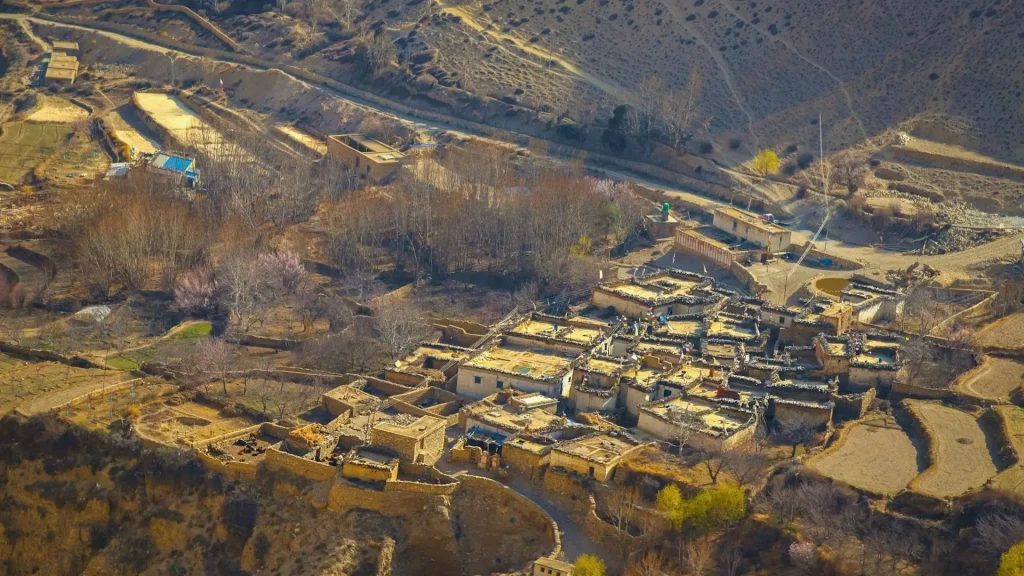
Mustang and Upper Mustang in particular preserve a version of Tibetan Buddhist culture that has faded in much of Tibet itself. The Loba people of Lo Manthang speak a Tibetan-derived language, follow the Tibetan Buddhist calendar, and maintain centuries-old monasteries, chortens, and mani walls along the trail.
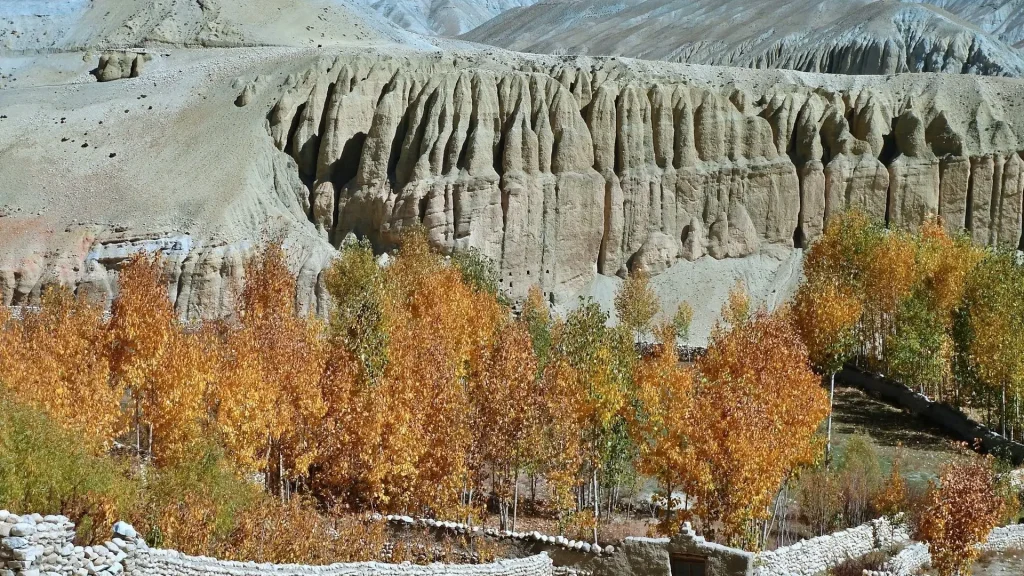
Lo Manthang’s walled old town centers on the former royal palace and four major monasteries, while the surrounding cliffs hide sky caves. These are human-made chambers cut into soft sandstone, some dating back over a thousand years, still being studied by archaeologists at sites like Chhoser.
Villages along the route, from Kagbeni and Marpha in the south to Ghami and Tsarang further north, each carry their own distinct character shaped by the Thakali and Loba communities that call this valley home. Respecting local customs matters here more than in many other parts of Nepal treks: Ask before photographing people or interiors of monasteries, dress modestly, and follow your guide’s lead at religious sites.
Preparing for the Mustang Trek: Fitness and Packing
No technical climbing skills are required for the Mustang trek, but you should be comfortable walking 5-7 hours a day over multiple consecutive days. A few weeks of regular walking, hiking, or cardio training beforehand makes a real difference, especially for Upper Mustang’s longer itinerary.
Because Mustang is a high-altitude desert, pack for big daily temperature swings and near-constant wind rather than for rain. Layered clothing, a windproof outer shell, sun protection, and a good buff or scarf for dust matter more here than heavy rain gear.
| Before You Go Carry cash in Nepali rupees for teahouses, snacks, and village entry donations. ATMs are limited to Jomsom, and card payment is rare beyond there. Your guide can advise on how much to bring for the length of your specific itinerary. |
Common Mistakes to Avoid on the Mustang Trek
- Underestimating the wind. Afternoons in the Kali Gandaki valley get strong, cold gusts. Plan to walk mornings when possible and pack real wind protection.
- Booking Pokhara-Jomsom flights with no buffer day, then missing the trek start (or a connecting flight home) when weather cancels the morning departure.
- Assuming Upper Mustang permit rules from a blog post are still current. Fees changed twice in 2025-2026, so always confirm with a registered agency before booking.
- Skipping acclimatization because the altitude looks moderate on paper. AMS can still occur below 4,000m, especially with rapid ascent.
- Packing for rain instead of for sun, wind, and dust, which are the actual conditions across most of the trekking calendar.
Final Thoughts on Mustang Treks
The Mustang trek rewards travelers willing to plan around its permits and logistics. Decide early whether Lower Mustang’s shorter, open-access loop or the full Upper Mustang journey to Lo Manthang fits your time and budget.
Confirm current permit rules with a registered agency given how often they have changed recently, and build a weather buffer around the Pokhara-Jomsom flight.
Frequently Asked Questions
1. How much does the Upper Mustang Trek cost?
The Upper Mustang trek costs approximately USD 1,300 to USD 3,500 per person for a standard 12- to 17-day itinerary, including the Restricted Area Permit, ACAP, TIMS, a licensed guide, teahouse accommodation, and meals. Most agency packages fall between USD 1,500 and 2,200; solo travelers and shorter, permit-optimized itineraries can bring costs down, while private or luxury arrangements push toward the higher end.
2. How difficult is the Upper Mustang Trek?
The Upper Mustang trek is rated moderate. Most of the route stays under 4,000m, with the highest points around 3,840-3,950m, and involves 5-7 hours of walking a day over dry, windy, but non-technical terrain. It suits reasonably fit beginners as well as experienced trekkers, provided you allow for acclimatization and respect the altitude.
3. How far is Mustang from Pokhara?
Mustang’s gateway town, Jomsom, is about 68 km from Pokhara by air (a 20-25 minute flight) or roughly 140-180 km by road, which takes 6-9 hours by jeep depending on conditions. Flights operate only in the early morning due to afternoon winds.
4. How long is the Mustang Trek?
A full Upper Mustang trek takes 10 to 14 days including transport to and from Jomsom, while a Lower Mustang-only loop can be completed in 4 to 7 days. Extended itineraries with additional side valleys can run 15 to 18 days.
5. Do I need a permit for the Mustang trek?
Lower Mustang requires only a standard ACAP and TIMS card. Upper Mustang requires those two plus a Restricted Area Permit (RAP), which costs USD 50 per person per day as of the 2026 fee structure and can only be arranged through a registered Nepal trekking agency.
6. Can I trek Upper Mustang solo?
As of a March 2026 rule change, solo trekkers can hold an Upper Mustang permit in their own name. The previous two-person minimum has been removed. However, independent trekking is still not allowed. You must be accompanied by a licensed guide arranged through a registered agency for the entire restricted-area section.
7. What is the best time for Mustang Trek in Nepal?
Spring (March-May) and autumn (September-November) offer the most stable weather and clearest views. Mustang is also one of the few Nepal treks that remains largely trekkable during the summer monsoon (June-August) because it sits in a rain shadow. Winter (December-February) is generally avoided due to extreme cold and possible snow closures.
8. What is the Tiji Festival, and when does it happen?
Tiji is a three-day Tibetan Buddhist festival held annually in Lo Manthang, featuring masked dances that reenact a myth of a deity protecting Mustang from a demon. It follows the Tibetan lunar calendar, so exact dates shift each year, typically landing in May. Confirm current dates with a registered agency or the Nepal Tourism Board before planning around it.
9. Is Upper Mustang worth visiting given the permit cost?
For travelers interested in intact Tibetan Buddhist culture, medieval architecture, and landscapes unlike anywhere else in Nepal, most who complete the trek consider it worth the cost. The permit fee also directly funds conservation and cultural preservation in one of Nepal’s most tightly regulated regions.
10. Do I need previous trekking experience for Mustang?
No prior high-altitude trekking experience is strictly required, since the trek is rated moderate and stays below 4,000m for most of the route. A reasonable fitness base and some pre-trip walking or cardio training make the multi-day walking schedule considerably more comfortable.