
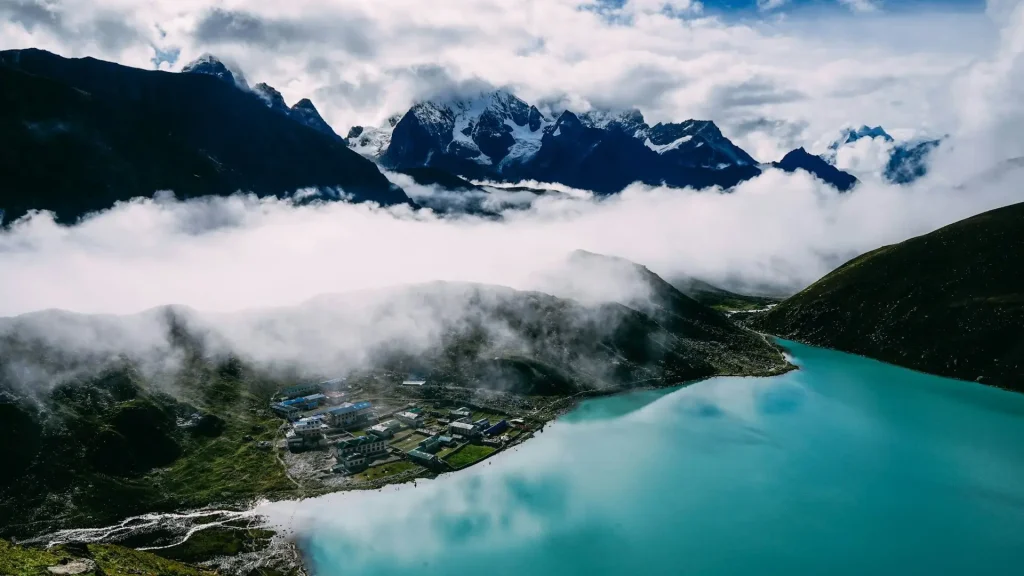
The Gokyo Lakes Trek leads into one of the highest freshwater lake systems in the world, tucked into a quieter side valley of Nepal’s Everest region. If you’re trying to work out whether this route suits you, how many days to set aside, or what it actually costs, this guide covers the practical details: the route from Lukla to Gokyo village, the climb up Gokyo Ri, the permits you need, and how the trek compares to Everest Base Camp.
This guide is built for planning and research, not for booking a package. Wander Himalayan is an independent Nepal travel information platform, not a trekking agency, so everything here is meant to help you understand the trek and plan around it, however you choose to organize your trip.
| Quick Answer The Gokyo Lakes Trek is a 10- to 14-day teahouse trek in the Everest (Khumbu) region that reaches six glacial lakes at roughly 4,700 to 5,000 meters, with a side climb to Gokyo Ri (5,357 m) for views of Everest, Lhotse, Makalu, and Cho Oyu. Most itineraries cover 90 to 110 km round-trip from Lukla. Budget USD 1,200 to 2,000 for a guided teahouse trek, and plan on arranging two mandatory permits before you set out. |
Key Takeaways
- Gokyo Ri (5,357 m) matches EBC’s altitude but with fewer high-sleep nights.
- Two permits required; no TIMS card needed.
- 10-14 days, ~90-110 km round-trip from Lukla.
- Budget USD 1,200-2,000 for a guided trek.
- Six lakes; Gokyo village sits on the third, Dudh Pokhari.
- Combinable with EBC (Cho La) or Renjo La to Thame.
- Best seasons: March-May and late Sept-Nov.
- Quieter than EBC, but shares lower villages like Namche.
Table of Contents
What Is the Gokyo Lakes Trek, Nepal?
The Gokyo Lakes Trek, Nepal, is a high-altitude teahouse trek in Nepal’s Khumbu region that follows the Dudh Koshi valley north from Namche Bazaar into Gokyo Valley, home to a chain of glacier-fed lakes and the viewpoint of Gokyo Ri. The route sits entirely within Sagarmatha National Park, a UNESCO World Heritage Site that also contains Mount Everest, Lhotse, and Ama Dablam.
Many trekkers choose Gokyo as an alternative to Everest Base Camp. The trail shares the same starting point and lower villages, but it branches off after Namche Bazaar into a quieter valley with fewer crowds. In place of the base camp itself, the reward here is the Gokyo Lakes, the Ngozumpa Glacier, and a summit view from Gokyo Ri that takes in Everest, Lhotse, Makalu, and Cho Oyu in a single sweep. Trekkers who want both experiences can link the two routes over the Cho La Pass.
Gokyo Lakes Trek at a Glance
| Aspect | Detail |
| Duration | 10 to 14 days, from Lukla to Lukla, plus 2 to 3 days in Kathmandu |
| Distance | Approximately 90 to 110 km round-trip from Lukla |
| Maximum altitude | Gokyo Ri, 5,357 m |
| Region | Khumbu / Everest Region, Solukhumbu District |
| Difficulty | Moderate to challenging, mainly due to altitude |
| Trek style | Teahouse / lodge-to-lodge |
| Starting point | Lukla, reached by flight from Kathmandu or Manthali |
| Permits required | Sagarmatha National Park permit + Khumbu Pasang Lhamu Rural Municipality permit |
| Best seasons | March to May, and late September to November |
| Guide requirement | A licensed guide is required inside Sagarmatha National Park |
Trekkers comparing different routes can explore more Nepal trekking options, covering popular trails, difficulty levels, and practical planning information.
The Route: From Lukla to Gokyo Valley
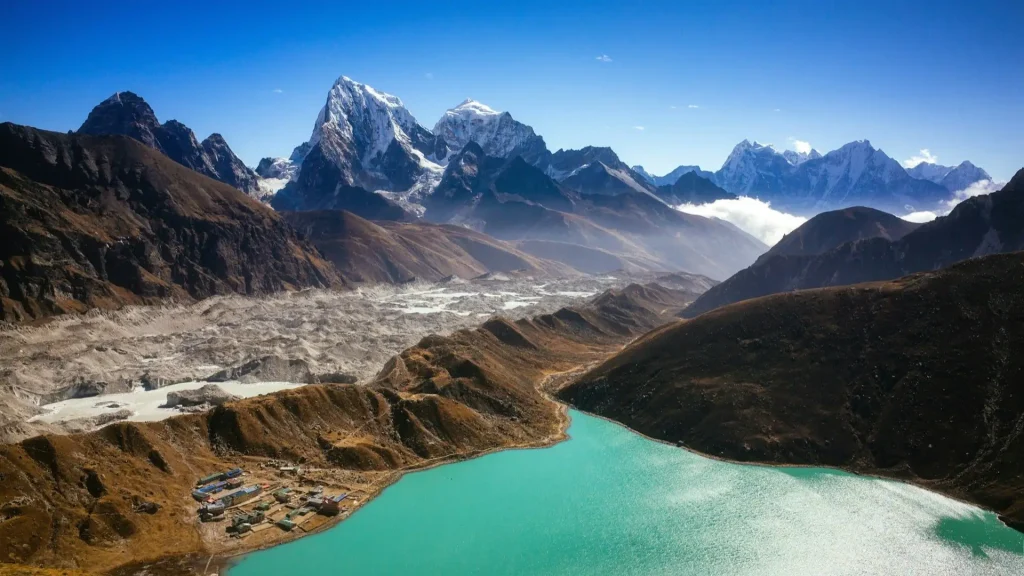
Most itineraries start with a short mountain flight from Kathmandu (or Manthali during peak season) to Lukla’s Tenzing-Hillary Airport, followed by a gentle walk to Phakding along the Dudh Koshi River. From there, the trail climbs steadily to Namche Bazaar, the unofficial capital of the Sherpa homeland and a required acclimatization stop for nearly every Khumbu trek.
Past Namche, the Gokyo trail separates from the Everest Base Camp route and climbs through Mong La toward Dole, Machhermo, and finally Gokyo village on the shore of the third lake. A rest day at Gokyo allows for the climb up Gokyo Ri and a hike out to the fourth and fifth lakes before retracing the route (or exiting over the Renjo La or Cho La passes) back toward Lukla.
Sample 12-Day Itinerary of Gokyo Lakes Trek
| Day | Route | Altitude |
| 1 | Fly from Kathmandu/Manthali to Lukla; trek to Phakding | 2,610 m |
| 2 | Phakding to Namche Bazaar | 3,440 m |
| 3 | Acclimatization day in Namche Bazaar (side hike to Khumjung or Everest View Hotel) | 3,440 m |
| 4 | Namche to Dole, via Mong La | 4,200 m |
| 5 | Dole to Machhermo | 4,470 m |
| 6 | Machhermo to Gokyo, past the first three lakes | 4,790 m |
| 7 | Acclimatization day: climb Gokyo Ri at sunrise, hike to the fourth and fifth lakes | 5,357 m |
| 8 | Gokyo backs down to Dole | 4,200 m |
| 9 | Dole to Namche Bazaar | 3,440 m |
| 10 | Namche Bazaar to Lukla | 2,860 m |
| 11 | Buffer day for flight delays, or fly to Kathmandu | 1,400 m |
| 12 | Departure, or extend the trip | – |
This is a standard, moderately paced version. Faster itineraries compress the trek to 10 days by cutting the buffer day; longer versions add the Cho La Pass to Everest Base Camp or the Renjo La Pass out to Thame, which stretches the trip to 15 to 20 days.
Getting to Lukla
Almost every Gokyo Lakes Trek begins with a flight to Lukla’s Tenzing-Hillary Airport, a short 25- to 40-minute hop from Kathmandu on a clear day. During the busiest spring and autumn weeks, flights are often rerouted through Manthali Airport in Ramechhap, roughly a four- to five-hour drive from Kathmandu, to ease congestion at the capital’s main airport. This adds an early start, and sometimes an overnight in Manthali, to the first day of the trip.
Lukla flights are notoriously weather-dependent. Morning departures are the norm, since clouds tend to build over the mountains by early afternoon, and delays or cancellations of a day or two are common, especially outside peak season. Building at least one buffer day into your itinerary, on either end of the trek, is standard practice rather than an overcautious extra.
A small number of trekkers skip the flight altogether and walk in from Jiri or Salleri, adding roughly five to seven extra trekking days but avoiding flight risk and offering a gentler, more gradual acclimatization profile.
Gokyo Valley and the Gokyo Lakes
The Gokyo Lakes are a chain of glacier-fed lakes formed along the edge of the Ngozumpa Glacier, in a valley considered one of the highest-altitude freshwater wetland systems anywhere. Six lakes are generally counted as the main system, though local sources describe a wider group of smaller ponds scattered through the valley.
Gokyo village sits on the shore of the third lake, known locally as Dudh Pokhari, and is the main overnight base for the trek. From there, day hikes lead to the fourth lake (Thonak Cho) and the fifth lake, both reached by trails that climb alongside the glacier and open up close views of Cho Oyu and Everest. Fewer trekkers continue to the sixth lake, which sits higher and further from the main trail.
| Local Insight Gokyo’s lakes change character through the day. Early morning, before the wind picks up, is when the water is stillest and most likely to mirror the surrounding peaks. This is worth factoring into your Gokyo Ri or lakeside schedule if photography matters to you. |
Climbing Gokyo Ri
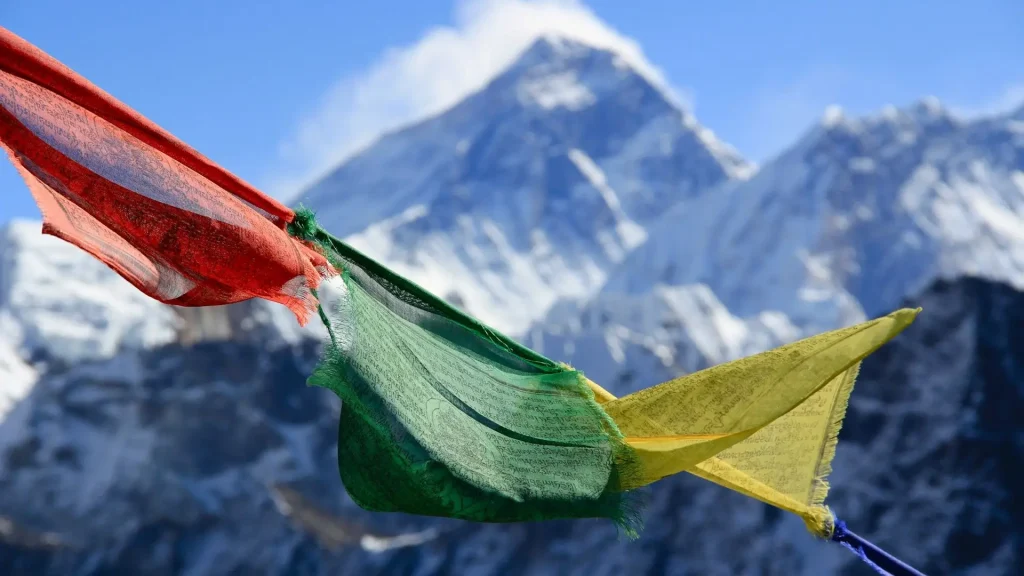
Gokyo Ri is the high point most trekkers climb for the panorama: a steep, roughly two- to three-hour ascent from Gokyo village to a 5,357-meter summit with views across four of the world’s 8,000-meter peaks, including Everest, Lhotse, Makalu, and Cho Oyu, along with Nuptse, Cholatse, and Taboche. Most trekkers climb before dawn to catch sunrise light on Everest and avoid the afternoon cloud that often builds up in the valley.
The climb itself is not technical. It is just a sustained, oxygen-thin uphill walk on a rocky trail. Altitude, not terrain, is what makes it hard.
The Ngozumpa Glacier
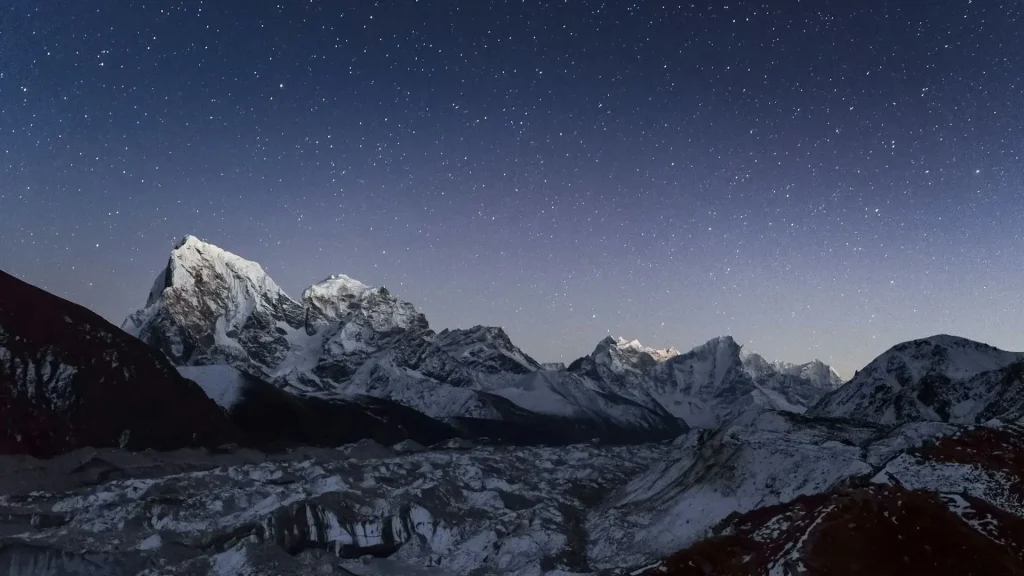
The Ngozumpa Glacier is the longest glacier in Nepal and the Himalaya, stretching more than 35 km down from Cho Oyu. The Gokyo trail runs alongside its lower moraine for much of the approach to Gokyo village, and the fifth lake area, sometimes called Scoundrel’s Viewpoint, offers one of the clearest views of its rock-covered ice and meltwater ponds.
Extending the Route: Renjo La and Cho La Passes
Trekkers with extra time and the right conditions often extend the Gokyo Lakes Trek over one of two high passes.
- Renjo La Pass (about 5,360 m) connects Gokyo to the Thame valley, offering a quieter exit route with wide views back over the Gokyo Lakes and across to Everest.
- Cho La Pass (about 5,420 m) connects Gokyo to Dzongla and the Everest Base Camp trail, letting trekkers combine both routes into a single Everest region circuit. Sections can be icy and are usually crossed with the help of a guide.
| Important Both passes require good weather, proper acclimatization, and reasonable trekking experience. They are not casual add-ons. Check conditions with your guide or local lodge owners before committing to either route. |
How Difficult Is the Gokyo Lakes Trek?
The Gokyo Lakes Trek is rated moderate to challenging, mainly because of altitude rather than technical difficulty. Daily walks run 4 to 7 hours over uneven mountain trails, with a steady overall elevation gain from Lukla’s 2,860 m to Gokyo Ri’s 5,357 m.
Compared with Everest Base Camp, Gokyo reaches a similar peak altitude at Gokyo Ri, but trekkers spend fewer nights sleeping above 4,500 m, since Gokyo village itself sits lower than Base Camp’s approach villages. That difference is one reason many trekkers, and several trekking operators, describe Gokyo as a somewhat gentler high-altitude option, though it is still a serious trek that demands fitness, layered clothing for sub-zero nights, and a sensible acclimatization schedule.
| Safety Note Altitude sickness can affect fit, experienced trekkers as easily as beginners. Watch for headache, nausea, dizziness, or unusual fatigue above 3,000 m, and descend if symptoms worsen rather than pushing on. This is general information, not medical advice. Talk to a doctor experienced in altitude medicine before you go. |
How Long Is the Gokyo Lakes Trek?
Most Gokyo Lakes Trek itineraries run 10 to 14 days from Lukla to Lukla, or 12 to 16 days total once you add arrival and departure days in Kathmandu.
A tighter 10-day version is possible for experienced, well-acclimatized trekkers, while a 14-day itinerary builds in a buffer day for Lukla flight delays, which are common in the Khumbu, especially outside peak season.
Trekkers who add the Cho La Pass to reach Everest Base Camp or loop out via Renjo La should plan for 16 to 20 days.
How Much Does the Gokyo Lakes Trek Cost?
A guided teahouse Gokyo Lakes Trek typically costs USD 1,200 to 2,000 per person, covering permits, a licensed guide, domestic flights, and basic teahouse accommodation and meals. Independent trekkers who arrange logistics themselves can sometimes bring this closer to USD 900 to 1,200, though a guide is legally required inside Sagarmatha National Park regardless of how the trip is organized.
| Expense | Approximate Cost (USD) |
| Sagarmatha National Park + Khumbu Pasang Lhamu permits | 45 – 50 |
| Kathmandu-Lukla round-trip flight | 350 – 500 |
| Licensed guide (per day) | 25 – 35 |
| Porter (per day, optional) | 20 – 25 |
| Teahouse lodging (per night) | 5 – 15 |
| Meals (per day) | 20 – 35 |
| Kathmandu hotel + miscellaneous | Varies by choice of hotel |
Costs rise the higher you go. Everything above Namche Bazaar arrives by porter or yak train, which is why a plate of dal bhat costs noticeably more in Gokyo than it does in Lukla.
Sources: Nepal Tourism Board (ntb.gov.np)
Permits and Regulations for the Gokyo Lakes Trek
Two permits are mandatory for the Gokyo Lakes Trek, and both cover the same area used by the Everest Base Camp and Three Passes routes:
- Sagarmatha National Park Entry Permit: Sagarmatha National Park entry permit costs NPR 3,000 plus 13% VAT (totaling NPR 3,390, about USD 25) for foreign nationals, with reduced rates for SAARC nationals and Nepali citizens. It can be arranged in Kathmandu at the Nepal Tourism Board office or at the park entry gate in Monjo.
- Khumbu Pasang Lhamu Rural Municipality Permit: Khumbu Pasang Lhamu Rural Municipality Permit: A local entry permit costing a fixed fee of NPR 3,000 (about USD 22–25) per foreign trekker, payable at the entry checkpoint in Lukla or Monjo.
As of 2026, a TIMS card is not required for most Khumbu itineraries, since the Khumbu Pasang Lhamu permit has effectively replaced it for this region. Trekking rules also require a licensed guide for all foreign trekkers inside Sagarmatha National Park. Requirements can change, so it’s worth confirming current rules with the Nepal Tourism Board or a registered trekking agency shortly before you travel.
Best Time to Trek to Gokyo Lakes
| Season | Months | Conditions |
| Spring | March – May | Warming temperatures, rhododendron blooms lower down, generally clear mornings with some afternoon cloud |
| Autumn | Late September – November | Driest, most stable weather; the most popular and busiest season on the trail |
| Winter | December – February | Very cold, especially above 4,000 m; quieter trails, and some Gokyo lodges close or reduce services |
| Monsoon | June – August | Frequent rain, cloud-covered peaks, and increased landslide risk on lower sections |
Spring and autumn are the most reliable windows for mountain views and stable trail conditions. Winter can still work for well-prepared trekkers who don’t mind the cold and want a quieter trail, but check ahead on lodge availability in Gokyo itself.
Sherpa Villages and Culture Along the Gokyo Trail
The Gokyo route runs through the heart of Sherpa country.
Namche Bazaar functions as the region’s trading hub and a Saturday market town; Khumjung and Khunde, a short side trip from Namche, are quieter Sherpa villages with a historic monastery and a hospital founded with Sir Edmund Hillary’s support.
Higher up, Dole and Machhermo are smaller settlements built almost entirely around the trekking trade, with prayer flags, mani walls, and small gompas along the trail.
| Local Insight Mani walls and chortens should be passed on the left, walking clockwise, in keeping with Buddhist tradition. It’s a small habit, but locals notice, and it’s an easy way to show respect on the trail. |
Accommodation and Food on the Trail
The entire route runs on teahouse (lodge) accommodation. Rooms are simple, usually twin-share with a shared bathroom, and cost is often kept low or waived if you eat your meals at the same lodge. Namche Bazaar has the widest range of options, including some more comfortable lodges; higher villages like Dole, Machhermo, and Gokyo offer more basic rooms, and it gets noticeably colder the higher you go.
Meal choices are similar throughout: dal bhat (lentils, rice, and vegetables), noodle and fried rice dishes, soups, and simple breakfast items. Menu prices climb with altitude, since everything above Namche has to be carried by a porter or yak.
| Budget Tip Dal bhat usually comes with free refills, which makes it one of the most cost-effective meals on the trail for the calories it provides. This is useful to know on a long trekking day. |
Preparing for the Trek: Fitness, Packing, and Altitude
No technical climbing skills are needed for the standard Gokyo Lakes Trek, but a reasonable base of cardiovascular fitness makes the daily walking hours and altitude gain far more manageable. Regular hiking, stair training, or cardio in the months before departure is the most useful preparation most trekkers can do.
Packing Essentials
- Layered clothing: moisture-wicking base layers, insulating mid-layers, and a windproof/waterproof outer shell
- A sleeping bag rated for at least -15°C, since Gokyo’s lodges are unheated overnight
- Sturdy, broken-in trekking boots and gaiters for early-season snow
- Water purification tablets or a filter, plus a reusable bottle or thermos
- A basic first-aid kit, sun protection, and a headlamp for the pre-dawn Gokyo Ri climb
- Comprehensive travel insurance that covers high-altitude trekking and emergency evacuation
| Before You Go Confirm your travel insurance explicitly covers trekking above 5,000 m and helicopter evacuation. Many standard policies cap altitude coverage well below Gokyo Ri’s summit. |
Gokyo Lakes vs. Everest Base Camp: Which Should You Choose?
| Aspect | Gokyo Lakes Trek | Everest Base Camp Trek |
| Signature sight | Glacial lakes, Gokyo Ri panorama, Ngozumpa Glacier | Base Camp itself, Khumbu Icefall, Kala Patthar viewpoint |
| Crowds | Quieter beyond Namche | Busiest trail in the Khumbu |
| Max altitude | 5,357 m (Gokyo Ri) | About 5,364 m (Base Camp), 5,545 m if adding Kala Patthar |
| Nights above 4,500 m | Fewer | More |
| Can be combined? | Yes, via Cho La Pass to EBC | Yes, via Cho La Pass to Gokyo |
Neither route is objectively better. Trekkers drawn to lake scenery, glacier views, and a quieter trail tend to prefer Gokyo. Those who want to stand at the base of Everest itself and don’t mind sharing the trail with more people usually pick Everest Base Camp. With enough time and the right conditions, the Cho La Pass lets you do both on one trip.
Alternatives to the Gokyo Lakes Trek
If the dates, altitude, or duration of the Gokyo Lakes Trek don’t quite fit your plans, a few other Everest region and nearby options are worth knowing about.
- Everest Base Camp Trek: The classic route to the foot of the world’s highest mountain, following a similar first few days before continuing straight up the Khumbu valley instead of branching toward Gokyo.
- Everest Three Passes Trek: A longer, more demanding loop that links Gokyo, Renjo La, Cho La, and Kongma La into a single circuit around the whole Khumbu.
- Manaslu Circuit Trek: A quieter, restricted-area trek in a different part of Nepal, crossing the Larkya La Pass at over 5,100 m.
- Langtang Valley Trek: A shorter, more accessible high-altitude trek closer to Kathmandu, suited to trekkers with less time.
Trekkers weighing these options against Gokyo can find more detail in Wander Himalayan’s Manaslu Circuit Trek and Langtang Valley guides.
Responsible Tourism in Gokyo Valley
Gokyo Valley’s ecosystem and Sherpa communities depend on trekkers treating the trail with care. A few practical habits go a long way:
- Carry out all non-biodegradable waste, including wrappers and batteries; there is no waste collection above Namche.
- Buy bottled water only when necessary, and use a filter or purification tablets instead where possible.
- Hire local guides and porters through fair, transparent arrangements, and pay porters a fair daily rate regardless of how much weight they carry.
- Ask before photographing people, and dress modestly when visiting monasteries and gompas.
- Stick to marked trails to avoid damaging fragile alpine vegetation and wetland areas around the lakes.
| Responsible Travel Sagarmatha National Park’s fragile ecosystem supports the entire Khumbu economy. Simple choices, like carrying a reusable water bottle and packing out your own trash, make a real difference at this altitude, where nothing decomposes quickly. |
Common Mistakes to Avoid
- Skipping acclimatization days to save time, this is the single biggest cause of altitude sickness on this route.
- Underestimating the cold: Gokyo regularly drops well below freezing overnight, even in trekking season.
- Booking too tight a Lukla flight buffer: Flight delays and cancellations are common, especially outside peak season.
- Not carrying enough cash: ATMs are unreliable past Namche Bazaar, and card payments are rarely accepted higher up.
- Ignoring early altitude sickness symptoms: A mild headache today can turn into a serious problem if you keep ascending.
Final Thoughts
The Gokyo Lakes Trek covers some of the most striking scenery in the Everest region: glacier-fed turquoise lakes, the sweep of the Ngozumpa Glacier, and a summit view from Gokyo Ri that few other treks in Nepal can match at this level of effort.
It asks for solid preparation and respect for altitude, but not technical climbing skill, which is part of why it draws both first-time Himalayan trekkers and experienced hikers looking for an alternative to the busier Everest Base Camp trail.
Whether you trek to Gokyo alone, extend it over the Renjo La or Cho La passes, or combine it with Everest Base Camp, the details in this guide, including route, permits, cost, and timing, should give you a solid starting point. For more on planning a trip through the wider Khumbu and Everest region, see Wander Himalayan’s other Nepal trekking guides.
Frequently Asked Questions
1. How difficult is the Gokyo Lakes trek?
The Gokyo Lakes trek is rated moderate to challenging, mostly due to altitude rather than technical terrain. Daily walks of 4 to 7 hours and a summit altitude of 5,357 m at Gokyo Ri make fitness and proper acclimatization more important than any technical skill.
2. How long is the Gokyo Lake trek?
The Gokyo Lake trek typically takes 10 to 14 days from Lukla to Lukla, or 12 to 16 days, including Kathmandu arrival and departure. Adding a high-pass crossing, such as from Cho La to Everest Base Camp, extends the trip to 16 to 20 days.
3. How much does a Gokyo Lake trek cost?
A guided teahouse Gokyo Lake trek costs roughly USD 1,200 to 2,000 per person, covering permits, flights, a guide, and basic accommodation and meals. Independent trekkers can sometimes reduce this to USD 900 to 1,200, though a licensed guide is still required inside the national park.
4. What is the toughest trek in Nepal?
The toughest treks in Nepal are generally considered to be the Everest Three Passes Trek, the Manaslu Circuit, the Kanchenjunga Circuit, and the Upper Dolpo trek. These routes involve longer durations, higher or more frequent passes, and far more remote terrain than the Gokyo Lakes Trek.
5. Can beginners do the Gokyo Lakes Trek?
Beginners can do the Gokyo Lakes Trek with proper preparation, since it requires no technical climbing skills. A reasonable level of fitness, sensible acclimatization, and appropriate gear for high-altitude cold make it manageable for first-time high-altitude trekkers.
6. Is a guide required for the Gokyo Lakes Trek?
Yes, a licensed guide is required for all foreign trekkers inside Sagarmatha National Park, including the Gokyo Lakes route. This rule applies regardless of whether you book a package or arrange the trek independently.
7. Can you combine Gokyo Lakes with Everest Base Camp?
Yes, the Gokyo Lakes Trek can be combined with Everest Base Camp by crossing the Cho La Pass (about 5,420 m), which links Gokyo to Dzongla and the main EBC trail. This combined route typically takes 16 to 20 days and requires good acclimatization and, at times, a guide experienced with icy pass conditions.
8. What is the best time to see the Gokyo Lakes?
The best time to see the Gokyo Lakes is during spring (March to May) or autumn (late September to November), when trails are driest and mountain views are clearest. Early mornings, before the afternoon wind picks up, tend to offer the calmest, most reflective water.
9. How many lakes are there in Gokyo Valley?
Gokyo Valley is generally described as having six main lakes, with Gokyo village sitting beside the third lake, known locally as Dudh Pokhari. Smaller ponds scattered through the valley are sometimes counted separately in broader descriptions of the wetland system.
10. Do I need a TIMS card for the Gokyo Lakes Trek?
As of 2026, a TIMS card is not required for most Gokyo Lakes Trek itineraries, since the Khumbu Pasang Lhamu Rural Municipality permit has effectively replaced it for this region. Requirements can change, so it’s worth confirming current rules before you travel.
11. Is there Wi-Fi and a mobile network in Gokyo Valley?
Wi-Fi is available in most Gokyo Valley teahouses, usually for a small daily or per-use fee, and Nepal Telecom or Ncell mobile signal reaches many points along the trail, though coverage becomes patchier above Machhermo. Connections are generally slow and can drop during bad weather.
12. What is the difference between the Gokyo Lake Trek and the Gokyo Ri Trek?
The Gokyo Lake Trek and Gokyo Ri Trek describe the same overall route; the Gokyo Ri climb is simply the day-hike highlight of the wider Gokyo Lakes itinerary. Some operators use “Gokyo Ri Trek” in marketing to emphasize the summit climb rather than the lakes themselves.