
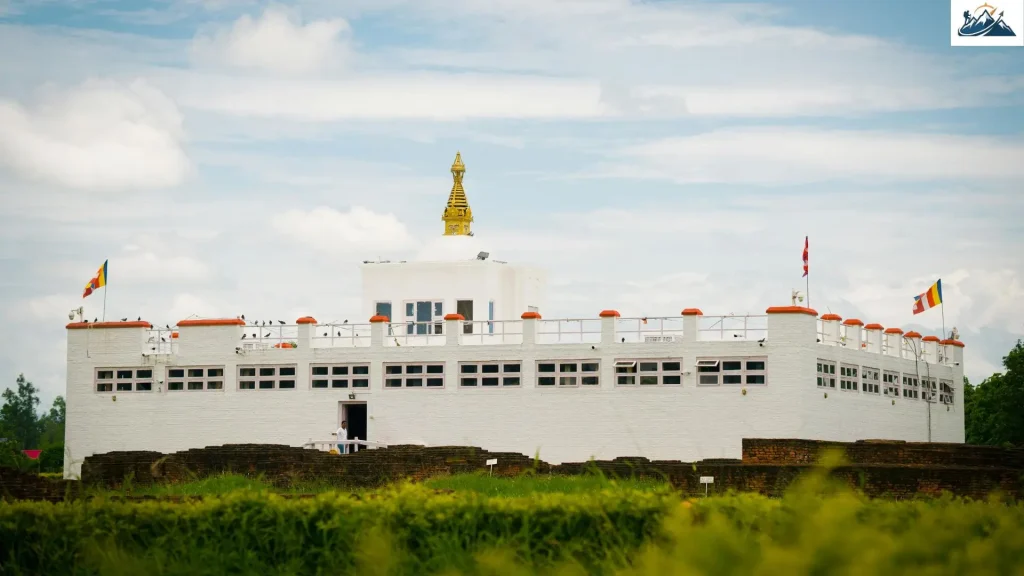
Lumbini is where Buddhism began, a site in Lumbini, Nepal’s southern Terai plains, where Siddhartha Gautama was born and which later became one of the world’s most important pilgrimage destinations.
This Lumbini travel guide is the central hub for everything you need to plan a visit: how to get there, what it costs, when to go, what to see, and where to stay, with links throughout to deeper, dedicated guides on each topic. Whether you’re coming as a pilgrim, a history-focused traveler, or simply adding Lumbini to a wider Nepal itinerary, start here and branch out into whichever sections matter most for your trip.
Quick Answer
This Lumbini travel guide covers Lumbini, Nepal, a UNESCO World Heritage Site in Nepal’s Rupandehi District, about 280-300 km southwest of Kathmandu and 170-190 km south of Pokhara. Lumbini is the birthplace of Siddhartha Gautama (the Buddha), centered on the Maya Devi Temple and the 249 BCE Ashoka Pillar. Most visitors reach it by a short flight to Bhairahawa or a 6-10 hour road trip, and one to two days is enough to see the Sacred Garden and Monastic Zone properly.
Lumbini Travel Guide At a Glance
- Lumbini is a UNESCO World Heritage Site (inscribed 1997), confirmed as Buddha’s birthplace by the inscription on the Ashoka Pillar, erected in 249 BCE.
- It sits in Nepal’s flat Terai plains at roughly 100-150 m elevation, in Rupandehi District, Lumbini Province.
- Reach it by flying into Bhairahawa (Gautam Buddha International Airport, about 30-40 minutes from Kathmandu) or by road (8-10 hours from Kathmandu, 6-7 hours from Pokhara).
- The core site, the Sacred Garden and Monastic Zone, can be covered in one full day, but two days lets you add Tilaurakot and the surrounding Buddhist circuit without rushing.
- The best time to visit is October to March, when the Terai’s subtropical heat and monsoon rains have eased; Buddha Jayanti in April/May is the most significant festival to time a visit around.
- Entry fees are regulated by the Lumbini Development Trust: currently NPR 700 for foreign visitors, NPR 400 for SAARC nationals, NPR 80 for Indian citizens, and NPR 20 for Nepali citizens (with additional fees for camera permits).
- Lumbini pairs naturally with Chitwan National Park and a Kathmandu-Pokhara loop, since it sits roughly midway between Pokhara and the Nepal-India border.
- The site is more spread out and low-key than its historical importance might suggest; expect a quiet, park-like atmosphere rather than a dense monument complex.
Where Is Lumbini? Location and Overview
Lumbini sits in Nepal’s Terai, the flat, subtropical lowland belt along the country’s southern border, in Rupandehi District, Lumbini Province, close to the border with India. It lies at a low elevation of roughly 100-150 meters, a sharp contrast to the mountain scenery most visitors associate with Nepal.
The core protected area is the Lumbini Development Zone, a roughly 4.8 km by 1.6 km planned zone designed in the 1970s by Japanese architect Kenzo Tange, centered on the Sacred Garden and stretching north through a Monastic Zone of more than two dozen international Buddhist temples toward a World Peace Pagoda. The nearest airport, Gautam Buddha International Airport, sits in Bhairahawa (Siddharthanagar), about 15-22 km away.
| Quick Fact: Lumbini’s Sacred Garden, the UNESCO-protected core containing the Maya Devi Temple and Ashoka Pillar, covers only about 130 by 150 meters, but the wider Lumbini Development Zone and Monastic Zone extend for several kilometers north of it. |
Why Is Lumbini So Famous?
Lumbini is famous as the birthplace of Siddhartha Gautama, who became the Buddha and founded Buddhism, a fact confirmed by the inscription on the Ashoka Pillar, erected around 249 BCE by the Mauryan emperor Ashoka after his own pilgrimage to the site. UNESCO inscribed Lumbini on the World Heritage List in 1997 in recognition of both its religious significance and the archaeological remains of Buddhist monasteries and shrines dating from as early as the 6th century BCE through the 15th century CE.
What makes Lumbini Nepal distinct from other historic sites in the country is that it isn’t a single monument; it’s an evolving pilgrimage landscape. Since the 1970s, Buddhist communities from around the world have built their own monasteries and temples inside the Monastic Zone, so a walk through Lumbini today takes you past Thai, Chinese, Japanese, Myanmar, Vietnamese, Korean, German, and other national temples, each reflecting a distinct architectural tradition, alongside the ancient core.
| Pro Tip: Because Lumbini is spread across a large, flat zone rather than concentrated in one building, most travelers underestimate how much walking or cycling it takes to see even a handful of the Monastic Zone’s temples properly. |
Is Lumbini Worth Visiting?
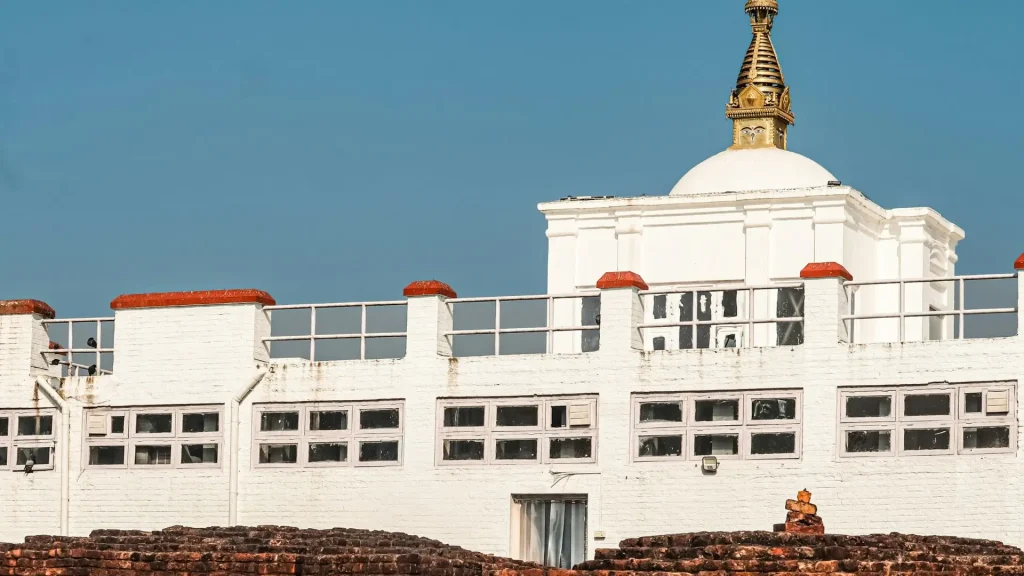
Yes, particularly for travelers with any interest in Buddhism, history, or world religious heritage; Lumbini is one of only a handful of places on Earth verified as the birthplace of a major religion’s founder.
Every version of this Lumbini travel guide comes back to the same conclusion: for travelers with no particular spiritual or historical interest, it’s still a worthwhile, calm counterpoint to Nepal’s mountain-focused itinerary, though it requires a genuine detour from the Kathmandu-Pokhara core route.
This Lumbini travel guide highlights several reasons to visit Lumbini:
- Buddhist pilgrims, for whom it’s one of the four most sacred sites associated with the Buddha’s life
- History and archaeology travelers, drawn to the excavated remains and the Ashoka Pillar inscription
- Photographers, especially for the Monastic Zone’s varied international temple architecture
- Travelers combining Nepal and India, since Lumbini sits close to the Sunauli border crossing and can be added to an itinerary through Gorakhpur or Varanasi
The most common reason travelers skip Lumbini is the extra travel time it adds to a Kathmandu-Pokhara itinerary; it’s a genuine detour south into the Terai rather than a stop along the main mountain route, so it works best when deliberately planned rather than added at the last minute.
How Far Is Lumbini From Kathmandu and Pokhara?
One of the most common questions this Lumbini travel guide answers is simply how far away the place is. Lumbini is roughly 280-300 km from Kathmandu by road (sources vary between about 225 km and 320 km depending on the exact route measured) and about 170-190 km from Pokhara. By air, it’s a short 30-40 minute flight from Kathmandu to Bhairahawa’s Gautam Buddha International Airport, followed by a 20-40 minute transfer to Lumbini itself.
| Route | Distance | Road Travel Time | Flight Option |
| Kathmandu → Lumbini | ~280-300 km | 8-10 hours | ~30-40 min flight to Bhairahawa + 20-40 min transfer |
| Pokhara → Lumbini | ~170-190 km | 6-7 hours | No direct flight; road only |
| Bhairahawa Airport → Lumbini | ~15-22 km | 20-40 minutes | N/A |
| Lumbini → Chitwan | ~130-150 km | 4-5 hours | N/A |
| Lumbini → Sunauli (India border) | ~20-25 km | ~1 hour | N/A |
| Important: Reported road distances and times for Lumbini vary noticeably between sources because measurement points differ (Lumbini Bazaar vs. the Sacred Garden itself) and road conditions change seasonally. Treat the 8-10 hour Kathmandu road estimate as a full travel day and plan accordingly, or fly to Bhairahawa to save the day. |
How to Reach Lumbini
The two realistic ways to reach Lumbini are flying into Bhairahawa or taking a direct road journey, and which one makes sense depends mainly on how much travel time you’re willing to spend versus how much you want to see along the way.
By air: Daily domestic flights connect Kathmandu to Gautam Buddha International Airport in Bhairahawa in about 30-40 minutes. From the airport, a taxi to Lumbini takes roughly 20-40 minutes depending on traffic. This is the fastest option and the only realistic way to fit Lumbini into a short trip.
By road from Kathmandu: Tourist buses and private vehicles cover the roughly 280-300 km route in about 8-10 hours, following highways that pass through Nepal’s mid-hills before dropping into the Terai plains. Most travelers who choose this option either treat it as a full travel day or break the journey with an overnight stop in Chitwan or along the way.
By road from Pokhara: The Pokhara-Lumbini road covers about 170-190 km in roughly 6-7 hours, making it a popular add-on for travelers already finishing their Pokhara stay and heading south rather than back to Kathmandu.
From India: Travelers combining Nepal with an Indian itinerary often reach Lumbini via the Sunauli border crossing, about 20-25 km away, or via Gorakhpur’s railway station, roughly a four-hour drive from Lumbini.
| Local Insight: Local transport inside Lumbini itself, between the Sacred Garden entrance and the Monastic Zone’s far end (roughly 3 km apart), is limited. Renting a bicycle at the entrance (a modest daily fee) or hiring an electric rickshaw is far more practical than trying to walk the whole circuit in Terai heat. |
Best Time to Visit Lumbini
The best time to visit Lumbini is from October to March, when the Terai’s monsoon rains have cleared and temperatures are far more comfortable for walking around the open, largely unshaded Sacred Garden and Monastic Zone. April and May bring intense pre-monsoon heat but also Buddha Jayanti, the most significant festival at the site.
| Season | Months | Weather | Good For |
| Autumn (best) | Oct-Nov | Mild, 15-30°C, clear skies | Sightseeing, photography, comfortable walking |
| Winter | Dec-Feb | Cool days (10-25°C), cold foggy mornings | Fewer crowds, still good conditions overall |
| Spring/pre-monsoon | Mar-May | Hot, rising to 35-40°C by May | Buddha Jayanti festival (April/May full moon), but plan around midday heat |
| Monsoon | Jun-Sep | Hot, humid, heavy rain, possible flooding on paths | Lush scenery and lower rates, but frequent stop-start sightseeing |
| Weather Tip: Even in the cooler months, Lumbini’s flat, open layout means little natural shade. Plan outdoor walking for early morning or late afternoon and treat midday as a break, especially between March and September. |
| Quick Fact: Buddha Jayanti, held on the full moon of April or May, marks the Buddha’s birth, enlightenment, and death together and draws pilgrims from across Asia to Lumbini for processions and lamp-lighting ceremonies at the Maya Devi Temple. |
How Many Days Do You Need in Lumbini?
One full day is enough to see the core Sacred Garden, Maya Devi Temple, and a handful of Monastic Zone temples, while two days lets you add Tilaurakot and explore the Monastic Zone more thoroughly without rushing between sites in Terai heat. Because Lumbini requires a genuine detour from the Kathmandu-Pokhara route, most travelers pair it with at least one overnight stay rather than attempting it as a same-day round trip.
1 day (minimum): Sacred Garden, Maya Devi Temple, Ashoka Pillar, Puskarini (Sacred Pond), Bodhi Tree, and a bicycle loop through the nearest handful of Monastic Zone temples.
2 days (recommended): Add the World Peace Pagoda at the northern end of the Monastic Zone, the Lumbini Museum, and a half-day trip to Tilaurakot, the archaeological site associated with Siddhartha Gautama’s childhood home.
3+ days: Combine Lumbini with a short excursion to Ramagrama or deeper exploration of the Greater Lumbini Area’s lesser-visited archaeological sites, or use it as a base for the Lumbini-Chitwan leg of a longer Terai itinerary.
Sample 2-Day Lumbini Itinerary
A well-planned Lumbini, Nepal, itinerary can cover the Sacred Garden and several Monastic Zone temples without rushing.
Day 1: The Sacred Garden and Core Sites
Arrive and settle in near the Sacred Garden entrance. Visit the Maya Devi Temple, the Ashoka Pillar, the Puskarini sacred pond, and the Bodhi Tree in the early morning before the heat builds. In the afternoon, rent a bicycle and ride north into the Monastic Zone, stopping at a handful of the international temples. The Zone splits into Theravada (east) and Mahayana/Vajrayana (west) wings, so pick one side to focus on if time is short.”
Day 2: Monastic Zone and Tilaurakot
Continue north to the World Peace Pagoda for a quieter, more reflective finish to the Monastic Zone visit, then take a taxi to Tilaurakot, roughly a 30-40 minute drive away, to see the excavated ruins associated with the ancient Shakya Kingdom and Siddhartha Gautama’s early life.
What to See in Lumbini: Top Attractions
Lumbini’s sites split naturally into the ancient Sacred Garden core and the newer Monastic Zone of international temples, with a handful of worthwhile excursions just outside the main development zone.
1. Maya Devi Temple
The Maya Devi Temple marks the exact spot where, according to tradition, Queen Maya Devi gave birth to Siddhartha Gautama around the 6th century BCE. Inside, a protected marker stone identifies the traditional birth spot, alongside excavated foundations from earlier structures on the site; photography is generally restricted inside the temple itself, though permitted in the surrounding garden.
2. Ashoka Pillar
The Ashoka Pillar is the single most important piece of physical evidence confirming Lumbini as the Buddha’s birthplace, a sandstone pillar erected around 249 BCE by the Mauryan emperor Ashoka, bearing a Brahmi-script inscription that records his pilgrimage to the site and the tax exemption he granted to Lumbini village in recognition of its significance.
3. Puskarini (Sacred Pond) and Bodhi Tree
The Puskarini, or Sacred Pond, sits just south of the Maya Devi Temple and is traditionally identified as the pool where Queen Maya Devi bathed before giving birth. Beside it grows a large Bodhi (sacred fig) tree, draped in prayer flags, which functions as an informal meditation and gathering spot for pilgrims.
4. The Monastic Zone
North of the Sacred Garden, the Monastic Zone houses more than two dozen Buddhist monasteries and temples built by national Buddhist communities from around the world, split into an eastern Theravada wing and a western Mahayana/Vajrayana wing separated by a central canal. Highlights include the Chinese, Korean, Myanmar, Thai, Vietnamese, and German temples, each built in a distinct national architectural style. Most visitors cover six to ten of these on a single visit rather than attempting all of them.
5. World Peace Pagoda
At the far northern end of the Monastic Zone stands the World Peace Pagoda, a Japanese-built white stupa reached by a long approach lined with prayer flags, popular as a quieter, more contemplative finishing point for a Lumbini visit, particularly at sunset.
6. Lumbini Museum
The Lumbini Museum, located within the wider development zone, displays archaeological finds and exhibits on Buddhist art and history from the region, useful for context before or after visiting the Sacred Garden itself.
7. Tilaurakot
Tilaurakot, about a 30-40 minute drive from Lumbini, is an archaeological site identified with the ancient Shakya Kingdom’s capital and traditionally associated with Siddhartha Gautama’s childhood home before he left on his spiritual quest. It’s included, alongside Lumbini and Ramagrama, on Nepal’s tentative list for further UNESCO recognition as part of the Greater Lumbini Area.
Lumbini Entry Fees and Practical Information
Access to the Sacred Garden and Maya Devi Temple is regulated by the Lumbini Development Trust conservation fee schedule: NPR 20 for domestic Nepali visitors (50% student discount), NPR 80 for Indian citizens, NPR 400 for SAARC nationals and Myanmar, and NPR 700 for foreign tourists. Entry is free for ordained monks, nuns, and local residents of Rupandehi, Kapilvastu, and Nawalparasi districts.
Note: Monks, nuns, persons with disabilities, and local residents of the three surrounding districts (Rupandehi, Kapilvastu, and Nawalparasi) are exempt from the conservation fee upon showing valid identification.
| Category / Item | Target Visitor / Scope | Verified Rate |
| Domestic Tourist Fee | Nepali Citizens | NPR 20 / day (50% discount for students) |
| Indian Tourist Fee | Indian Passport / ID Holders | NPR 80 / day |
| SAARC & Regional Fee | SAARC Country Nationals + Myanmar | NPR 400 / day |
| Foreign Tourist Fee | All Other Passport Holders (Third Countries) | NPR 700 / day |
| Still Camera Permit | All Nationalities | NPR 100 (Domestic/Indian) / USD $3 (~NPR 400 for SAARC & Foreigners) |
| Video Camera Permit | All Nationalities | NPR 1,000 (Domestic/Indian) / USD $25 (~NPR 3,350 for SAARC & Foreigners) |
| Bicycle Rental | Local rental shops near the entrance | NPR 200 – 300 / full day |
| Electric Rickshaw Hire | Inside the Monastic Zone & Sacred Garden grounds | NPR 600 – 1,200 (negotiable by hour/route) |
| Entry to the Sacred Garden and Maya Devi Temple requires a Greater Lumbini Development & Conservation Fee issued by the Lumbini Development Trust (LDT). Tickets can be purchased at the gate ticket counters (in cash or via QR code) or online via the official LDT portal (tickets.lumbinidevtrust.gov.np). |
Where to Stay During the Lumbini Tour
Most travelers choose between staying inside the Monastic Zone at one of several monastery-run guesthouses or in the small bazaar area just south of the main entrance, which has a wider range of standard hotels.
- Monastery guesthouses: Simple, budget-priced rooms run by some of the international monasteries (Korean, Vietnamese, and German-affiliated temples among them), often including a simple meal; a good option for travelers who want to be inside the Sacred Garden’s calm atmosphere before the day’s heat and crowds arrive.
- Lumbini Bazaar hotels: Mid-range hotels a short distance from the main entrance, generally offering hot water, air conditioning, and breakfast, the most common choice for travelers on a standard tour itinerary.
- Bhairahawa hotels: For travelers who want more comfort or are catching an early flight, Bhairahawa has a wider range of commercial hotel options about 20-30 minutes from Lumbini itself.
| Budget Tip: Monastery guesthouses are usually the cheapest option, but many prioritize guests with a genuine spiritual or pilgrimage purpose and may ask about your reason for visiting at check-in. A standard hotel in the bazaar area is a more straightforward choice for general sightseeing. |
Combining Lumbini With the Rest of Nepal
Lumbini works best as one leg of a wider loop rather than a standalone trip, most commonly combined with Chitwan National Park (about 130-150 km and 4-5 hours away by road) for a wildlife safari, or added onto a Kathmandu-Pokhara itinerary as a southern detour before flying home or crossing into India.
A common southern-Nepal route runs Kathmandu → Pokhara → Lumbini → Chitwan → Kathmandu (or the reverse), using the Pokhara-Lumbini road as the connecting leg and returning to Kathmandu by air from Bhairahawa to save time on the return journey.
Culture and Etiquette at Lumbini
Lumbini is an active pilgrimage site as much as a historical monument, so dress modestly, remove shoes before entering temple interiors, and keep noise low around the Maya Devi Temple and meditation areas, where pilgrims are often engaged in quiet prayer or reflection. Photography is generally restricted inside the Maya Devi Temple itself, and signage around the site marks these boundaries clearly. Respect these rules even if other visitors don’t, since enforcement (and any resulting friction with staff) tends to fall on those who ignore them.
| Trekker’s Tip: If you’re combining Lumbini with mountain trekking elsewhere in Nepal, note that this is a flat, low-altitude walking day rather than a trekking one. Comfortable walking shoes are enough; no specialized gear is needed. |
Common Mistakes to Avoid in Lumbini
- Treating it as a quick photo stop. The Monastic Zone alone spans several kilometers; rushing through in an hour means missing most of what makes Lumbini distinct from a single temple visit.
- Underestimating Terai heat. Even in the cooler months, the flat, largely unshaded layout means midday sun is more draining than the temperature alone suggests. Plan around it rather than through it.
- Skipping Tilaurakot because it’s ‘just ruins.’ For travelers with a genuine interest in the historical Buddha, Tilaurakot adds meaningful context that the Sacred Garden alone doesn’t provide.
- Assuming there’s a direct flight from Pokhara. There isn’t. Pokhara-Lumbini requires a road journey; only Kathmandu connects to Bhairahawa by air.
- Not budgeting an overnight stay. Because of the travel time involved, treating Lumbini as a same-day round trip from Kathmandu usually means arriving exhausted and rushing the visit.
Packing Checklist for Lumbini
- Lightweight, breathable, modest clothing suitable for temple visits (covering shoulders and knees).
- Comfortable walking or cycling shoes for the Monastic Zone’s flat but extensive walking distances.
- Sun protection, including a hat, sunscreen, and sunglasses, given the largely unshaded, open layout.
- A light scarf or shawl for entering temple interiors where head or shoulder covering may be expected.
- Insect repellent, particularly outside the dry season.
- Cash in Nepali rupees, since card acceptance is limited on-site and there are no ATMs inside the Sacred Garden itself.
- A refillable water bottle, as the flat terrain makes it easy to underestimate how much walking a full circuit involves.
Final Thoughts
Lumbini rewards travelers who give it real time rather than treating it as a quick stop between Kathmandu and Chitwan. The Ashoka Pillar’s 2,200-year-old inscription, the quiet Sacred Garden, and the varied international temples of the Monastic Zone add up to something genuinely distinct from the rest of Nepal’s mountain-focused itinerary.
If you’re planning a trip that includes this Lumbini travel guide’s core sites, budget at least one overnight stay, aim for the October-March window, and use Lumbini as the natural link between a Pokhara visit and a Chitwan safari on your way back toward Kathmandu.
With an overnight stay and a little planning, a Lumbini tour can become a meaningful part of a wider Nepal itinerary rather than a rushed stop.
If you’re planning to explore more of the country beyond Lumbini, discover other Nepal destinations, from the Himalayan regions of Everest and Annapurna to Pokhara, Chitwan, Mustang, and the Kathmandu Valley.
Frequently Asked Questions
How far is Lumbini from Kathmandu?
Roughly 280-300 km by road, typically an 8-10 hour drive, or about a 30-40 minute flight to Bhairahawa followed by a short transfer.
How far is Lumbini from Pokhara?
About 170-190 km, typically a 6-7 hour road journey; there’s no direct flight between Pokhara and Bhairahawa.
Is Lumbini worth visiting?
Yes, especially for travelers interested in Buddhism, history, or world religious heritage. It’s one of the few verified birthplaces of a major religion’s founder and offers a distinct, calmer counterpoint to Nepal’s mountain-focused destinations.
How many days do you need in Lumbini?
A one-day Lumbini tour covers the main Sacred Garden, while a two-day visit gives you more time for the Monastic Zone and Tilaurakot.
What is Lumbini famous for?
It’s the birthplace of Siddhartha Gautama, the Buddha, confirmed by the Ashoka Pillar inscription, and a UNESCO World Heritage Site since 1997.
What is the best time to visit Lumbini?
October to March, when the Terai’s monsoon heat and rain have eased; Buddha Jayanti in April or May is the key festival period if you want to time your visit around a major event.
Do I need a permit to visit Lumbini?
No special conservation permit is required, only the standard Sacred Garden entrance fee, unlike trekking regions such as Annapurna or Everest.
Can I visit Lumbini as a day trip from Kathmandu?
It’s possible by flying to Bhairahawa and back the same day, but most travelers find a rushed day trip doesn’t do the site justice. An overnight stay is recommended.
What’s the closest airport to Lumbini?
Gautam Buddha International Airport in Bhairahawa (Siddharthanagar), about 15-22 km from the site.
Can I combine Lumbini with a trip to India?
Yes. Lumbini sits close to the Sunauli border crossing and is a common stop for travelers routing between Nepal and northern India via Gorakhpur.
Is Lumbini only for Buddhist pilgrims?
No. While it holds deep religious significance for Buddhist pilgrims, it’s equally worthwhile for history-focused and general travelers interested in one of the best-documented ancient religious sites in Asia. Lumbini, Nepal, draws archaeology enthusiasts and photographers just as often as it draws pilgrims.
Sources
- UNESCO World Heritage Centre: Lumbini, the Birthplace of the Lord Buddha: https://whc.unesco.org/en/list/666
- UNESCO: Strengthening the Conservation and Management of Lumbini: https://www.unesco.org/en/articles/strengthening-conservation-and-management-lumbini-birthplace-lord-buddha
- Nepal Tourism Board: https://ntb.gov.np