
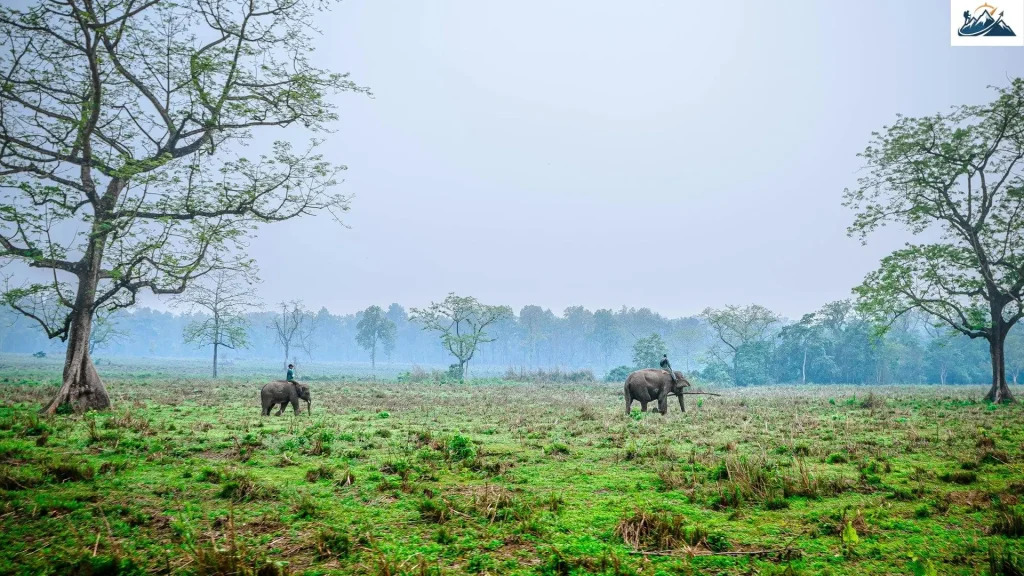
Chitwan National Park is Nepal’s oldest national park and the best place in the country to see a wild one-horned rhinoceros, a Bengal tiger track, or a gharial crocodile basking on a riverbank.
This guide covers everything you need to plan a visit: how to get there, when to go, what safaris actually cost, where to stay, and what to expect on the ground in Sauraha, the park’s main tourist gateway. Whether you have one day or four, you’ll find a realistic itinerary and practical, experience-based advice here, not just a list of animals.
Quick Answer
Chitwan National Park is a UNESCO World Heritage Site in Nepal’s subtropical lowlands, about 150-165 km (5-6 hours by road, or a 20-25 minute flight) south of Kathmandu. It’s Nepal’s premier destination for jungle safaris, home to wild Bengal tigers, one-horned rhinos, gharial crocodiles, and over 540 bird species.
Most travelers base themselves in Sauraha and spend 2-3 days on jeep safaris, canoe rides, and jungle walks. Entry costs roughly NPR 2,260 (about USD 15) per day for foreign visitors.
Table of Contents
Chitwan National Park at a Glance
- Chitwan National Park was Nepal’s first national park, established in 1973, and became a UNESCO World Heritage Site in 1984.
- The park covers roughly 952.63 sq km of subtropical forest, grassland, and riverine habitat in the Inner Terai lowlands.
- Sauraha is the main tourist hub on the park’s eastern edge; Kasara and the Meghauli/Amaltari side offer a quieter, more remote experience.
- The best time to visit is October to March, when temperatures are mild and wildlife viewing is at its best; the monsoon (June-September) closes many activities.
- A one-horned rhino sighting is close to guaranteed on a half-day jeep safari; Bengal tiger sightings are rare and never guaranteed.
- Budget roughly USD 100-250 per person per day for a 2-3 day package that includes accommodation, meals, and safari activities.
- Foreign visitors pay a daily park entry fee (around NPR 2,260) separate from safari and guide costs; always confirm the current rate at the gate or with your operator.
- Elephant-back safaris are still offered but are discouraged by responsible travel organizations; jeep safaris, canoe rides, and guided jungle walks are the recommended alternatives.
What Is Chitwan National Park?
Chitwan National Park is a protected lowland wilderness in south-central Nepal, and it’s the place most travelers go when they want to see wildlife rather than mountains. It sits in the Inner Terai, a belt of subtropical forest and floodplain squeezed between the Mahabharat foothills and the Indian border, and it’s built around two major rivers, the Rapti and the Narayani, which shape almost everything about how the park is visited.
The park was gazetted in 1973 as Nepal’s first national park, largely in response to the collapse of the rhino population from unchecked hunting in the mid-20th century. It was expanded and later declared a UNESCO World Heritage Site in 1984 in recognition of its exceptional biodiversity, one of only a handful of natural sites in Nepal to hold that status alongside Sagarmatha National Park.
| Quick Fact: Chitwan National Park covers approximately 952.63 sq km, with a surrounding buffer zone of community forest that adds significant habitat and helps reduce human-wildlife conflict with the villages on the park’s edges. |
Where Is Chitwan National Park?
Chitwan National Park lies in the Chitwan, Nawalpur, Parsa, and Makwanpur districts of Bagmati and Gandaki provinces, roughly 150-165 km south of Kathmandu by road. The nearest town with an airport is Bharatpur, about 16 km from Sauraha, the main tourist base on the park’s eastern boundary.
The park borders Parsa National Park to the east, giving the two protected areas a combined range that’s large enough to support breeding populations of tigers and rhinos. To the south, the international border with India’s Uttar Pradesh state runs close to the park boundary, which is part of why Chitwan connects into a larger transboundary conservation landscape.
Why Visit Chitwan National Park?
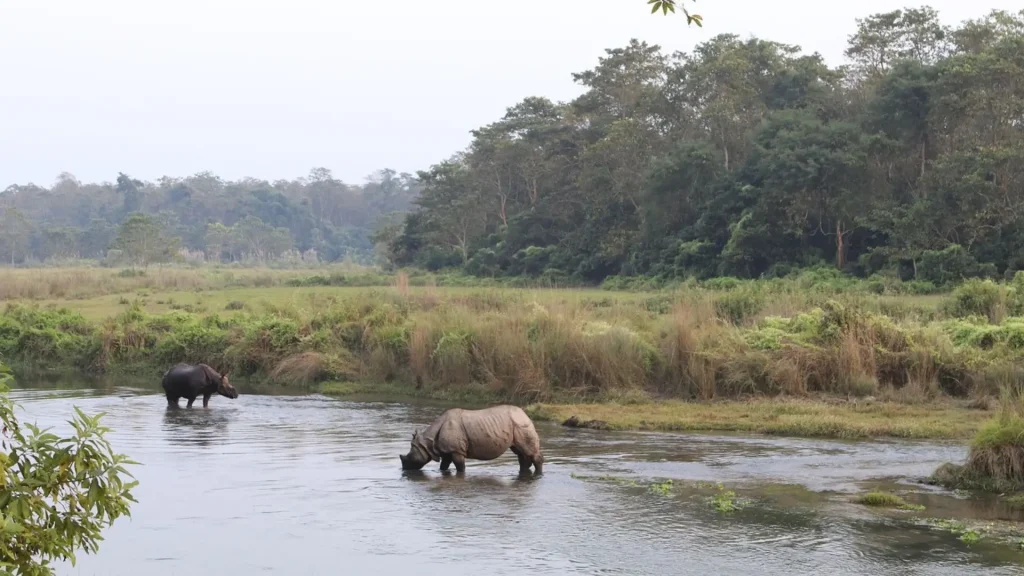
Chitwan is where you go in Nepal to see animals, not mountains, and it delivers on that in a way few other places in South Asia can match. This is a genuinely wild park, not a fenced reserve, so a visit here means real jungle tracking rather than a drive-through zoo experience.
Chitwan National Park covers an official core area of 952.63 sq km in the Inner Terai lowlands. It is home to 75 species of mammals, 643 species of birds (including the endangered Bengal florican and Great Hornbill), and 56 species of herpetofauna. The headline species are the one-horned rhinoceros and the Bengal tiger, but the birdlife alone, including several species found almost nowhere else in Nepal, is enough to justify a visit for dedicated birdwatchers.
| Pro Tip: If wildlife photography is your main goal, plan for at least two full days in the park. A single half-day safari can easily produce zero large-mammal sightings beyond rhinos; more time in the park compounds your odds significantly. |
If Chitwan is only one stop on your journey, explore our Nepal Destinations page to discover other national parks, trekking regions, heritage cities, hill stations, and cultural destinations across the country that you can add to your itinerary.
Best Time to Visit Chitwan National Park
The best time to visit Chitwan National Park is from October to March, when the weather is dry, temperatures are comfortable, and the tall elephant grass has been cut back, making animals easier to spot. Avoid the monsoon months of June through September, when heavy rain floods trails, swells the rivers, and closes many safari activities.
| Season | Months | Conditions | Good for Visiting? |
| Winter | December-February | Cool mornings (5-10°C), warm afternoons (20-25°C), clear skies | Excellent: best overall wildlife viewing |
| Spring | March-April | Warm (25-35°C), grass cutting in progress, good visibility | Very good: one of the best windows for tiger sightings |
| Pre-monsoon/Summer | May-early June | Hot and humid (up to 40°C), animals gather near water | Good but physically demanding |
| Monsoon | June-September | Heavy rain, flooding, leeches, and some trails and activities closed | Not recommended |
| Post-monsoon/Autumn | October-November | Mild, lush greenery, rivers still high | Excellent, with comfortable temperatures and improving visibility |
| Important: Elephant grass grows to over 3 meters tall during and after monsoons, which can hide even large animals like rhinos from view. The annual grass-cutting typically happens in January, after which visibility across the park improves dramatically. Late January through March is often cited by local guides as the single best window for sightings. |
How to Reach Chitwan National Park from Kathmandu
You can reach Chitwan National Park from Kathmandu either by a 5-6 hour road journey or a 20-25 minute domestic flight to Bharatpur Airport, followed by a short taxi or bus transfer to Sauraha. Flying is faster and more predictable; driving is cheaper and lets you stop along the scenic Trisuli River valley.
By road
Tourist buses leave Kathmandu early in the morning (typically 6:30-7:30 AM) from the tourist bus stand and arrive in Sauraha by early-to-mid afternoon. The route follows the Prithvi Highway through the Trisuli Valley before turning south at Mugling toward the Terai plains. Private jeep or car transfers are widely available through hotels and tour operators and take a similar amount of time but offer more flexibility for stops.
By air
Buddha Air and Yeti Airlines operate multiple daily flights between Kathmandu and Bharatpur Airport. The flight itself takes only 20-25 minutes, though it’s one of the less scenic domestic routes in Nepal since it heads away from the mountains rather than toward them. From Bharatpur Airport, it’s roughly a 30-40 minute taxi ride to Sauraha.
From Pokhara
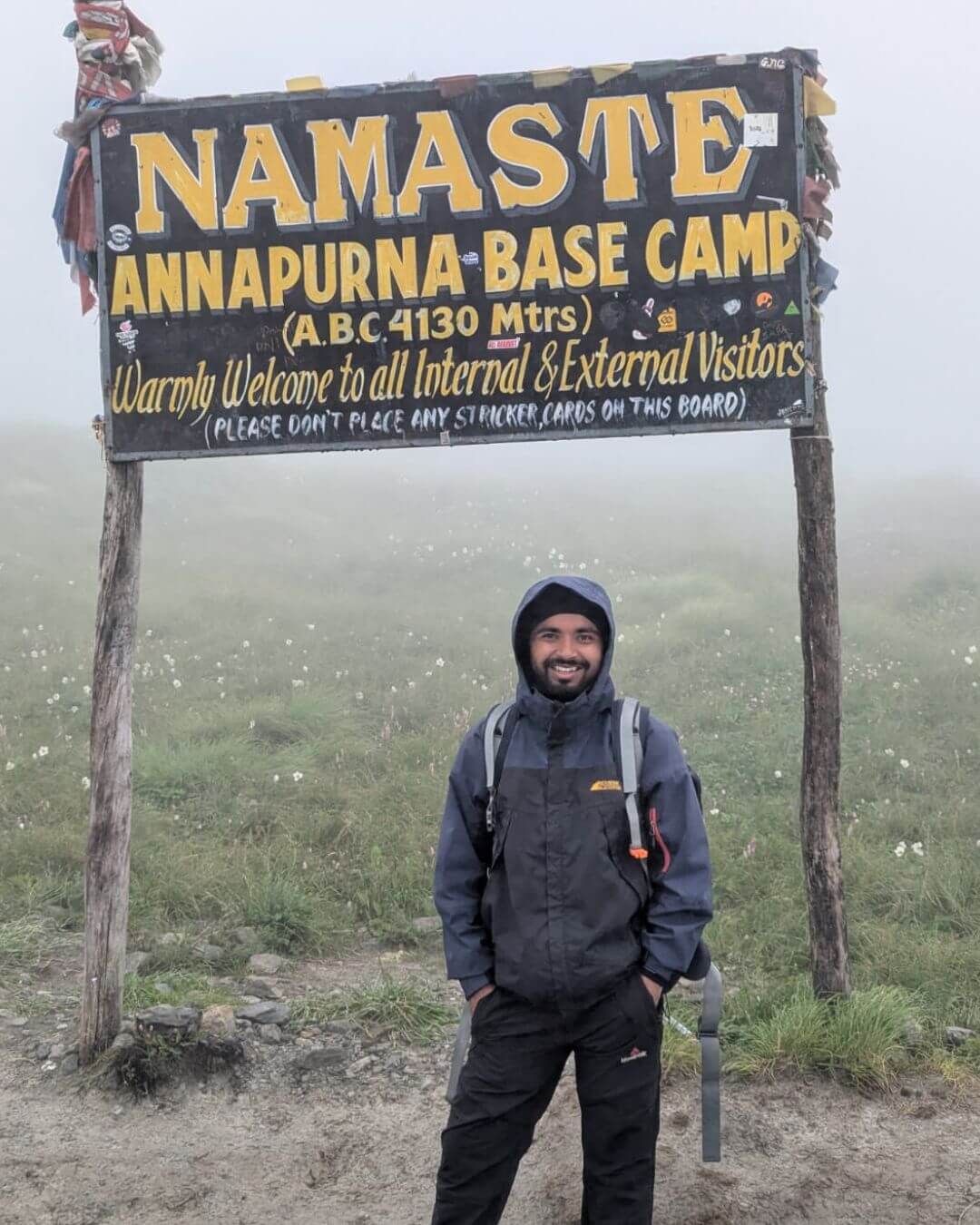
There’s also a short direct flight between Pokhara and Bharatpur and an overland route of about 5-6 hours by road, which is useful if you’re combining Chitwan with an Annapurna region itinerary.
| Local Insight: If you’re prone to motion sickness, the flight to Bharatpur is a better choice, as the road trip involves a lot of winding switchbacks through the hills before Mugling. If you get flight delays (common in Nepal due to weather), build in a buffer day rather than booking a same-day onward connection. |
Chitwan National Park Entrance Fee and Permits
Foreign visitors currently pay a daily park entrance fee of approximately NPR 2,260 (roughly USD 15), with a reduced rate of around NPR 1,130 for SAARC nationals and NPR 170 for Nepali citizens. Children under 10 typically enter free with valid ID. This entry fee is separate from safari, guide, and accommodation costs.
| Visitor Category | Approximate Entry Fee (per day) |
| Foreign nationals | NPR ~2,000 + 13% VAT = NPR 2260 (approx. $15-$20) |
| SAARC nationals | NPR 1,130 (NPR 1,000 + VAT) |
| Nepali citizens | NPR 170 (NPR 150 + VAT) |
| Children under 10 | Free (with ID) |
| Permit Update: Entry permits are non-transferable, valid for a single day only, and can be purchased at the DNPWC counter at the Nepal Tourism Board office in Kathmandu or directly at the park entrance gate in Sauraha. Fees are reviewed periodically by the Department of National Parks and Wildlife Conservation, so treat the figures above as a planning estimate and confirm the exact current rate with your hotel or tour operator before you travel. |
Things to Do in Chitwan National Park
The core Chitwan experience is built around a small set of activities that combine well into a 2-3 day itinerary: jeep safaris for covering ground and spotting rhinos or tigers, canoe rides for birdlife and crocodiles, guided jungle walks for a slower, close-up perspective, and a visit to Tharu villages for cultural context.
1. Jeep Safari
A jeep safari is the most efficient way to cover the park’s grasslands and forest tracks, and it’s the activity with the best odds of a rhino sighting. Safaris run in open-sided 4WD jeeps with a trained driver and a park-registered naturalist guide, typically departing early morning (around 6-7 AM, when animals are most active) or in the late afternoon.
Half-day jeep safaris run 3-4 hours; full-day safaris can run 6-8 hours and reach deeper into the park toward Kasara or the Rapti riverbanks. Shared jeeps (6-8 people) are significantly cheaper than private jeeps and are the standard choice for solo travelers and couples.
| Budget Tip: A shared half-day jeep safari typically runs NPR 2,500-4,000 per person, while a private full-day jeep can cost NPR 10,000-15,000 for the whole vehicle. If you’re traveling in a small group, chartering a private jeep for a full day often works out close to the shared per-person rate and gives you far more control over pacing and stops. |
2. Canoe Ride on the Rapti River
A canoe ride along the Rapti River is a quiet, low-impact way to see gharial and mugger crocodiles basking on sandbanks and a wide range of water birds, including kingfishers, storks, and egrets. Canoes are traditional dugout boats, paddled by a local boatman, and rides typically last 30-60 minutes.
| Photography Tip: Early morning canoe rides give the best light and the calmest water, and gharials are most visible when they’re out sunning themselves on the banks, which happens most reliably in the cooler morning hours rather than midday. |
3. Guided Jungle Walk
A guided jungle walk puts you on foot inside the park with an armed, trained naturalist guide, moving slowly through forest and grassland to track animal signs, such as footprints, scat, and feeding marks, rather than just driving past them. It’s a genuinely different experience from a jeep safari: quieter, slower, and far more focused on reading the jungle than on covering distance.
| Important: Jungle walks always require a minimum of two guides for safety, and you should never attempt to walk in the park without a licensed guide. Rhinos and sloth bears are both capable of serious, sudden charges, and Chitwan’s guides are trained in how to react, such as climbing a tree or standing behind one, moving diagonally away from a charging rhino rather than running in a straight line, which is knowledge that matters if you’re on foot. |
4. Elephant Breeding Center
The Elephant Breeding Center, located near Sauraha, is a government-run facility where domesticated elephants are bred and raised, and it’s a popular short stop for travelers wanting to see elephants up close, including calves. It’s worth visiting with a critical eye toward how the elephants are kept, and it’s separate from the elephant-back safaris that are still offered by some operators in the area.
Important: Responsible travel organizations, including several international wildlife welfare groups, advise against riding elephants for safaris because of the training methods historically used to make wild-born or captive elephants controllable for tourism. If elephant welfare matters to you, choose a jeep safari, canoe ride, or jungle walk instead; you’ll see just as much wildlife without the ethical trade-off.
5. Tharu Village and Culture
The Tharu people are the indigenous inhabitants of the Chitwan lowlands, with a distinct language, architecture, and cultural traditions shaped by centuries of living alongside, and historically being naturally resistant to malaria in, this floodplain environment.
A guided village walk through a Tharu community near Sauraha typically includes a look at traditional mud-and-thatch houses, a chance to see or try local farming methods, and often a Tharu stick dance performance in the evening.
| Trekker’s Tip: The Tharu stick dance (locally called Sakhiya or Jhamta dance depending on the sub-region) performed most evenings in Sauraha is genuinely worth attending; it’s rhythmic, energetic, and one of the more accessible ways to engage with Tharu culture without intruding on daily village life. |
6. Bird Watching
Chitwan is one of the best birdwatching destinations in Nepal, with over 540 recorded species, including the endangered Bengal florican, great hornbill, and a wide range of storks, kingfishers, and raptors.
The riverine forest, grassland, and oxbow lakes around Sauraha and Tiger Tops offer varied habitat within a relatively small, walkable area, which is part of why serious birders often base themselves here for several days.
Chitwan Wildlife: What You Might See
Chitwan’s headline species are the one-horned rhinoceros, the Bengal tiger, and the gharial crocodile, but the park’s real strength is the sheer range of species you can encounter across its grassland, forest, and river habitats.
| Species | Sighting Likelihood | Best Activity to Spot Them |
| One-horned rhinoceros | High: close to guaranteed on a half-day safari | Jeep safari, jungle walk |
| Bengal tiger | Low: rare and never guaranteed | Jeep safari: extended stays improve odds. |
| Gharial crocodile | Moderate to high, seasonal | Canoe ride on the Rapti River |
| Mugger crocodile | Moderate to high | Canoe ride, riverbank sightings |
| Asian elephant (wild) | Low to moderate | Jeep safari, deeper park sections |
| Sloth bear | Low | Jungle walk, jeep safari |
| Spotted deer, sambar, barking deer | High | Jeep safari, jungle walk |
| Gharial and various water birds | High | Canoe ride, riverside walks |
| Quick Fact: The one-horned rhinoceros population in Chitwan has recovered substantially since the park’s establishment thanks to decades of anti-poaching work by the Nepali army and park authorities. Nepal has recorded multiple ‘zero poaching’ years for rhinos in the past decade, a conservation success story that’s rare globally for a large, high-value species. |
Sauraha: The Gateway to Chitwan National Park
Sauraha is the main tourist town for Chitwan National Park, sitting right on the park’s eastern boundary along the Rapti River, and it’s where the vast majority of visitors base themselves. It has the widest range of hotels, restaurants, and safari operators of any entry point, along with a walkable riverside strip where you can watch the sunset over the park.
If you search ‘Sauraha Chitwan National Park‘ while planning, know that Sauraha isn’t a separate destination; it’s the practical, developed gateway that makes visiting the park logistically simple, similar to how Lukla functions for the Everest region.
| Local Insight: Sauraha’s main strip can feel touristy in the evenings, with a concentration of restaurants and souvenir shops, but a five-minute walk in almost any direction takes you back into quiet village lanes and rice paddies. If you want a quieter base with a similar level of access, Meghauli and Amaltari on the park’s western side offer a more remote, upscale alternative with fewer crowds, usually at a higher price point. |
Alternative Gateways: Kasara, Meghauli, and Amaltari
Kasara, near the park’s administrative headquarters, and the Meghauli/Amaltari area on the western boundary offer a quieter, more premium alternative to Sauraha, typically through high-end jungle lodges with their own private safari access.
These areas tend to see fewer day-trippers and offer a more immersive, less crowded jungle experience but come with higher costs and less independent-traveler infrastructure (fewer budget guesthouses, more limited public transport).
Where to Stay in Chitwan National Park
Most travelers stay in Sauraha, where accommodation ranges from budget guesthouses to mid-range hotels with pools, all within walking distance of the river and safari operators. For a more remote, higher-end experience, jungle lodges near Meghauli and Kasara put you closer to the park’s interior with less foot traffic.
| Type | Typical Location | Price Range (per night) | Best For |
| Budget guesthouse | Sauraha | USD 10-25 | Backpackers, solo travelers |
| Mid-range hotel/resort | Sauraha | USD 30-80 | Couples, families |
| Jungle Lodge (all-inclusive) | Meghauli, Kasara, Amaltari | USD 150-400+ | Wildlife photographers, honeymooners, luxury travelers |
| Budget Tip: Many mid-range Sauraha hotels sell all-inclusive packages that bundle accommodation, meals, and 2-3 safari activities into one price. These are often better value than booking accommodation and activities separately, since safari and guide bookings arranged independently at the last minute can cost more. |
Chitwan National Park Itinerary: 2 Days
Two days in Chitwan National Park is enough to cover the core activities, including a jeep safari, a canoe ride, and a jungle walk, without feeling rushed, and it’s the most common itinerary length for travelers combining Chitwan with other stops in Nepal.
Day 1
- Morning: Arrive in Sauraha (by flight or road), check into accommodation, and brief orientation walk along the river.
- Afternoon: Canoe ride on the Rapti River followed by a short guided jungle walk back toward Sauraha, watching for birdlife and crocodiles.
- Evening: Tharu cultural stick-dance performance in Sauraha.
Day 2
- Early morning: Full-day or half-day jeep safari into the park’s grassland and forest zones, your best chance for rhino and, less likely, tiger sightings.
- Afternoon: Visit to the Elephant Breeding Center and a walk through a nearby Tharu village.
- Evening: Sunset viewing along the Rapti riverbank before departure the next morning.
| Packing Tip: Pack neutral-colored clothing (khaki, olive, and brown) for safari activities, as bright colors and white stand out sharply against the jungle’s natural palette and can spook animals before your guide gets you close. |
If you have a third day, add a full-day jeep safari toward Kasara or a dedicated birdwatching walk with a specialist guide, both of which meaningfully improve your odds of a wider range of sightings, including a possible tiger track or sighting.
Chitwan National Park Travel Cost
A realistic budget for a 2-3 day Chitwan trip for one person runs roughly USD 100-250 per day, depending on accommodation standard and whether you book a shared or private safari package. This typically covers accommodation, meals, park entry, and a mix of jeep safari, canoe ride, and jungle walk activities.
| Cost Category | Budget Estimate | Mid-Range Estimate |
| Accommodation (per night) | USD 10-25 | USD 30-80 |
| Park entry fee (per day) | ~USD 15 | ~USD 15 |
| Jeep safari (half-day, shared) | USD 20-30 | USD 20-30 |
| Canoe ride | USD 5-10 | USD 5-10 |
| Guided jungle walk | USD 10-15 | USD 10-15 |
| Meals (per day) | USD 10-15 | USD 20-35 |
| Kathmandu-Chitwan transport (one-way) | USD 8-12 (bus) | USD 100-120 (flight) |
| Important: Most budget Chitwan packages advertised online (commonly USD 99-150 for 2-3 days) don’t include the park entry fee or the transport to and from Kathmandu. Always ask your operator explicitly what’s included before booking, since the entry fee alone adds a real cost on top of any package price. |
Safety Tips for Chitwan National Park
Chitwan is a genuinely wild park, and the biggest safety factor is simple: always follow your guide’s instructions exactly, especially on jungle walks, since animals like rhinos and sloth bears can charge with very little warning. Never wander off marked trails alone, and never approach wildlife for a closer photo.
| Safety Advice: If a guide tells you to move behind a tree or climb it during a rhino encounter, do it immediately without stopping to check your camera settings. Rhino charges happen fast, and Nepali park guides are trained specifically in de-escalation techniques that only work if followed precisely and without hesitation. |
Other practical safety notes:
- Apply mosquito repellent, particularly around dawn and dusk near the rivers, and consider malaria precautions if recommended by a travel clinic for your specific dates and route.
- Drink only bottled or properly treated water.
- During monsoon season, leeches are common on jungle walks; tucking trousers into socks helps.
- Always confirm your guide is licensed by the park; unlicensed ‘freelance’ guides sometimes approach tourists in Sauraha and don’t carry the same safety training or park access.
Chitwan National Park Checklist
Final Thoughts
Chitwan National Park remains Nepal’s best destination for wildlife travel, a genuinely wild, UNESCO-listed park where a rhino sighting is close to guaranteed and a tiger sighting is a real, if rare, possibility.
Base yourself in Sauraha for the easiest logistics, budget 2-3 days for a full mix of jeep safaris, canoe rides, and jungle walks, and time your visit for the October-to-March dry season for the best combination of comfortable weather and clear wildlife viewing.
Whether you’re combining it with a trek in the Annapurna or Everest regions or visiting Nepal purely for its wildlife, Chitwan National Park delivers an experience that’s hard to match anywhere else in South Asia.
Looking for more inspiration beyond Chitwan? Explore Wander Himalayan for expert travel resources, destination information, trekking advice, practical travel tips, and itineraries designed to help you plan your Nepal adventure with confidence.
Frequently Asked Questions
1. How many days do I need for Chitwan National Park?
Two to three days is enough to cover the core activities, including a jeep safari, canoe ride, and jungle walk, comfortably. A single day is possible if you’re short on time, but it limits you to essentially one activity and reduces your odds of good wildlife sightings.
2. Can I see a Bengal tiger in Chitwan National Park?
It’s possible but rare; tigers are elusive, and most visitors don’t see one even across multiple days. Rhino sightings, by contrast, are close to guaranteed on a half-day safari.
3. Is Chitwan National Park safe for tourists?
Yes, when you follow your guide’s instructions and stick to licensed activities. The main risks come from close encounters with rhinos or sloth bears on foot, which is why jungle walks require trained, armed guides at all times.
4. What is the entrance fee for Chitwan National Park?
Foreign visitors currently pay roughly NPR 2,260 per day, SAARC nationals around NPR 1,130, and Nepali citizens around NPR 170. Always confirm the current rate, since fees are periodically revised by the DNPWC.
5. What’s the difference between Chitwan National Park and Bardia National Park?
Chitwan is more developed for tourism, easier to reach from Kathmandu, and has a higher density of rhinos, while Bardia National Park in western Nepal is less crowded, offers a wilder feel, and has a comparatively higher chance of tiger sightings due to lower visitor density.
6. Do I need a visa or special permit to visit Chitwan National Park?
You need a valid Nepal tourist visa to enter the country, plus the standard park entry fee paid at the gate or in Kathmandu. No separate trekking-style permit is required for Chitwan, unlike some of Nepal’s mountain regions.
7. Is an elephant-back safari available in Chitwan National Park?
Yes, it’s still offered by some operators, but responsible travel organizations discourage it due to the training methods historically used on captive elephants. Jeep safaris and jungle walks are the recommended alternatives.
8. What should I pack for a Chitwan safari?
Neutral-colored clothing, comfortable closed-toe shoes, a hat, sunscreen, mosquito repellent, binoculars if you have them, and a light rain jacket outside the dry winter months.
9. Is Chitwan National Park worth visiting if I’ve already done a trek in Nepal?
Yes. Chitwan offers a completely different experience from mountain trekking, focused on wildlife and lowland culture rather than altitude and Himalayan scenery, and it’s a natural complement to a Kathmandu-Pokhara-Annapurna itinerary.
10. How do I get from Chitwan National Park to Pokhara?
There’s a direct flight between Bharatpur and Pokhara, as well as an overland road route of roughly 5-6 hours, making it straightforward to combine both destinations in one trip.
11. What is the best month to visit Chitwan National Park?
Late January through March is often cited by local guides as the best window, since annual grass-cutting improves visibility right as temperatures become comfortably warm.
12. Are there malaria risks in Chitwan National Park?
The Terai lowlands, including Chitwan, carry some malaria risk, though it’s low in tourist areas with modern prevention measures. Check current guidance from a travel health provider based on your specific travel dates and itinerary.
Sources
- UNESCO World Heritage Centre–Chitwan National Park: https://whc.unesco.org/en/list/284/
- Buddha Air – Bharatpur Route Information: https://www.buddhaair.com/flight-routes/flights-from-kathmandu-to-bharatpur