
Pokhara is Nepal’s most laid-back big destination, and for most travelers, it’s the single best introduction to the country outside of Kathmandu.
This Pokhara travel guide covers everything you need to plan your trip: how to get there, what it costs, the best time to go, the top places to visit, and how many days you actually need. Whether you’re heading to Pokhara for a lakeside break, a paragliding trip, or as your launch point into the Annapurna region, you’ll find the practical details here, drawn from how the city actually works day to day rather than recycled listicle advice.
Quick Answer
Pokhara is a lake city in Nepal’s Gandaki Province, roughly 200 km (six to nine hours by road, 25 minutes by air) west of Kathmandu. It’s famous for Phewa Lake, Himalayan views of the Annapurna range and Machhapuchhre, and as the main gateway for Annapurna region treks. Most travelers spend 3-5 days here for sightseeing, paragliding, and boating, and it’s generally cheaper and more relaxed than Kathmandu, making it one of Nepal’s most worthwhile stops.
Table of Contents
Pokhara, Nepal At a Glance
- Pokhara sits at about 822-827 m elevation in Gandaki Province, roughly 200 km west of Kathmandu by road.
- You can reach Pokhara by a 25-minute domestic flight or by a tourist bus (6-9 hours, sometimes longer with road work).
- Phewa Lake, Sarangkot sunrise views, and Annapurna panoramas are what Pokhara is best known for.
- Most travelers need 3-5 days in Pokhara to cover the main sights and one adventure activity.
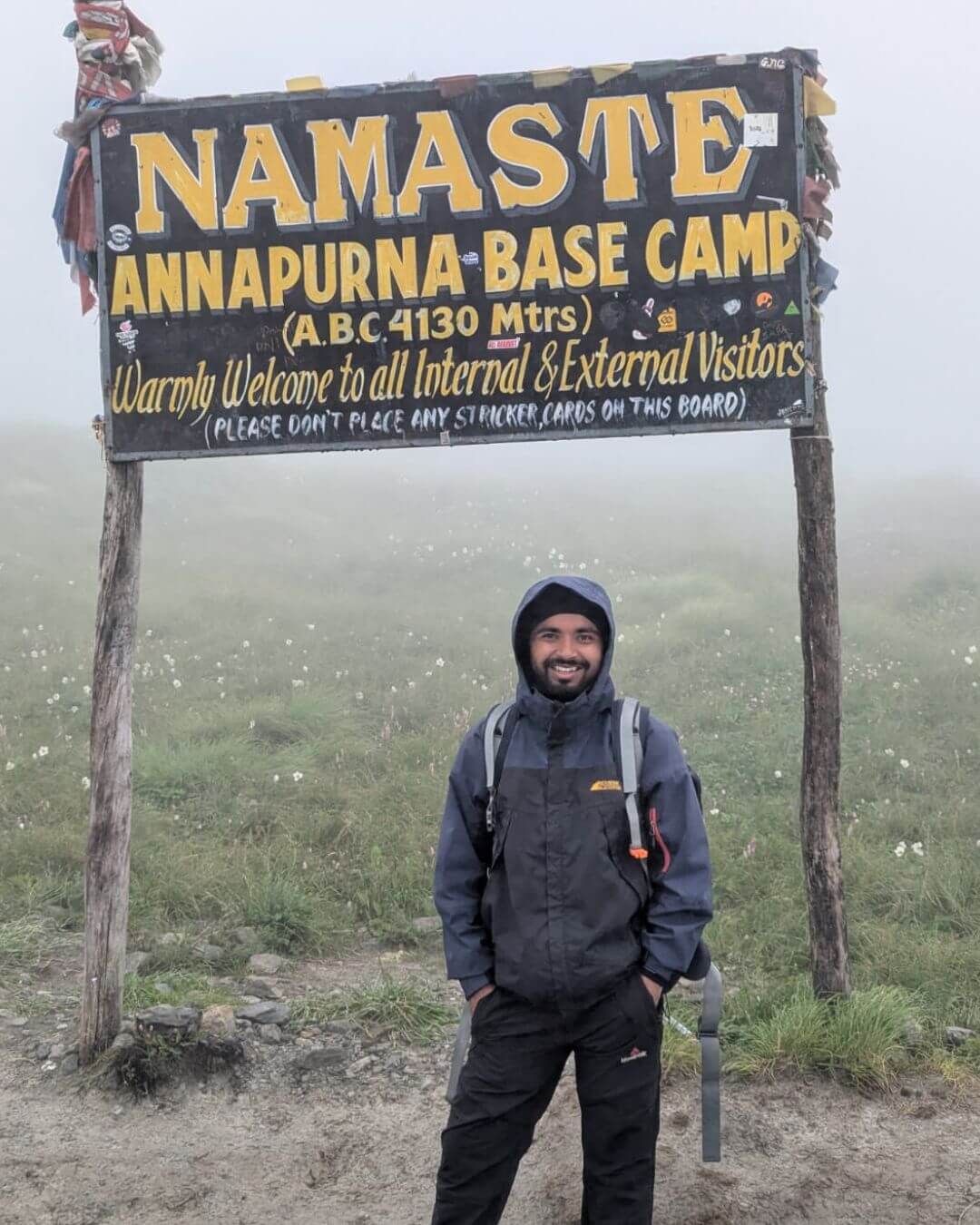
- Pokhara is also the main entry and exit point for Annapurna Base Camp, Annapurna Circuit, Ghorepani-Poon Hill, and Mustang/Muktinath trips.
- A comfortable daily budget runs from roughly $20-25 for backpackers to $60+ for mid-range travelers.
- Paragliding, boating on Phewa Lake, and visiting the World Peace Pagoda are the signature Pokhara experiences.
- Pokhara is generally considered calmer, greener, and easier to navigate than Kathmandu, though the two cities offer different kinds of appeal rather than a strict “better or worse” comparison.
Where Is Pokhara? Location and Overview
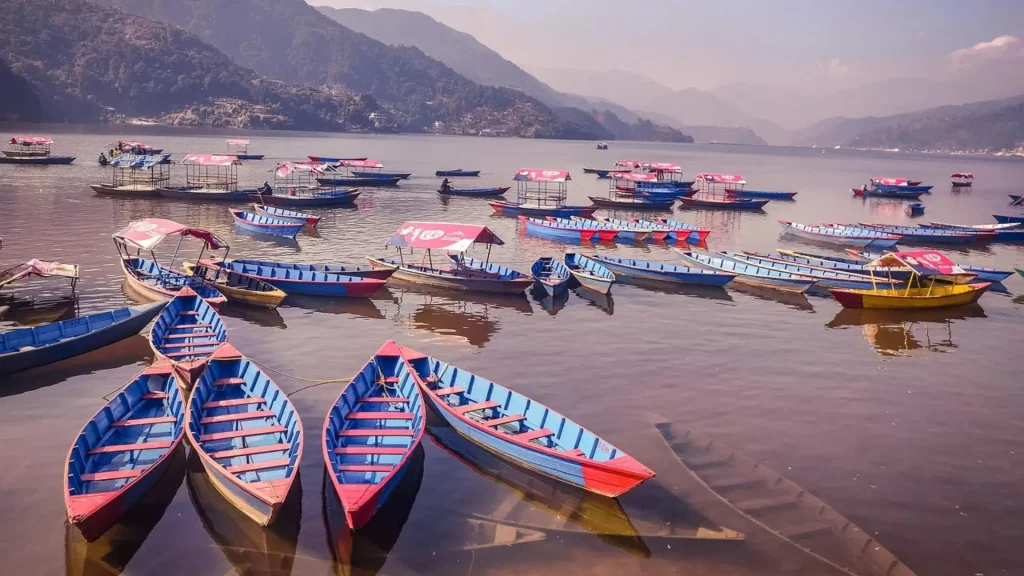
Pokhara is a city in Gandaki Province, in the mid-hills of central Nepal, roughly 200 km west of Kathmandu. It sits in the Pokhara Valley at an elevation of approximately 822-827 meters, on the southern shore of Phewa Lake, and is the administrative headquarters of Kaski District.
Pokhara is Nepal’s second-largest city and its most visited destination outside the capital. Unlike Kathmandu, which grew around a dense historic valley, Pokhara spreads along the lake and the Seti Gandaki River gorge, with the Annapurna Himalaya rising directly behind it. On a clear morning, you can see snow peaks from the street outside your guesthouse, something that simply isn’t possible in Kathmandu.
Quick Fact: Pokhara’s low elevation (822 m) compared to Kathmandu (about 1,400 m) means it’s noticeably warmer and more humid, especially outside winter.
Why Is Pokhara So Famous?
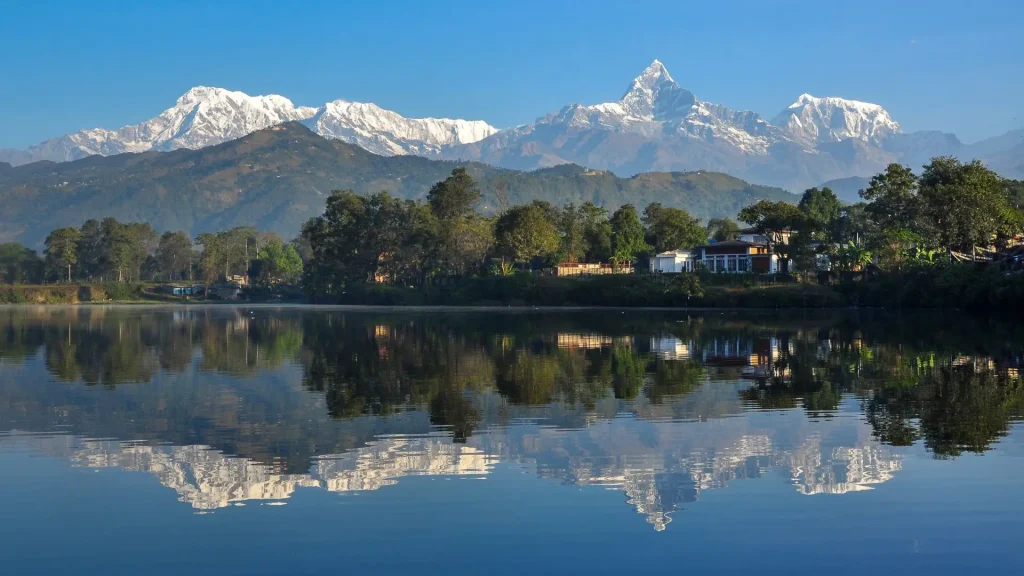
Pokhara is famous for combining lake scenery, close-up Himalayan views, and a wide range of outdoor activities in one compact, easy-to-navigate city. The direct backdrop of Machhapuchhre (Fishtail) and the Annapurna range, reflected in Phewa Lake, is a view few other cities in the world can offer.
Beyond the scenery, three things drive Pokhara’s reputation:
- It’s the gateway to the Annapurna region. Nearly every Annapurna Base Camp, Annapurna Circuit, Mardi Himal, and Ghorepani-Poon Hill trek starts and ends here, which means the city has built up a mature trekking and outfitting industry over decades.
- It’s Nepal’s adventure sports hub. Sarangkot’s launch site makes Pokhara one of the world’s most accessible paragliding destinations, alongside ziplining, ultralight “ultra flights,” white-water rafting on nearby rivers, and mountain biking.
- It’s relaxed compared to Kathmandu. Wider streets, less traffic congestion, and a lakeside strip built around cafés, yoga studios, and guesthouses give Pokhara a slower travel pace that many visitors extend their stay to enjoy.
Pro Tip: If your time in Nepal is limited, Pokhara is a better base than Kathmandu for combining sightseeing with genuine outdoor activity. You can paraglide over the lake in the morning and be having dinner on the water in the evening.
Is Pokhara, Nepal, Worth Visiting?
Yes, for almost every type of traveler to Nepal, Pokhara is worth visiting, and for many, it becomes the highlight of the trip rather than a stopover. It works equally well as a short lakeside break, a trekking base camp, or a several-day adventure sports destination.
Pokhara suits:
- First-time visitors who want mountain views without committing to a multi-day trek
- Trekkers starting or finishing an Annapurna route
- Couples and honeymooners looking for boating, sunset views, and quieter lakeside stays
- Backpackers drawn by the low cost of accommodation and food relative to Western prices
- Families who want gentler activities (boating, museums, short walks) alongside the option of adventure sports for older kids and teens
- Digital nomads who use Pokhara’s cafés and coworking-friendly guesthouses as a longer-term base
The main reason travelers skip or shorten their Pokhara stay is time pressure on a broader Nepal or South Asia itinerary, but even a single overnight stop is enough to see the lake, catch a sunrise at Sarangkot, and understand why the city has such a strong reputation.
Planning more than just Pokhara? Explore our Nepal Destinations to discover Nepal’s top trekking regions, mountain towns, national parks, cultural cities, and hidden gems so you can build the perfect itinerary.
How Many Hours From Kathmandu to Pokhara?
By plane, Kathmandu to Pokhara takes about 25 minutes; by tourist bus or private car on the Prithvi Highway, it typically takes 6 to 9 hours, and sometimes longer during road construction or monsoon landslides. The straight-line distance is about 146 km, but the road distance is roughly 200 km, winding through hill terrain rather than running in a direct line.
| Mode | Distance | Typical Travel Time | Approx. Cost (2026) |
| Domestic flight | 146 km (air) | 20-25 minutes | $100-150 one-way |
| Tourist bus | ~200 km (road) | 6-9 hours (advertised 6-7, realistic, often 8-10) | $10-20 |
| Private jeep/car | ~200-206 km (road) | 6-8 hours | $80-150 (whole vehicle) |
| Local/public bus | ~200 km (road) | 8-10+ hours | $5-8 |
Important: The Prithvi Highway has been under phased upgrade work in recent years, which can extend journey times well beyond the advertised 6-7 hours, particularly in the monsoon (June-September) when landslides are more common. Build in a buffer day if you have a tight onward connection.
Best Time to Visit Pokhara
The best time to visit Pokhara is during autumn (late September to November) or spring (March to April), when skies are clearest and Himalayan views are most reliable. Both seasons also align with the best trekking windows in the Annapurna region, which is why Pokhara gets busiest during these months.
| Season | Months | Weather in Pokhara | Good For |
| Autumn | Late Sep-Nov | Clear skies, mild days, cool nights | Best mountain views, festivals (Dashain, Tihar), trekking |
| Winter | Dec-Feb | Cool, dry, occasional morning fog | Fewer crowds, lower prices, still good visibility most days |
| Spring | Mar-Apr | Warm days, rhododendrons in bloom, some haze | Trekking, greenery, and good but slightly hazier mountain views |
| Pre-monsoon | May | Hot, increasingly humid | Fewer tourists, lower rates, visibility declining |
| Monsoon | Jun-Aug | Hot, humid, heavy rain, frequent cloud cover | Budget travel, lush landscapes, but poor mountain visibility and landslide risk on roads |
Weather Tip: Even in the clearest months, mountain views are usually best in the early morning before clouds build up over the Annapurna range in the afternoon. This is why sunrise trips to Sarangkot are so popular rather than sunset ones.
How Many Days to Spend in Pokhara
Plan for a minimum of 2 full days in Pokhara to see the main sights, and 3-5 days if you want to add an adventure activity like paragliding or a short trek without rushing. If Pokhara is also your trekking base, add extra days before and after your trek for permits, gear shopping, and recovery.
- 2 days (minimum): Lakeside walk and boating, Sarangkot sunrise, World Peace Pagoda, Davis Falls, and Gupteshwor Cave.
- 3 days (recommended for first-timers): Add a full adventure day, including paragliding, ziplining, or a half-day trip to Begnas Lake, and time for the International Mountain Museum.
- 5+ days: Combine sightseeing with a short trek (Poon Hill, Mardi Himal, or Australian Camp), a Mustang/Muktinath side trip, or simply slow down and use Pokhara as a rest stop between longer treks.
Sample 3-Day Pokhara Itinerary
Day 1: Lakeside and Culture
Arrive, settle into Lakeside, walk or row a boat across Phewa Lake to the Tal Barahi Temple, then hike or boat over to the World Peace Pagoda for sunset views over the lake and valley.
Day 2: Sarangkot and Caves
Head up to Sarangkot before dawn for sunrise over the Annapurna range and Machhapuchhre, then spend the rest of the day visiting Davis Falls and the connected Gupteshwor Cave, followed by the International Mountain Museum.
Day 3: Adventure or Lakes
Choose one: a tandem paragliding flight from Sarangkot, a zipline run, or a quieter half-day excursion to Begnas Lake and Rupa Lake, which see far fewer tourists than Phewa Lake.
Pro Tip: If you’re also trekking the Annapurna region, do your paperwork (ACAP permit) and gear shopping on your first afternoon in Pokhara so you’re not scrambling on the trek departure morning.
Best Places to Visit in Pokhara
Pokhara’s attractions cluster into three groups: lakeside and hill viewpoints, caves and waterfalls, and museums and temples. Below are the sights that consistently rank as must-see for first-time visitors.
1. Phewa Lake and Lakeside
Phewa Lake is Pokhara’s centerpiece, a freshwater lake covering about 4.4 to 5.7 km² at roughly 742 m elevation, known for reflecting Machhapuchhre and the Annapurna range on calm mornings. The Lakeside (Baidam) neighborhood along its eastern shore is where most guesthouses, restaurants, and tour operators are based, making it the natural hub for any Pokhara stay. Rowboats and paddleboats are available by the hour, and the small island temple of Tal Barahi sits in the middle of the lake.
2. Sarangkot
Sarangkot is a hilltop village at roughly 1,592-1,600 m elevation, about 11 km from central Pokhara, famous as Nepal’s most accessible sunrise viewpoint over the Annapurna and Dhaulagiri ranges. It’s also the main paragliding launch site in Pokhara. Most visitors arrive by taxi or shared jeep before dawn; a stone-staircase hiking trail also connects Sarangkot to Lakeside for those who want to walk up or down.
3. Davis Falls and Gupteshwor Cave
Davis Falls (locally Patale Chhango) is a waterfall where the Pardi Khola stream, fed by Phewa Lake, plunges into a narrow underground channel; directly across the road, Gupteshwor Cave is a limestone cave you can walk through, which connects to the base of the same waterfall. Visiting them together takes about an hour and works well combined with a stop at the International Mountain Museum nearby.
4. World Peace Pagoda
The World Peace Pagoda (Shanti Stupa) is a large white Buddhist stupa on a hilltop (roughly 1,100 m) south of Phewa Lake, reachable by a lake crossing plus a forest hike, or by road. It’s one of the best spots in Pokhara for panoramic views combining the lake, the city, and the mountains in a single frame, and it’s quieter than Sarangkot for sunset.
5. Begnas Lake and Rupa Lake
Begnas Lake and Rupa Lake sit about 15-35 km east of central Pokhara and are far less touristy alternatives to Phewa Lake, popular for boating, fishing villages, and quiet countryside scenery. They’re a good half-day trip if you want to see rural Pokhara Valley away from the Lakeside crowds.
6. Bindhyabasini Temple
Bindhyabasini Temple is a hilltop Hindu temple in Pokhara’s old bazaar area dedicated to the goddess Bhagwati, and it’s one of the city’s most active local pilgrimage sites, especially busy on Saturdays and during festivals.
7. International Mountain Museum
The International Mountain Museum, run in partnership with the Nepal Mountaineering Association, documents Himalayan mountaineering history, mountain ecology, and the cultures of Nepal’s highland communities. It is a useful stop if you are about to trek and want context on the region you are entering.
8. Mahendra Cave and Bat Cave
Mahendra Cave and the nearby Bat Cave (Chamere Gufa) are limestone caves on the northern edge of the city; Bat Cave, true to its name, houses a colony of horseshoe bats you can view up close along a walking route through the cave.
9. Seti Gorge
The Seti Gandaki River has cut a narrow, deep gorge directly through Pokhara’s urban center, in places barely a few meters wide but tens of meters deep, visible from several bridges in the city and a striking reminder of the geology beneath Pokhara’s calm surface.
What to Do in Pokhara: Adventure Activities
Pokhara offers more adventure sports in one place than anywhere else in Nepal, built around the natural launch points of Sarangkot’s ridge and the open water of Phewa Lake.
- Paragliding: Tandem flights launch from Sarangkot and land at Lakeside, lasting roughly 20-40 minutes and typically costing around NPR 8,500-13,000 (about $65-100), depending on the operator and package. The main season runs from early October to early May, with November-December considered peak for stable thermals.
- Boating: Rowboats and paddleboats on Phewa Lake are inexpensive and available all day; an early-morning row toward the World Peace Pagoda side is one of the calmer, less crowded ways to see the lake.
- Ziplining: Pokhara is home to one of the world’s steepest and longest zipline courses, running down from a hillside near Sarangkot at high speed over the valley.
- Ultra flight (ultralight aircraft): A powered ultralight flight from Pokhara’s airport gives you a longer, higher-altitude look at the Annapurna range than paragliding, typically 15-30 minutes depending on the package.
- Rafting and kayaking: The Seti and Trishuli rivers near Pokhara offer white-water rafting trips ranging from a few hours to multi-day expeditions.
- Mountain biking and short treks: Trails around Sarangkot, Australian Camp, and Dhampus give you Himalayan views without needing a multi-day trekking commitment.
Packing Tip: For paragliding and ziplining, wear closed-toe shoes and layers. It is noticeably cooler and windier at Sarangkot’s launch point than down at lake level, even on a warm day.
Things to Do in Pokhara for Couples
Pokhara is one of Nepal’s most popular destinations for couples and honeymooners, largely because its slower pace and lake setting suit shared, low-effort experiences rather than group activities.
Popular options include a sunset row across Phewa Lake, a joint tandem paragliding flight, a quiet dinner at one of the lakeside rooftop restaurants facing the water, and a sunrise trip to Sarangkot before the crowds arrive. Couples looking for something quieter than Sarangkot’s popular viewpoint often prefer the World Peace Pagoda instead, which draws fewer visitors at sunset.
Pokhara as the Gateway to the Annapurna Region
Pokhara is the starting and ending point for nearly every major trek in the Annapurna Conservation Area, including Annapurna Base Camp, the Annapurna Circuit, Ghorepani-Poon Hill, and Mardi Himal, which is why the city has such a developed trekking infrastructure of gear shops, permit offices, and guide agencies.
To enter the Annapurna Conservation Area, foreign trekkers need an Annapurna Conservation Area Permit (ACAP), issued by the National Trust for Nature Conservation (NTNC). As of 2026, the ACAP costs NPR 3,000 (roughly $22-25) for foreign nationals and NPR 1,000 for SAARC nationals; it can be purchased at NTNC or Nepal Tourism Board counters in both Kathmandu and Pokhara. Since April 2023, Nepal has also required a licensed guide for trekking in the Annapurna Conservation Area, so independent, unguided trekking is no longer permitted here.
| Permit | Cost (Foreigners) | Cost (SAARC) | Where to Get It |
| ACAP (Annapurna Conservation Area Permit) | NPR 3,000 (~$22-25) | NPR 1,000 | NTNC/NTB office, Kathmandu or Pokhara |
| TIMS Card | NPR 2,000 (individual) | NPR 1,000 | Registered trekking agency |
Permit Update: Enforcement details for TIMS have shifted in recent years, with some Annapurna checkpoints checking ACAP only in practice. Confirm current requirements with a registered trekking agency or the NTB office in Pokhara before you set out, since rules can change with little notice.
Pokhara to Muktinath and Mustang Distance
Pokhara to Muktinath is roughly 170-200 km by road via Beni, Tatopani, and Jomsom, taking about 6-10 hours by private jeep, or around 20-25 minutes by flight from Pokhara to Jomsom followed by a short jeep transfer.
Pokhara to Jomsom, the gateway town for both Muktinath and Upper Mustang, is about 156 km, with driving taking roughly 8-9 hours over mountain roads that are paved in sections and unpaved or landslide-prone in others.
| Route | Distance | Road Travel Time | Flight Option |
| Pokhara → Jomsom | ~156-170 km | 8-9 hours by jeep | 20-25 min flight |
| Jomsom → Muktinath | ~21 km | 30-45 min by jeep | N/A |
| Pokhara → Muktinath (total, via Jomsom) | ~170-200 km | 6-10 hours by jeep (often over 2 days) | Flight and short jeep transfer |
Most travelers split this journey over two days, overnighting in Jomsom, because the road passes through the Kali Gandaki Gorge, one of the deepest gorges in the world, and mountain weather can add delays. Flying to Jomsom only operates in the early morning due to afternoon winds, so plan on an overnight stay in Pokhara before an early flight.
Important: Roads beyond Beni toward Jomsom and Muktinath include unpaved and landslide-prone stretches, especially during monsoon season; a 4WD jeep with an experienced mountain driver is strongly recommended over a standard car.
How Expensive Is Pokhara? Budget Guide
Pokhara is generally affordable by international standards and slightly cheaper than Kathmandu for accommodation and food, though adventure activities like paragliding and rafting add noticeably to a daily budget. A realistic daily budget ranges from about $20-25 for a backpacker to $60 or more for a mid-range traveler who adds activities and better accommodation.
| Budget Level | Daily Cost (excl. big activities) | What’s Included |
| Backpacker | $20-25 | Dorm/basic guesthouse, local food, walking/local transport |
| Mid-range | $35-60 | Private room, mix of local and Western food, some taxis |
| Comfort | $70-120+ | 3-4-star hotel, restaurant meals, private transport |
Budget Tip: Paragliding ($65-100), a private jeep to Sarangkot for sunrise ($10-15 shared), and boat rentals ($5-10/hour) are the activities most likely to push a backpacker budget upward. Plan for at least one “splurge” activity even on a tight budget, since it is genuinely the highlight for most visitors.
Bike Hire in Pokhara
Bike and scooter rental is widely available around Lakeside, with basic scooters and step-through motorbikes typically renting for around NPR 600-1,500 (roughly $5-12) per day, and larger motorcycles running higher, averaging around €50-60 (about $55-65) per day for multi-day rentals through international booking platforms. Mountain bike rental for the trails around Sarangkot and the surrounding hills costs more than a standard scooter due to equipment quality.
Most rental shops ask for a passport or ID as a deposit rather than cash, and international riders should check what license category (car license vs. motorcycle license) a given bike legally requires, since this varies by engine size. A day’s rental is enough for a loop to Sarangkot, Begnas Lake, and back; multi-day rentals are popular for longer trips toward Mustang on larger bikes with more experienced riders.
Important: Nepal’s mountain roads, especially toward Jomsom and Mustang, require real off-road riding experience and, in most cases, a proper motorcycle license. This is not a route to learn on.
Where to Stay in Pokhara
Nearly all visitors base themselves in **Lakeside (Baidam)**, the strip running along Phewa Lake’s eastern shore, which has the highest concentration of guesthouses, restaurants, and tour operators and puts you within walking distance of the lake and boat docks. Quieter, slightly more upscale options sit toward the southern end of Lakeside and around Damside, closer to the World Peace Pagoda trailhead.
- Budget: Simple guesthouses and hostels around central Lakeside, generally $8-20/night for a private room.
- Mid-range: Boutique hotels and guesthouses with lake or mountain views, generally $30-70/night.
- Comfort/Luxury: International-standard hotels and resorts, some directly on the lake, generally $100+/night.
Food in Pokhara
Pokhara’s food scene reflects both its Nepali roots and its role as a long-standing traveler hub: expect excellent dal bhat, momos, and Newari specialties, alongside a wide range of Western, Indian, Israeli, Korean, and Japanese restaurants clustered around Lakeside, catering to the international trekking crowd who’s passed through for decades. Lakeside cafés are also a good place to try Nepali coffee, which is grown in the hills around Pokhara and increasingly served at specialty cafés rather than only instant coffee.
Photography Tip: Rooftop restaurants facing Phewa Lake toward the northwest catch both the sunset colors and the mountain silhouette in the same frame. It is worth timing a dinner reservation around golden hour.
Is Pokhara More Beautiful Than Kathmandu?
Pokhara and Kathmandu offer genuinely different kinds of beauty, so “more beautiful” comes down to what you are looking for. Pokhara wins on natural scenery and mountain views, while Kathmandu wins on historic architecture, temples, and cultural density. Most travelers who visit both do not come away thinking one is simply better. They come away glad they saw both.
| Category | Pokhara | Kathmandu |
| Natural scenery | Lake, Himalayan views, greenery | Valley views, but more built-up |
| Historic/cultural sites | Fewer, more spread out | Dense UNESCO sites, temples, palace squares |
| Pace of travel | Relaxed, outdoor-focused | Busier, more urban |
| Adventure activities | Extensive (paragliding, boating, trekking base) | Limited within the city itself |
| Air quality/traffic | Generally better | Often more congested |
Culture and Local Etiquette in Pokhara
Pokhara sits in a religiously mixed area with a strong Gurung, Magar, and other hill-community presence alongside Hindu and Buddhist traditions, visible in the mix of temples (like Bindhyabasini) and stupas (like the World Peace Pagoda) around the city. As elsewhere in Nepal, dress modestly at religious sites, remove shoes before entering temple interiors, and ask before photographing people, particularly in the smaller villages around Begnas Lake and Sarangkot.
Safety Tips for Pokhara
Pokhara is generally considered one of the safer, more tourist-friendly cities in Nepal, but a few practical points are worth planning around:
Safety Advice: Carry a printed or offline copy of your accommodation address, and if you’re heading toward Sarangkot, Jomsom, or Muktinath by road, check current landslide and road-closure conditions with your hotel or a local agency before departure, especially during monsoon season (June-September).
- Standard travel insurance covering adventure sports (paragliding, rafting, ziplining) and, if trekking, high-altitude evacuation is strongly recommended.
- Lakeside is well-lit and busy into the evening, but standard city precautions (watch belongings on boats and buses, avoid unlicensed activity operators) apply.
- If trekking from Pokhara toward Annapurna or Mustang, register your ACAP/TIMS details and share your route plan with your guide or agency, since this information supports rescue coordination if needed.
Common Mistakes to Avoid in Pokhara
- Scheduling only one full day. Weather, especially cloud cover over the mountains, can wipe out a single planned viewpoint day. Build in a buffer if mountain views matter to you.
- Booking paragliding on a whim without checking the operator’s certification. Stick to established operators with certified pilots rather than the cheapest street-side offer.
- Underestimating the Kathmandu–Pokhara road journey. Treat the advertised 6–7 hours as a best case, not an average, especially outside the dry season.
- Skipping Begnas Lake because Phewa Lake is “the lake.” If you want a quieter, more local experience, Begnas is worth the half-day trip.
- Forgetting permits before a trek departure. ACAP and guide arrangements take time. Sort them out in Pokhara at least a day before you plan to start walking.
Packing Checklist for Pokhara
- Lightweight, breathable clothing for lake-level warmth, plus a warm layer for Sarangkot’s cooler, windier hilltop
- Comfortable closed-toe shoes for walking, caves, and adventure activities
- Sun protection (hat, sunscreen, sunglasses). UV exposure is stronger at elevation than it looks.
- A light rain jacket, especially outside the dry season
- Cash in Nepali rupees for permits, small vendors, and rural areas where cards are not accepted
- Passport-size photos and your passport for any trekking permits arranged in Pokhara
- Basic first-aid kit and any travel insurance documents, particularly if adding a trek or adventure sport
Local Insight: ATMs are plentiful around Lakeside, but machines can run out of cash or go offline during peak season. Withdraw more than you think you will need rather than relying on a top-up the next day.
Final Thoughts
Pokhara earns its reputation honestly: a lake city with direct Himalayan views, genuine adventure activities, and a slower pace than Kathmandu, all wrapped into one manageable destination.
Whether you are stopping for two days on a wider Nepal trip, basing yourself here before an Annapurna trek, or heading onward to Muktinath and Mustang, this Pokhara travel guide should give you what you need to plan the visit with confidence.
The next step is simple. Decide how many days you have, pick your season, and start building the rest of your Nepal itinerary around it.
Frequently Asked Questions
1. How many hours from Kathmandu to Pokhara?
By flight, about 25 minutes. By tourist bus or private car, typically 6-9 hours on the Prithvi Highway, occasionally longer during road work or monsoon delays.
2. Why is Pokhara so famous?
Pokhara is famous for Phewa Lake, close-up views of the Annapurna range and Machhapuchhre, and its role as the main gateway to Annapurna region treks and adventure sports like paragliding.
3. Is Pokhara, Nepal, worth visiting?
Yes. It suits nearly every type of traveler, from backpackers and trekkers to couples and families, and most people who visit call it a highlight of their Nepal trip rather than a stopover.
4. How expensive is Pokhara?
A backpacker can manage on roughly $20-25 a day excluding major activities, while mid-range travelers typically spend $35-60 a day; adventure activities like paragliding add $65-100 per person.
5. Is Pokhara more beautiful than Kathmandu?
They offer different strengths. Pokhara excels in natural and mountain scenery, while Kathmandu stands out for its historic and cultural density. So it depends on what kind of beauty you are looking for.
6. How many days should I spend in Pokhara?
Plan for at least 2 full days to cover the main sights, and 3-5 days if you want to add an adventure activity or use Pokhara as a base before or after trekking.
7. What is Pokhara famous for?
Phewa Lake, the Sarangkot sunrise viewpoint, paragliding, and being the entry point to the Annapurna Conservation Area.
8. What is the best time to visit Pokhara?
The best time to visit Pokhara is late September to November and March to April, for the clearest skies and best mountain visibility.
9. Do I need a permit to visit Pokhara City itself?
No, Pokhara City doesn’t require a permit. Permits like ACAP are only needed once you head into the Annapurna Conservation Area for trekking.
10. How far is Pokhara from Muktinath?
Roughly 170-200 km by road via Jomsom, typically taking 6-10 hours by jeep (often split over two days), or a short flight to Jomsom followed by a jeep transfer to Muktinath.
11. Can I rent a bike in Pokhara without a motorcycle license?
Scooters generally require at least a standard car license category in most rental shops, while larger motorcycles typically require a proper motorcycle license. Requirements vary by shop and bike size, so confirm before booking.
12. Is Pokhara safe for solo travelers?
Yes, Pokhara is considered one of Nepal’s more solo-traveler-friendly cities, though standard precautions around unlicensed adventure operators, road conditions, and evening safety on quieter streets still apply.